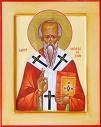
Lucifer, a Type of Christ? Michael Haykin answers a puzzling quote from Jonathan Edwards

[This is for Chip Dean who started the whole thing].

On his Church History blog at The Andrew Fuller Center (SBTS), Dr. Michael Haykin has answered a question today concerning Jonathan Edward’s view of Lucifer as a type of Christ in his post “Jonathan Edwards on Christ and Lucifer.”  The question arose from Edwards’ miscellanies “Fall of the Angels,” in “Miscellaneous Observations on Important Theological Subjects,” Chapter XI, of The Works of Jonathan Edwards (Hendrickson Publishers, 1998), II, 609). In his biblical reflections Edwards draws parallels between Lucifer before the Fall and Christ in his glorious humanity.  Obviously, this causes orthodox believers to hesitate.  Haykins’ comments are helpful.  After quoting the pertinent sections, he commments:

A close and careful reading of the text reveals simply this: Edwards is arguing that the unfallen Lucifer is a type of glorified humanity of Christ—the chief responsibilities of Lucifer before his fall have now been given to the glorified humanity of Jesus Christ. There is nothing heretical in this, though, in true Edwards style, this is something I had never thought of before. But the latter is of no import, there is so much in Edwards that we lesser minds would never have thought of if we did not read it in Edwards. As a theologian, he was stellar. Is he right: that is another question. Again, Edwards is not exalting Lucifer over our Lord. He is simply arguing that the unfallen Lucifer has typological aspects to his character when it comes to his relationship to the glorified humanity of Christ.

Once again typology seems to be a necessary device to understanding the Bible.  What are your thoughts.  Does Edwards get it right?

Thank you, Dr. Haykin, for taking the time to respond and for helping us better understand Edwards and his biblical theology.  Read the whole thing here; read Edwards entire miscellany on Angels here .

Sola Deo Gloria, dss

Piper at ETS: Stealing God’s Glory, Steals the Joy of Others

For nearly three decades, John Piper has preached a message of God-centered exultation (and exaltation).  He has traveled the country proclaiming that God’s greatest interest is…God.  And if you have read him, you know of his passion for expository exaltation of this singular truth–white-hot worship of the all-glorious God.

Most recently, Piper took his message to a much more challenging audience–the ETS meeting at Providence, Rhode Island.  He presented a brief 7-point presentation, which synthesized his fundamental argument that “God is not a meglomaniac when he demands worship.”  Expansions of this argument can be found in his books Desiring God, The Pleasures of God, and Let the Nations Be Glad.  I am immensely grateful for these books and their vision of God.  One quote stuck out today as I read this theocentric mandates was this:

This [God’s Godwardness] is not megalomania because, unlike our self-exaltation, God’s self-exaltation draws attention to what gives greatest and longest joy, namely, himself. When we exalt ourselves, we lure people away from the one thing that can satisfy their souls—the infinite beauty of God. When God exalts himself, he manifests the one thing that can satisfy our souls, namely, God.

What stood out was this sentence: “When we exalt ourselves, we lure people away from the one thing that can satisfy their souls—the infinite beauty of God.”  What a convicting thought in our idol-making, idol-aspiring age: to draw people to ourselves is to steal their joy and lead them to a fallen image, namely ourselves, instead of the true Image of God, Jesus Christ.   Too often our hearts long to make much of ourselves, too often we see Christian leaders promoting themselves in ways that draw followers after themselves; yet this kind of idol-making steals glory from God and joy!  I was convicted by this brief article today and am thankful for its Godwardness.

May we search our hearts for idol-aspiring tendencies and cry out with John the Baptist (and Piper), “He must increase; I must decrease” (John 3:30).

Sola Deo Gloria, dss

(HT: DG)

The Biblical Theology of Irenaeus [4]

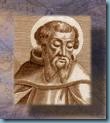
Irenaeus5 [This post is the fourth in a series on the biblical theology of Irenaeus of Lyons found in Against Heresies].

Working against an atomistic reading of Scripture, Irenaeus appeals to the variegated testimony of the Old Testament that finds unity in Christ (cf. Eph. 1:10).[8] Drawing on these OT witnesses, Irenaeus vindicates the virgin conception of Jesus in a variety of ways. He points to Isaiah for giving the church a “sign” of its coming Lord,[9] Daniel for “foreseeing [Jesus] advent” in the stone cut without hands,[10] Moses for “giving a type” when he “cast his rod upon the earth, in order that it, by becoming flesh, might expose and swallow up all the opposition of the Egyptians,”[11] and Jeremiah for explaining in history how the Messiah could not be the biological son of Joseph, because Jesus earthly father was, in fact, the descendent of the disinherited Jechoniah.[12] In this logical exposition of the Old Testament text, Irenaeus calls attention to divinely-ordained symbolism, predictive prophecy, typology, and historical deduction based on the revealed will of God. In all of these modes of interpretation, Irenaeus presupposes the Old Testament as a divinely-intended foreshadow of things to come.

Naturally this leads to a very strong sense of recapitulation in his biblical theology. His typology commonly posits Jesus as the divine antitype who recapitulates OT people, events, and institutions. Quoting from Romans 5, Irenaeus comments, “[just as] Adam had his substance from untilled and as yet virgin soil…so did He who is the Word, recapitulating Adam in Himself, rightly receive a birth…from Mary, who was as yet a virgin.”[13] Likewise, Irenaeus sees Jesus blood as recapitulating the “innocent” blood of Abel shed at the hands of his brother Cain,[14] and Jesus entire lifework “sum[s] up all things, both waging war against our enemy, and crushing him who had at the beginning led us away captives in Adam.”[15] Summarizing the kind of revelation found in the OT, he writes:

For the prophets prefigured in themselves all these things, because of their love to God, and on account of His word. For since they themselves were members of Christ, each one of them in his place as a member did, in accordance with this, set forth the prophecy [assigned him]; all of them, although many, prefiguring only one, and proclaiming the things which pertain to one.[16]

In a litany of OT citations, Irenaeus quotes nine OT authors,[17] grouping these oracles according to four intertextual themes—the glories of the Messiah, His sufferings, His resurrection, and the establishment of a new covenant (cf. Luke 24:26, 46-47). In arranging these predictive prophecies in this way, Irenaeus shows a tremendous grasp of the Hebrew Scriptures, but more than that he expounds a Christ-centered, Gospel-contoured (life, death, resurrection), textually-derived biblical theology. Graeme Goldsworthy summarizes Irenaenus’ interpretation:

In the early church we see attempts to understand the essential unity of the Bible from the epicentre of the person and work of Jesus Christ. These early Christological interpretations of the Old Testament were driven partly by the apologetic needs to counter Judaism…[and in the case of Irenaeus], to oppose Gnosticism by showing the unity of the Testaments.[18]

Irenaeus’ hermeneutic unashamedly unites all things in Jesus Christ. For him, “the Old Testament and the New Testament represented a unity. The prophets were fulfilled in Christ. The apostles, meaning the entire New Testament (the apostolic preaching), in turn preached the same God the Father, the Son, and the Holy Spirit and the same economy of salvation.”[19] Over against the Gnostics whose selective Bible reading led them to posit a false God and a damning form of religion, Irenaeus’ biblical theology led him to see in every person, event, and institution a divinely intended type or shadow of Jesus Christ.[20]

Irenaeus understood typology to be a primary means by which YHWH instructed the people of Israel (OT) and the church (NT). Quoting 1 Corinthians 10:11, he comments, “For by means of types they learned to fear God, and to continue to devoted to His service.”[21] Speaking of the saints in the Old Testament, he argues that all that they received in the law—circumcision and the Sabbath,[22] covenantal stipulations,[23] and the sacrificial system[24]—were given to represent later and greater Spiritual realities. He writes:

Moreover, [God] instructed the people…by repeated appeals to persevere and serve God, calling them to the things of primary importance by means of those which were secondary; that is, to thing that are real, by means of those that are typical [typological]; and by things temporal, to eternal; and by the carnal to the spiritual; and by the earthly to the heavenly; as was also said to Moses, “Thou shalt make all things after the pattern of those things which thou sawest in the mount.”[25]


[1] Deuteronomy 6:4; Mark 12:29-30; Hebrews 13:8; James 1:17.

[2] David Dockery, Biblical Interpretation Then and Now, 59.

[3]Michael Haykin, Defence of the Truth, 37.

[4] See Irenaeus vehement accusation against Marcion in Irenaeus Adversus haereses 1.27.4.

[5] Michael Haykin, Defence of the Truth, 37.

[6] See Irenaeus prolix argument for the unified message of he Bible in Adversus haereses 4.5-15.

[7] Irenaenus Adversus haereses 4.11.4.

[8] Irenaeus Adversus haereses 4.33.10.

[9] Ibid., 3.21.6.

[10] Ibid., 3.21.7.

[11] This type Moses explains was a part of “the pre-arranged plan of God; that the Egyptians themselves might testify that it is the finger of God which works salvation for the people, and not the son of Joseph [in the flesh]. For if He were the son of Joseph, how could he be greater than Solomon…Jonah…or David” (Irenaeus Adversus haereses 3.21.8).

[12] Irenaeus intratextual argument posits that while Joseph was cut off from the Davidic covenant because of his patriarchal lineage and connection with the accursed Jeconiah (Jer. 22:24-25, 28; 36:30-31), Jesus is not disqualified because he is not his biological heir. He was virgin born. In the flesh, he was the son of Mary, who did not descend from Jechoniah (cf. Matt. 1:1-17, the genealogy of Joseph; Luke 3:23-38, the genealogy of Mary). This intratextual argument exemplifies Irenaeus’s commitment to the biblical text (Irenaeus Adversus haereses 3.21.9).

[13] Irenaeus Adversus haereses 3.21.10.

[14] Ibid., 5.14.1.

[15] Irenaeus’ recapitulation, though primarily accomplished by Jesus Christ, does extend to other aspects of redemptive history (Irenaeus Adversus haereses 5.21.1). In Irenaeus Adversus haereses 5.19.1, he compares Eve to Mary, and asserts how the latter obediently reenacts—he does not use “recapitulate”— the life of the first woman, whose “virginal disobedience” led to death, but now “has been balanced by virginal obedience.”

[16] Ibid., 4.33.10.

[17] The full list includes Amos, Daniel, David, Ezekiel, Habakkuk, Isaiah, Jeremiah, Joel, and Zechariah; and includes some of the prominent typological and prophetic passages associated with these inspired writers (Irenaeus Adversus haereses 3.23.9-15).

[18] Graeme Goldsworthy, Gospel-Centered Hermeneutics: Foundations and Principles for Evangelical Biblical Interpretation (Downers Grove, IL: IVP Academic, 2007), 236.

[19] David Dockery, Biblical Interpretation Then and Now, 69.

[20] In his exhaustive work on the word typos in the New Testament, Richard Davidson says of the early church fathers, “Throughout the patristic literature the Scriptural ‘types’ are generally understood to consist of divinely-designed prefigurations of Christ or of the realities of the Gospel brought about by Christ” in Typology in Scripture: A study of hermeneutical TYPOS structures (Berrien Springs, MI: Andrews University Press, 1981), 19.

[21] Irenaeus Adversus haereses 3.14.2.

[22] Ibid., 3.16.1-2. Concerning circumcision and the Sabbath, Irenaeus posits, “These things, then, were given for a sign; but the signs were not unsymbolical, that is, neither unmeaning nor to no purpose, inasmuch as they were given by a wise Artist; but the circumcision after the flesh typified that after the Spirit” (Irenaeus Adversus haereses 3:16.1).

[23] Ibid., 3.16.3-5. Speaking of the instructive and eschatological nature of the Law, Irenaeus writes, “These things [i.e. the Law], therefore, which were given for bondage, and for a sign to them, He cancelled by the new covenant” (Irenaeus Adversus haereses 3.16.2).

[24] Ibid., 3.17-18.

[25] Ibid., 3.14. 2.
Irenaeus Upholds Sola Scriptura [3]

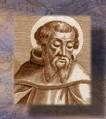
Irenaeus3 Long before Paul Tillich, men like Valentinus were engaging in theological accommodation and “methods of correlation.”[1] David Dockery says of Valentinus, “His hermeneutical approach was more sophisticated than Marcion, beginning with a simple literal interpretation of the biblical passages and moving to a more esoteric instruction on ethical and spiritual truth.”[2] In response, Irenaeus excoriates Valentinus, saying, “They gather their views from other sources than the Scriptures,” and then use their wicked schema to tie biblical phrases together to come up with another system of doctrine.[3]

Irenaeus, on the other hand, from first to last is explicitly biblical. He outlines his method as one completely derived from the Bible, and he rejects Gnosticism on the basis that they corrupt the perfect word of God. Concerning the veracity of God’s word, he declares:

Our Lord Jesus Christ is the truth, and no lie is in Him. As also David says, prophesying His birth from a virgin, and the resurrection from the dead, “Truth has sprung out of the earth.” The apostles likewise, being disciples of the truth, are above all falsehood; for a lie has no fellowship with the truth, just as darkness has none with light.[4]

Earlier Irenaeus affirms divine inspiration, biblical inerrancy, and the apostolic authority of the Scriptures, writing, “the Scriptures are indeed perfect, since they were spoken by the Word of God and His Spirit.”[5] Congruently, Irenaeus holds to the unity and clarity of the Scriptures when he says, “the entire Scriptures, the prophets, and the Gospels, can be clearly, unambiguously, and harmoniously understood by all.”[6] In short, though centuries before the Reformation and the publication of systematic treatments of doctrine, this second century divine is firmly evangelical. He argues for Scripture’s inspiration, inerrancy, authority, sufficiency, necessity, and clarity.

Though some have argued that Irenaeus’ regula fidei, which appealed to apostolic tradition to defend Scripture, led to “a precedent for setting up church traditions as being of equal authority with Scripture,”[7] it can be equally discerned from his writings that the ultimate authority is the Bible itself. Contending against the Gnostics, whose fallacious doctrines had no historical warrant, he appealed to the church because the church is the “pillar and buttress of the truth” (1 Tim. 3:15). In reading Against Heresies, it does not appear that Irenaeus himself is elevating tradition to the level of authoritative Scripture, but rather that he exhorts people to flee to the church because it is the church that possesses the life-giving Word of God.[8]


[1] The “method of correlation” was coined by Paul Tillich and encourages a dialetic approach to the Scripture where philosophy asks the question and the Bible supplies the answer. It is a twentieth century version of what the heretics have always done, comingle biblical truth with worldly philosophies (cf. Colossians 2:8). See Stanley Grenz and Roger Olson, Twentieth-Century Theology: God and the World in a Transitional Age (Downers Grove, IL: Intervarsity Press, 1992), 114-29.

[2] Dockery, Biblical Interpretation Then and Now: Contemporary Hermeneutics in the Light of the Early Church (Grand Rapids, MI: Baker Books, 1992), 60.

[3] Irenaeus employs one of his most colorful quotations to illustrate what these false teachers are doing. He writes, “Their manner of acting is just as if one, when a beautiful image of a king has been constructed by some skilful artist our of precious jewels, should then take this likeness of a man all to pieces, should re-arrange the gems, and so fit them together as to make them into the form of a dog or of a fox, and even that but poorly executed” (Irenaeus Adversus haereses 1.8.1).

[4] Irenaeus Adversus haereses 3.5.1.

[5]Uniting inerrancy, inspiration, and authority together in one sentence, Irenaeus avows, “; but we, inasmuch as we are inferior to, and later in existence than the Word of God and His Spirit, are on that very account destiture of the knowledge of His mysteries” (Irenaeus Adversus haereses 2.28.2).

[6] Irenaeus Adversus haereses 2.27.2. He continues in 2.28.3, “all Scripture, which has been given to us God, shall be found by us perfectly consistent; and the parables shall harmonize with those passages which are perfectly plain; and those statements the meaning of which is clear, shall serve to explain the parables; and through the many diversified utterances [of Scripture] there shall be heard one harmonious melody in us, praising in hymns that God who created all things.”

[7] Michael Haykin, Defence of the Truth (Webster, NY: Evangelical Press, 2004), 39; see also David Dockery’s appraisal in Biblical Interpretation Then and Now, 71-73.

[8] See Irenaeus Adversus haereses 3.1-5 for a detailed section of his appeal to the “rule of faith” and the historical importance of the church to arbitrate right doctrine. Irenaeus Adversus haereses 5.20.1-2 gives an interpretive key for Irenaeus’ reasoning for appeals to the Church.

Irenaeus’ Against Heresies: A Brief Overview [2]

Irenaeus2 In Against Heresies, Irenaeus spends the first two books understanding the Gnostics and refuting them at every turn.[1] His arguments are logical, but more importantly they are biblical. In contradistinction from Justin Martyr and Origen, who baptize philosophy with Christian truth and nomenclature, Irenaeus is a biblical apologist in the purest sense. The Gnostic Christians have misinterpreted the Bible, misconstrued the doctrines of the faith, and misled the Church by conjoining the pure Word of God with the perverted philosophies of Greek mythology. In Against Heresies, Irenaeus responds by highlighting the disparity between their false arguments and the plain reading of Scripture. He does this in three ways.

First, Irenaeus contends with the Gnostics because they derive their principles of doctrine from the irreligious philosophers of the day. Instead of appealing to the Bible they imitate Thales, Anaximander, Plato, and the Pythagoreans.[2] The only difference is the nomenclature. Irenaeus writes, “These men (the heretics), adopting this fable as their own, have ranged their opinions round it, and if by a sort of natural process, changing only the names of the things referred to, and setting forth the very same beginning of the generation of all things, and their production.”[3]

Second, Irenaeus lists numerous ways in which the Gnostics strain the gnat and swallow the camel. They import meaning into letters, syllables, and numbers,[4] while disregarding the composite testimony of the biblical writers. Likewise, they parse out meaning in parables that do not relate to the singular meaning of the Lord’s instruction.

Third, Irenaeus charges the Gnostics with an atomistic reading of Scripture that fails to recognize authorial intent, biblical context, or the unified formation of Scripture. In this, Irenaeus distinguishes the use of biblical language and biblical truth. Concerning this vain imitation, he says, “by these words [the Gnostics] entrap the more simple, and entice them, imitating our phraseology.”[5] The Gnostics deceitfully appropriate the former to deny the latter. He says,

They gather their views from other sources than the Scriptures; and, to use a common proverb, they strive to weave ropes of sand, while they endeavor to adapt with an air of prophets, and the words of the apostles, in order that their scheme may not seem altogether without support.[6]

Continuing his rejection of the Gnostic system of interpretation, Irenaeus says, “the method which these men employ to deceive themselves, while they abuse the Scriptures by endeavoring to support their own system out of it.”[7] Rather than reading the Bible in context and searching for an inductive meaning in the text, these false teachers were conscripting words, ideas, and atomistic elements of the text to support their preconceived systems of thought. Irenaeus continues, “collecting a set of expressions and names scattered here and there [in Scripture], they twist, them, as we have already said, from a natural to a non-natural sense.”[8]

The problem with this is that it superimposes on the Bible the ideas and theological constructs of the reader. The intention of the author and message of the Spirit is distorted and lost. Though centuries before postmodern, reader-oriented hermeneutics, this is essentially what Irenaeus is refuting. He is contending against any kind of allegory which says “this means that,” what you see in this passage actually means that person, that Aeon, that god, or that idea drawn from the system of the reader. Irenaeus’ conclusion articulates well how contextual readings undo this allegorical nonsense.

If he takes [the verses lifted out of context] and restores each of them to its proper position, he at once destroys the narrative in question. In like manner he also who retains unchangeable in his heart the rule of the truth which he received by means of baptism, will doubtless recognize the names, the expressions, and the parables taken from the Scriptures, but will by no means acknowledge the blasphemous use which these men make of them. For, though he will acknowledge the gems, he will certainly not receive the fox instead of the likeness of the king. But when he has restored every one of the expressions quoted to its proper position, and has fitted it to the body of the truth, he will lay bare, and prove to be without any foundation, the figment of these heretics.[9]


[1] Cleveland Coxe summarizes these books, “The first of these contains a minute description of the tenets of the various heretical sects, with occasional brief remarks in illustration of their absurdity, and in confirmation of the truth to which they were opposed. In his second book, Irenaeus proceeds to a more complete demolition of those heresies which he has already explained, and argues at great length against them, on grounds principally of reason” in The Anti-Nicene Fathers (Peabody, MA: Hendrickson, 1994), 311. Irenaeus employs logic, but his polemics are biblically-informed and rich with illustrations and explanations from the Bible.

[2] Irenaeus Adversus haereses 2.16.1-6.

[3] Ibid., 2.16.1. In this statement, Irenaeus is referring to the account of an unrecongnized “cosmic poet” by the name of Antiphanes, whose cosmogony started with Night and Silence which begot Chaos, then Love from Chaos and Night, and then finally Light.

[4] Ibid., 1.14.1-6; 2.24.1-6.

[5] Ibid., 3.15.1. He reiterates this point, “Such men are to outward appearance sheep; for they appear to be like us, by what they say in public, repeating the same words as we do; but inwardly they are wolves” (Irenaeus Adversus haereses 3.16.8).

[6] Ibid., 1.8.1.

[7] Ibid., 2.9.1.

[8] Ibid., 2.9.4.

[9] Ibid., 2.9.4.

Irenaeus: Against Heresies

Irenaeus1 [For the next week, I am going to post a series on Irenaeus’ and his view of Scripture, his use of biblical theology, and his employment of typology in his polemic work: Against Heresies.  The content is not ground-breaking, but a simple attempt to understand how this Apostolic Father read Scripture and put the two testaments together.  Hopefully, it will help us better appreciate the shoulders that we stand on and how we might better interpret the Scriptures.]

[The bulk of these posts are from a paper I wrote earlier this semester on the subject.  Reading Against Heresies proved to be very enriching, and I hope that if you follow the analysis presented here over the next few days as it relates to Biblical Theology and biblical interpretation that you would be spurred on to read his book, Against Heresies.  The first two books are very hard to read as they deal with the intricacies of Gnosticism; the final three books are incredibly insightful and full of biblical exposition.  I highly recommend them.]

In Against Heresies,[1] Irenaeus of Lyons presents a biblically rigorous defense of historic Christianity in the face of second-century Gnosticism. Over the course of this week we will examine Irenaeus’ interpretive method in Against Heresies, and assert that contemporary Bible scholars, theologians, and pastors would do well to consider Irenaeus’ theological hermeneutics and to imitate those interpretive methods that prove faithful to Scripture (cf. Heb. 13:7). Of his interpretive methods, three deserve unreserved affirmation: 1) against Gnosticism, Irenaeus rejects theological accommodation that superimposes philosophical systems onto the biblical text; 2) against Valentinus, the Bishop of Lyons affirms Sola Scriptura with its doctrinal entailments—inspiration, inerrancy, sufficiency, and authority; and 3) against Marcion, Irenaeus defends the Bible’s unity by proposing a robust biblical theology. Expanding this last point, we will analyze Irenaeus’ typology asserting that his typological method should be adopted with some significant modifications and caveats.

Sola Deo Gloria, dss


[1] Irenaeus Adversus haereses, trans. A. Roberts and J. Donaldson under the title Irenaus Against Heresies, in The Apostolic Fathers, Justin Martyr, Irenaeus, Ante-Nicene Fathers [ANF], American ed., vol. 1 (United States: Christian Literature, 1885; reprint, Peabody, MA: Hendrickson, 2004), 309-567.

2 Corinthians 5:11-21: The Overriding Priority of Being Christ’s Ambassador

This is a Guest Post from Garrett Wishall, a good friend, a fellow student at SBTS, and the managing editor for Southern’s Towers Magazine.

Life is full of choices. Should I hit the snooze or get up? Will I go with hazelnut, mocha or Jamaican bean coffee this morning? Do I watch football or have a conversation with my wife? Do I have “the talk” with my son today or do I put it off? When I see my neighbor do I ask him about the yelling I heard from his house last night or do I avert my eyes and comment about the weather?

Our priorities shape how we make such choices. What is truly important to us comes through in what we do and don’t do what we say and don’t say. And it is motivations and heart desires that drive and define our priorities and, in turn, our decision-making.

In 2 Corinthians 5:11-21, Paul discusses a fundamental, overriding priority for every Christian: being an ambassador for Christ. An ambassador is one who represents another, one who acts as an emissary. For example, when President-elect Barack Obama settles into office, he will begin sending ambassadors to foreign nations. Those men and women will go with his commission: they will speak in his place and represent his beliefs. What they say will come with his stamp of approval.

Every believer in Christ serves as an ambassador for Christ, for good or for ill. 2 Corinthians 5:20 says that God makes His appeal through us, through believers. Thus, what we say should align with what Christ would say. What we do should align with what He would do.

In this passage, Paul provides three motivations that shape his prioritization of the role of being an ambassador for Christ.

First, Paul says that he knows the fear of the Lord (2 Cor 5:11). Paul is aware that he once walked in darkness, before the God who called light into existence shined the light of the knowledge of the glory of Christ into his heart. Paul says that He thus proclaims Christ as Lord, and himself as a servant for Christ’s sake (2 Cor 4:5-6). Paul knows fearing the Lord centers on submission to Christ and he persuades others to do just that.

Second, Paul says the love of Christ controlled him (ESV) or compelled him (NIV). Paul notes that since one man, Christ, died for all men, all men have thus died. Christ died for all that those who live might then live for Him and not for themselves (2 Cor. 5:14-15). The logic is simple: one righteous man dies for men dead in sin. All who respond to this news with repentance of sin and belief in this one man receive their lives back. How could we not then live for Christ’s sake and not our own?

This touches on the area of Christian freedom. Paul is saying that Christian freedom rightly employed prioritizes the glory of God and exaltation of Christ, not selfish gain. Too often Christian freedom is equated with being able to watch certain movies and drink certain beverages. The central purpose of Christ setting people free is that they might enter His kingdom, be conformed to His image and glorify God. In shorthand: He died that we die to sin and live for God (Rom 6:10-11).

This reality did not simply make logical sense to Paul: it moved him. In 2 Corinthians 6, Paul recounts the ways the love of Christ, being an ambassador of Christ, shaped his actions toward the church at Corinth. Through imprisonments, beatings and other afflictions, Paul was insistent in faithfully representing Christ. Paul concludes that the Corinthians believers are not restricted by him, but in their own affections.

The church at Corinth thus knew about the sacrifice of Christ, but it did not shape their lives. They were aware of His death on their behalf, but were not rightly moved to live on His behalf. We, God’s people, today are prone to respond to Christ’s sacrifice more like the Corinthians than like Paul. May we rend our hearts and ask the Lord to do a work in us. May we meditate upon the riches of Christ and may our lives then explode with gratitude and devoted service.

Finally, Paul was motivated to be a faithful ambassador for Christ because this ministry came from God (2 Cor 5:18). The message that every believer is Christ’s ambassador did not originate with your college mentor. It did not originate with John Piper or Mark Dever or whoever your favorite Bible teacher is.  The role of ambassador for Christ originates with the same God who spoke the world into existence and sustains it by the power of His Word. There is no authority that can override this Authority.

The fear of the Lord, the love of Christ and the authority of God thus drove Paul to prioritize his role as an ambassador of Christ. Such a prioritization should characterize the life of every believer, for we are all ambassadors of Christ.

Life is full of choices. But God does not leave us without direction for such choices. Instead, He gives us priorities that make the way clear. Every believer is Christ’s ambassador. Thus, everything we do and say reflects positively or negatively on Him.

In 2 Corinthians 5:11-21, Paul shows how the fear of the Lord, the love of Christ and the authority of God compel him to prioritize his role as Christ’s ambassador. Let us pray that the Lord will give us the grace to respond in a like manner. Then perhaps we can faithfully represent Christ in the words we say, the things we do and the choices we make each day.

Sola Deo Gloria, dss

N.T. Wright: The New Testament and the People of God

new-testament-and-the-people

N.T. Wright.  The New Testament and the People of God: Christian Origins and the Question of God.  Minneapolis, MN: Fortress, 1992.

In N.T. Wright’s first book in a series of three (with two more projected), the British New Testament scholar gives a full-orbed presentation (535 pp.) on the history, culture, and worldview of the land and the people into which Jesus was born and from which Christianity arose.

Part I introduces the book and the extended project.  He attempts to show that premodern, modern, and postmodern attempts at interpreting Scripture are all deficient, and that a synthesis of premodern’s authority, modernity’s critical eye, and postmodernity’s subjective impulse are needed to rightly understand the Bible.  He procedes to layout a three-fold method for considering the NT–examining its history, literature, and theology, which he unites with studies about Jesus, the gospels, and Paul, respectively. 

Part II picks up these three evaluative lens.  After dealing with issues of epistemology in chapter 2, Wright develops his understandings of history (3), literature (4), and theology and authority (5).  His interpretive grid is that of a “critical realist” (44-46) and he argues that we should understand the Bible according to its meta- and micro- narratives (this is developed further in chapters 13-14: “The Stories in Christianity”).   In his chapter on “Literature, Story, and Worldview,” Wright addresses the problems of hermeneutics, language, and reading.  He suggests a hermeneutic of love and goes on to propose a worldview-informing narrative hermeneutic.  Reading the Bible as an interactive story upholds the immutable Bible and the interpretive challenges of an everchanging world–in this Wright seems to fuse modern and postmodern tendencies.  Chapters 4 develops the view that history is never objective and that intrinsically it should be seen as historiography, history delivered with specific authorial intent to shape the account through selectivity, sequencing, and shaping.  Chapter 5 finishes his introductory section by considering the worldview-shaping effects of narrative theology.

Part III is comprised of five chapters that recreate the world of second temple Judaism (fourth century BC – first century AD).  In Chapter 6, Wright gives an historical account of the Greco-Roman world that dominates the landscape for the Jewish people.  Chapter 7 subdivides the Jewish thoughtlife, societal structures, and political machinations to show the diversity of second-temple Judaism.  While chapters 8-10, unfold the Jewish heritage, highlighting the stories, symbols, and praxis that shape their day-to-day life (8), tracing the storyline that informs contemporary beliefs (9), and referencing the apocalyptic hope that the Jew’s maintained in the face of enemy oppression (10).  

Wright bases much of his findings on the works of Josephus and much intertestamental Jewish writings.  His analyses contravene many historical positions on the 1st Century Judaism, while helpfully demonstrating the variations of Jewish belief at the time of Jesus’ birth.  Nevertheless, it is evident that he is clearing the way for New Perspective teachings on Paul (aka E.P. Sanders and James Dunn), which deny any kind of works-based righteousness–which will redefine justification by faith alone– and promotes a responsive covenantal nominianism (law-keeping)–that advocates a kind of “gracious” law-keeping.  (For a response to this see: John Piper’s The Future of Justification).

Wright juxtaposes the Jews with the oppression of the Roman empire and shows why covenantal markers are so important to the Jewish people.  He articulates that since the zenith of the covenant is dwelling in God’s presence (i.e. in the land and within the Temple), and that when this function is disable or at least inhibited by sin that leads to exile that leads to indwelling opposition in the land, that the Jews recast dwelling with God with covenantal markers (i.e. circumcision, Sabbath, ritualistic days, etc).  The difference between OT and NT is not type and fulfillment, but spacio-temporal, obeying the Torah becomes preeminent to keep covenant.  Entering the covenant is assumed by birthright.   Wright’s emphasis is clearly more corporate, to the detrimental exclusion individuals and their need to be reconciled to God.  While emphasizing the covenantal and corporate elements of salvation (of which he speaks in exodus language, restoration from exile), he minimizes the doctrine of personal salvation.  Moreover, nowhere in his lengthy discussion does he include matters of personal guilt, individual transgression, or need for atonement (cf. Ezek. 18; Leviticus 1-6, 16), leaving essential matters of redemption out of his discussion.   Consequently, he seems to be working with a semi-Pelagian understanding (anachronistically applied to second-temple Judaism, I understand) of the Jewish nations ability to keep covenant.

The value of Part III is its illuminating descriptions of second temple Judaism; the criticisms are clearly the New Perspective emphases which undermine the Reformation doctrines of salvation.

Part IV is the most helpful section in the book.  Chapter 12 begins with a discussion of praxis, symbols, and worldview that informed second-temple Judaism, but more pertinently shaped the first-century Christian community.  Looking particularly at the significance of the Land, the Temple, and the Torah, Wright asserts that all were updated in Christ, so that in the NT they take on metaphorical realities.  His approach in this chapter is overtly cultural-historical-sociological, not biblical-theological.  (This is a trait that runs throughout the book.  Wright devotes most of his energy retelling the story of the people from a sociological angle, not an exegetical outworking of the Biblical canon).  Nonetheless, his typological applicatons to Christ do stress the OT shape of the NT.

Chapters 13 and 14 unfold the message(s) of the biblical authors.  Chapter 13 examines the form and function of the synoptic gospels, the Pauline letters, Hebrews, and the Johannine corpus.  This chapter masterfully displays the wisdom and the logic of the NT writers, who retell the story of Israel in the person and work of Jesus Christ.  For instance, Wright compares Luke’s gospel to the work of Josephus–both of whom are making an apology to the Roman empire–and he goes on to show how the doctor recaptures the Samuel narratives to provide the outline of his Davidic biography.  Moreover, Matthew seems to employ Deuteronomy to construct his gospel, and Mark utilized Daniel as an apocalyptic narrative.  These intracanonical connections demonstrate the NT use and dependence on the OT.  In so doing, Wright argues that this more that simple typology.  It is rather a kind of mindset that sees the history of Israel being recapitulated (my word, not his) in the life of Jesus and the church.  Paul further does this in inviting Gentiles into the story of Jesus, the Israel of God.

Chapter 14 moves from the larger units (NT books) to the contents of those books–Jesus teaching, miracle stories, parables, etc.  He argues that these did not develop over time, but from the beginning they were well-formed.  He explains why this is so, using simply analogous logic, appealing to the ways stories are told and retold.

Finally, Wright concludes with an overarching description of first-century Christianity in “The Early Christians: A Preliminary Sketch” (15).  The take away point is that Christianity’s identity is fully Jewish.  The earliest church was shaped not by the historical events of Jesus life only.  Rather Jesus life and the birth of the church were understood, defined, and developed according to the well established patterns and promises of the OT, so that the life, death, and resurrection–an old testament pattern of exodus–was “according to the Scriptures.”  Without hesitation, this is the most helpful aspect of the book.  It makes the reader more aware of the intracanonical connections by way of appeal to historical-cultural-sociological expectations of the Jews.

The book is long and filled with abberrant teaching about the doctrines of justification and sin, but its Jewish reading of the Scriptures is very helpful and worth perusing.  I look forward to reading, with cautious selectivity, the other books in this series.

Sola Deo Gloria, dss

Messiah in the Old Testament: A Rap

In class today, Dr. Jim Hamilton released his latest attempt at poetry, only this time it was delivered in the form of a rap.  Following in the footsteps of another SBTS Professor’s Philosophy Rap, Hamilton’s “Messiah in the Old Testament” surveys the Old Testament world of the Bible, pointing all things to the seed-crushing son of God, Jesus Christ. 

This illuminating and engaging rap culminated a rich, intra-textual look at the Bible that Dr. Hamilton provided in his class by the same name– “The Messiah in the Old Testament.”  I look forward to his forthcoming biblical theology, where much of the material will be published. 

Here are the first and last three stanzas:

God promised a seed, who would crush the serpent’s head
Adam and Eve hoped in what God said
This can be seen from the naming of the wife
Whereas death was promised, the promised seed means life …

…So if you want to know what Jesus said
On the road to Emmaus from the law and prophets
Beginning from Moses, in all that was written
Opening their minds, explaining what was hidden 

Look to the writings of the New Testament
Where the men taught by Jesus tell us what he meant
They show us how to read the OT
And Jesus sent the Spirit to help you and me 

So spread the good news that the battle is won
The curse is reversed, the new age begun
We long for the day when he returns
The Spirit and the bride say, “Come, Lord, come.” 

I hope you will read the rest and return to your Bible’s singing the songs of the savior–in whatever style you prefer–rap, country, gospel, folk, or rock.  You can read the rest of this faith-enriching, biblically-informing rap here.

Sola Deo Gloria, dss

Colossians 1:24: Suffering for the Sake of the Body (pt. 2)

My Final Answer:

The “lack” that Paul’s sufferings are filling up is the representative absence of Christ’s redemptive sufferings. Let me expound: What Christ did on the cross was a singular event in space and time, yet it was for all time and for all people. The distance between the singular event and the fullness of humanity is the lack. The application of reconciliation needs to be extended to all people. That is where Paul’s suffering, and your suffering and my suffering come in. We suffer to fill up the lack of proclamation of Christ’s propitiation. Therefore, what Christ propitiated, we proclaim. What he did, we declare. The redemption he accomplished we make known through declaration, and as the Lord ordains our sufferings for his sake, we demonstrate his death and resurrection in our bodily afflictions.

Commenting on this, John Piper writes:

Christ has prepared a love offering for the world by suffering and dying for sinners. It is full and lacking nothing—except one thing, a personal presentation by Christ himself to the nations of the world. God’s answer to this lack is to call the people of Christ (people like Paul) to make a personal presentation of the afflictions of Christ to the world…In [our] sufferings they see Christ’s sufferings. Here is the astounding upshot: God intends for the afflictions of Christ to be presented to the world through the afflictions of his people (Desiring God, 225).

In short, Paul’s suffering validated and attested to the life-giving power of the message he proclaimed, so that in his life he demonstrated Christ’s sacrificial death and resurrection power (cf. Phil. 3:9-10).  In the church, the world is able to see the body of Christ. In the suffering of Christ’s body, they are given a living, breathing, suffering testimony of the savior who bled and died to make reconciliation with God possible. This was God’s design for his church from the beginning.  Reflecting on this call to suffer, Romanian pastor Joseph Tson comments:

[Speaking in first person, in the life of Paul, he says]: If I had remained in Antioch…nobody in Asia Minor or Europe would have been saved. In order for them to be saved, I have had t accept being beaten with rods, scourged, stoned, treated as the scum of the earth, becoming a walking death. But when I walk like this, wounded and bleeding, people see the love of God, people hear the message of the cross, and they are saved. If we stay in the safety of our affluent churches and we do not accept the cross, others may not be saved. How many are not saved because we don’t accept the cross? (Quoted by John Piper in Desiring God, 230).

Let me summarize: Christ’s sufferings redeemed; Paul’s sufferings reveal. They do not add to Christ’s all-sufficient work, but they do extend its all-sufficient power and message (cf. 2 Cor. 4:7-11). The purpose of God in Christ’s sufferings was to redeemed a people dead in trespasses and sins; the purpose of God in Paul’s sufferings was to bear witness to the sufferings of another, and amazingly Paul’s bodily afflictions were designed by God to advance that message.  So then, Paul’s sufferings for the gospel, and ours, are not supplementary, but complementary.  They are essential, not optional.

Jesus promised his followers a cross. He said that if the world hated the master, they would also hate his servants. Therefore, in telling the world about his saving work, we can expect to suffer. Yet, in that suffering we demonstrate in our flesh the power of God’s love and the very cross that we declare. When the world sees suffering, bleeding, dying Christians telling of their suffering, bleeding, dying savior with joy (“I rejoice in my sufferings for your sake,” Col. 1:24a), they are filling up what is lacking in Christ’s afflictions—namely the representative witness of the savior’s redemption. And in so doing, we follow in the faithful footsteps of Paul and we fill up what is lacking in Christ’s afflictions.

Lord Jesus, give us more grace to move towards the suffering you have designed for us to embrace in our bodies, and may the world know that while we suffer, we do it joyfully, looking forward to the resurrection of the body in the age to come.

Sola Deo Gloria, dss