Scripture is Our Guardian and Guide to True Worship (Sermon Notes)

True Worship is Revealed By God

Yesterday’s post considered the way Exodus 32 warns us of false worship.  It confronts the many ways we (unintentionally) bring ‘golden calves’ into our worship services, and it makes us ask whether or not the elements in our worship are biblically-grounded or not.  Today, we aim to make a positive argument for true worship based on the ‘Regulative Principle.’

Moving from Old Covenant to New Covenant, we should notice that God is just as interested in true worship in the church-age.  The difference is the location of that worship–in the Spirit-filled temple of the gathered church, not Solomon’s temple made of stones.  On this John 4 is helpful.

In John 4, Jesus pursues a conversation with a sexually-dysfunctional Samaritan woman. This is a great passage on the subject of missions, evangelism, and salvation unto all peoples.  But it also speaks volumes about worship.  Tucked in this context, we see that God is still seeking worshipers who will worship Him in Spirit and Truth (v. 24).

To which we may ask: How do we worship in truth?  Exodus 32 has shown us what false worship looks like, but where do we find true worship.  Put simply, I would say that the whole counsel of Scripture is required to worship aright.

Now, this question has been debated much in church history.  There are some who will say, that the church is permitted to do most anything in God’s name, so long as it does not violate the teaching of Scripture.  This has been called the “Normative Principle.”

Conversely, others have argued for the “Regulative Principle,” which asserts that the church should do no more than what is commanded and/or explicitly modeled in Scripture.  This second approach has, in some cases, been taken to the extreme.  Some have argued that instruments, for instance, find no place in the New Testament and thus should be removed from worship.  Others, more moderately, have made adjustments such as allowing for amplification and powerpoint in their services, even though Scripture says nothing of these things (although a raised platform and assistance in understanding the text in Nehemiah 8 may give support for amplification and powerpoint–just saying).

The perpetual challenges of contextualization make this debate very challenging.  Nevertheless, based on the seriousness which God takes worship (cf Exod 32), it is a conversation worth having.  My point, from the text in Exodus 32, is simply that we ought to have a principle of regulation, that arises from the text in all that we do.  Creative freedom in worship seems to be what Exodus 32 is against, and it actually proves that such “freedom” results in the ultimate slavery (death). By contrast, when churches submit themselves to Scripture, they experience the freedom of the Lord, who descends upon the gathered church, and as 2 Corinthians says, where the Lord is there is a Spirit of freedom.

A Baptist Argument for the Regulative Principle

On the subject of the Regulative Principle, I have not found much that is immediately helpful–if you know of something, please let me know–but in a Baptist Press article from 2003, Donald Whitney, now professor at Southern Seminary (Louisville, KY), and author of Spiritual Disciplines for the Christian Lifegives a number of helpful points.  Let me quote a portion of his article, Worship Should Be God-Centered and Biblical

The regulative principle of worship in essence says that God knows how He wants to be worshiped better than we do, . . .
”He has not left us in the dark about that and has revealed in Scripture [alone] how he wants us to worship Him, what the elements of worship are to be. If He has done so, then those are the things we must do and we should not bring any of our own ideas in addition to that.” 


 Biblical elements of corporate worship include preaching and teaching the Word of God, prayer, the public reading of Scripture, the singing of Psalms, hymns and spiritual songs, and celebrating the ordinances of baptism and the Lord’s Supper. 

The regulative principle rules out extra-biblical elements such as drama, clowns and the like.

Whitney pointed out that many Baptists today practice what is known as the “normative principle” of worship. The normative principle says that corporate worship must include all biblical elements, but believers also are free to include things not forbidden by Scripture. 

This approach is dangerous because God’s will is known only through His special revelation, . . .

We don’t know what honors God except that which He has revealed, . . .  In areas like worship where He has revealed His truth, we may not go beyond the bounds of that. 

[Significantly, Whitney ends his article by pointing us to the Scriptures, quoting from even from Exodus 25-30, which serves as the true pattern that was broken in Exodus 32].

In the end, Scripture must be our guardian and our guide!  God has not left himself silent on matters of worship.  He does not want creative expressions borrowed from the world.  He wants his creation to worship him according to his Word.  He is not looking for new ways to know him, explain him, promote him, or seek him.  He has given us his word and his Spirit.  This is sufficient.

To those who interpret the world through lens acquired from the world, this seems foolish and weak. But indeed, it is the wisdom of God.  May we again press into know the Lord, and trust that we will not be dissatisfied.

Soli Deo Gloria, dss
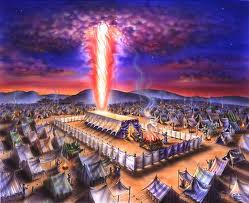
Beware of False Worship (Sermon Notes)

Exodus 32 is a tremendous vision of all that God hates about false worship.  If we pay careful attention, the problem is not absence of worship, but absence of divine sanction. In other words, the problem is not rejection of religion or indifference to worship. The problem is that worship derives its origin from some place other than God himself. This is not too different from the church today.

In an age of creative ventures in worship, the Golden Calf incident is worth our attention, because it provides a powerful counter-example to false forms of Christian worship. And what is most shocking and indicting is the fact that in Exodus 32 we find that false worship looks a lot like true worship, and that only in the light of divine revelation, can we tell the difference.

False Worship Looks A Lot Like True Worship

False religion is so dangerous because of how closely it apes true religion.  It doesn’t come with a surgeon generals warning on it.  In fact, if you use Christianbook.com as a resource for getting “good, Christian resources,” beware.  There is no warning for the likes of Osteen, Boyd, Eldredge, Meyer, or Jakes.  Today, too many Christian booksellers make a killing selling false doctrine.

In Exodus 32, we see a number of ways that ancient Israel apes true religion, and how Satan deceives God’s son.

First, while the need for leadership is real, the request is wrong.  Moses has been gone for weeks, and Israel feels its need. So they come to Aaron earnestly; unfortunately, their worry is premature.  The pillar of cloud is still on Mount Sinai.  There is no evidence that it has departed.  They were told that when Moses ascended, he would return and lead Israel to dwell with YHWH.  But like in the garden, Satan plays on the emotions of Israel, and they fall for his temptation.

Second, the worship that Israel offers looks sacrificial.  Here Aaron, failing to guard Israel, like Adam failed to guard his wife, calls for gold to fashion an idol.  And the people give.  They give liberally! It is a major act of spirituality–false spirituality.  Sadly, they miss God’s mark.  Part of God’s plan is for Israel to gather gold, silver, fabrics, etc (Exod 25, 35), thus, what Aaron calls for seems very natural. Sadly, his construction will distance Israel from God, it will not bring them near.  Access to God requires God’s revelation.

We learn something very important here: Sacrifice does not equal spirituality.  Spirituality calls for sacrifice. David says of Araunah’s threshing floor in 1 Sam 2:24, “I will not offer burnt offerings to the LORD my God that cost me nothing”  True spirituality will cost you  (cf. Luke 14:25-33), but just because you offer costly service, does not mean your spirituality is pleasing to God.

Third, the materials Israel offers for worship are essentially the same. The people of God build an altar, offer burnt offerings and peace offerings, and feast with the Lord (v. 5-6).  Yet, while in name these offerings and elements of worship are the same, they are different because they are invented by men and not God.  Aaron is not responding to God’s revelation, he is building the altar and offering the sacrifices according to all that he had seen in Egypt.

At this point in the narrative, Moses alone had God’s instructions.  He is still on the Mountain.  Israel does not yet have Exodus 25-31.  We do.  They don’t.  Worse: Because of the sexual promiscuity often associated with temple worship in the ancient world, the “playing” in Exodus 32:6 is likely to have a sexually perverse element.  Overall, the offering is an abomination, because it fails to do what God’s word says; it offers worship according to the vain imagination of fallen men.

Here is the application, via negative example, for us: It is natural and easy for the worship of God’s people to reflect more of the culture than of the court of heaven.  False worship is indeed what will happen whenever God’s word is minimized.  Unless we employ a regulative principle that allows Scripture to define and delimit our worship, we run the risk of offending God with the very thing with which we intend to please him.

Worship Without the Word Invokes God’s Wrath

The reaction of God is evident to all.  YHWH was incensed.  Verse 7 describes the distance that now existed between God and Israel.  He calls Israel “Moses’ people,” and he tells Moses that he brought them up from Egypt.  YHWH wants to have nothing to do with Israel.  In verse 8, he condemns them legally for breaking the part of the law that they had.  Remember, more than once, Israel swore that they would do all the words the Lord had spoken (Exod 25:3)They knew that failure to obey meant death.  And so, God was fully within his rights, to say in 32:10, “I have seen this people, and behold, it is a stiff-necked people. Now therefore let me alone, that my wrath may burn hot against them & I may consume them, in order that I may make a great nation of you’

The people of God worshiped YHWH (v. 5), but not according to the way YHWH designed.  Thus, they invoked his wrath.  How many churches today do the same?  As they creatively invite the presence of the Spirit through smells, bells, dramas, and personal interviews, they may actually distance themselves from the Christ they name.  For churches and their leaders, it is worth asking: What biblical sanction is there for such activity in corporate worship?  Failure to think through these things, invites God not to write his name on our churches, but rather the word “Ichabod.”

May God protect us from false worship, and may we pursue true worship as we look to the Word of God and worship according to all that he has revealed and prescribed in his sufficient revelation.

Soli Deo Gloria, dss


Sermon Notes: Exodus 34:6-7 In Biblical-Theological Context

The Context of Exodus 32-34

Exodus 32-34 are at the center of the tabernacle section (Exodus 25-40).  They function as a break between the instructions (25-31) and the construction (35-40). But the break is not just literary, it’s relational.

After all that God has done for Israel—remembering them in Egypt, redeeming them from slavery, making his covenant with them—Israel returns the favor by committing spiritual adultery.  In Exodus 32, God’s people make a graven image, and bow before it.  This invokes God’s wrath, but it also sets the stage to display YHWH’s mercy and grace.

Exodus 34:6-7 is the capstone of this passage, and in these two electric verses, we find the center of Old Testament Theology in God’s revelation to Moses (see Jim Hamilton, God’s Glory in Salvation Through Judgment for a full development of this idea).  These verses are programmatic for the rest of the Bible and they read,

The LORD passed before [Moses] and proclaimed, “The LORD, the LORD, a God merciful and gracious, slow to anger, and abounding in steadfast love and faithfulness, keeping steadfast love for thousands, forgiving iniquity and transgression and sin, but who will by no means clear the guilty, visiting the iniquity of the fathers on the children and the children’s children, to the third and the fourth generation.”

To know our God, it is vital to understand these passages in context and content. To better acquaint ourselves with this passage, notice three ways that God’s revelation on Sinai functions much like the cross in the New Testament.

1. Like the cross of Christ, these chapters show God’s mercy and his justice. Like a perfect kaleidoscope, they radiate the colors of God’s severity and kindness (cf. Rom 11:22).  In the New Testament, wrath and mercy meet at the cross; in the Old Testament they meet here.

2. Like the cross of Christ, the role of Moses is that of God-given Mediator.  In other words, he stands between God’s holy wrath and Israel’s rebellious sin.  In this way, as he pleads for mercy, he foreshadows Christ.  But lets not make the mistake that Moses or Christ change God’s mind; in both cases, the God who metes out perfect justice, also sends his a mediator to plead for pardon.  In this, there is the beautiful mystery that God who seeks to destroy Israel, is first the God works to save them.  He listens to Moses’ prayer, because he sent Moses to pray.

3. Like the cross of Christ, this episode shapes the rest of the OT (and NT). Exodus 34:6-7 is quoted throughout the rest of the Bible, and gives shape to all that follows.

This verse is picked up in places like Num 14:18. When Israel rebels against Moses, Moses quotes Exodus 34:6-7 in full as he pleads for Israel’s pardon. In the Psalms, it is often cited to remind Israel of God’s gracious character (cf. 86:15; 103:7).  But in the prophets, Nahum stresses God’s wrath: “The LORD is a jealous and avenging God; the LORD is avenging and wrathful; the LORD takes vengeance on his adversaries and keeps wrath for his enemies. The LORD is slow to anger and great in power, and the LORD will by no means clear the guilty. His way is in whirlwind and storm, and the clouds are the dust of his feet” (1:2-3). Even Jonah quotes the verse, saying it was this reason that he did not go to Nineveh, because the reluctant prophet knew God would forgive them if they repented.

Exodus 34:6-7 is so programmatic because of the way it expresses God’s relationship with the world.  YHWH is unchanging (Mal 3:6), yet people are not.  Thus, God has made a world in covenant with him.  Which means: Those who keep covenant will receive grace, mercy, and forgiveness (thru atonement).  However, for those who reject or ignore him, he loathes. His anger burns red-hot. His patience is slow, but not infinite.

Finally, Exodus 34:6-7 is fulfilled in Christ himself. In John 1:14, the beloved disciple introduces Christ saying, “And the Word became flesh and dwelt among us, and we have seen his glory, glory as of the only Son from the Father, full of grace and truth.”  The connection with Exodus 34:6-7 is in the last phrase.  The God who is abounding in steadfast love (hesed) and faithfulness (emeth) is fully revealed in Christ who is full of grace (charis) and truth (aletheia).

This is our God.  Though, Scripture reveals him progressively over time, he is the same yesterday, today, and forever.  The Old Testament God and the New Testament God are not juxtaposed, rather, as I recently heard D. A. Carson say, the New Testament vision of God is simply more clear and precise–this is true with God’s love and his justice.

May we this week, worship the God of Sinai and Calvary, and learn to know him in his faithfulness to forgiveness and judge.

Soli Deo Gloria, dss

A Temple Story: Tracing God’s Presence Through Scripture

A Temple Story

What is the best way to describe the Bible?  Is it a collection of verses that supply promises and warnings for the Christian life?  Is it a collection of books that each point to Jesus Christ?  Or is it an epic story of Paradise Created, Paradise Lost, Paradise Promised, and Paradise Made New in Christ?

Perhaps, the best answer is all the above.  While each of these three answers are correct, I think the last is the most difficult to see in Scripture.  In the last month at our church, we have given attention on Sunday mornings to the tabernacle in Exodus and how it fits into God’s plan of redemption.  Because of that, I want to give you a biblical roadmap that traces God’s “tabernacles.”  I think by seeing this line of dwelling places, it will give you and I a greater ground for hope in God.  Call it a temple story.

Garden of Eden.  This is God’s first dwelling place on earth. In Genesis 3, it describes God walking in the Garden in the cool of the day.  This garden has many features of the later sanctuaries of God—gold, bountiful trees, flowing rivers, priestly guardians, and more.  Thus, from the beginning, God sets a pattern for the kind of place he will inhabit with his people.

Exodus 25-40. On Mount Sinai God gives Moses a vision of his throne room, which becomes the pattern for the tabernacle and all future sanctuaries.  Interestingly, as we have seen this tabernacle points back to Eden and ahead to a New Eden.  The tabernacle given in Exodus is a portable Sinai where God’s people—through the priest—can climb the rungs of Jacob’s ladder and come into God’s presence.

1 Kings 8.  After Israel is settled and resting in the land, 1 Kings records how God gives Solomon wisdom to build a temple in Jerusalem.  This temple replaced God’s nomadic tent and became a permanent fixture in Israel.  It’s size and beauty surpassed that of the first tabernacle, showing that as time goes by, God’s temple increases in glory and beauty.

Ezekiel 40-47.  During the Exile, after God’s spirit had abandoned the temple, Ezekiel describes a future temple that overflows with streams of living water.  This water will cleanse the earth, and God’s presence will once again dwell with his people.  Significantly, when Jesus comes, John uses imagery from Ezekiel to describe Christ’s cleansing ministry (see John 7:37-39).

Jesus.  Perhaps most amazing of all, Jesus Christ is described as God’s dwelling place.  He is God with us, Immanuel.  John 1:14 says that the Word became flesh and “tabernacled” among us.  In truth, Christ is the meeting place between God and man.  In him the fullness of God dwelt bodily (Col 2:9), and in him we have access into the very throne room of God (Heb 10:19-25).  Therefore, we ought to come regularly into his presence with thanksgiving and supplication.

The Church.  Today, God dwells in heaven, but by his Spirit, he also dwells in his church. Paul says, “We are the temple of living God” (2 Cor 6:16), and that our bodies are the “temple of the Holy Spirit” (1 Cor 6:19).  Likewise, 1 Peter 2:5 describes believers as living stones “being built up as a spiritual house.”  In this way, the church is the spiritual house of God (Eph 2:19-22).

Revelation.  Finally, there is the promise at the end of the age that God will dwell with his people on earth.  In fact, Revelation 21 speaks of a New Jerusalem that will come down out of heaven adorned as a bride. It says there won’t be a temple, for the lamb will be the temple of God.  This is our hope. At the end of the age, all the cosmos will experience the glory of God’s holiness, and will be as sacred as innermost chamber of the temple.

This temple theme is a source of great wonder and hope.  When the world around us seems to be crumbling, the ever-steady rise of God’s dwelling place in our world is a gospel reminder that even if our flesh and funds may fail, God is bringing us into his dwelling place.

Remember what Jesus promised.  He said, “In this world, we would have tribulation, but take heart, I have overcome the world” (John 16:33).  Such a promise is good news, but its goodness grounded in another promise: “Let not your hearts not be troubled.  Believe in God; believe also in me.  In my father’s house are many rooms.  If it were not so, would I have told you that I go to prepare a place for you?  And if I go and prepare a place for you, I will come again and will take you to myself, that where I am you may be also” (John 14:1-3).

I am praying that this month God will give you and me a greater vision of his heavenly tabernacle, and that such a vision will purify our daily desires, and motivate us to live more radically for Christ.  God’s temple story gives us hope for tomorrow, no matter what is transpiring today.

Soli Deo Gloria, dss

Sermon Notes: The Sweet-Smelling Aroma of Prayer (NT)

Not only does the New Testament develop general themes of Christ’s fulfillment of the tabernacle.  It also picks up more specific details, like that of the golden altar of incense.  Yesterday, we considered the law and the prophets on this theme.  Today, we venture into the New Testament.

4. Christ’s offering is fragrant and acceptable to God.  We see this in at least two places in the New Testament.

Ephesians 5:2.  Walk in love, as Christ loved us and gave himself for us, a fragrant offering and sacrifice to God.  In Exodus, “fragrant” always described the incense.  Here, we have evidence of Christ’s offering on the golden altar and the sacrifice on the bronze altar.

Hebrews 5:7.  In the days of his flesh, Jesus offered up prayers and supplications, with loud cries and tears, to him who was able to save him from death, and he was heard because of his reverence.

5. The Gospel: We have a God who hears us.  In Christ, our prayers get behind the veil. In the nostrils of God our prayers are a fragrant offering because they have the scent of his son.  This is seen most convincingly in Revelation.

Rev 5:8. And when he had taken the scroll, the four living creatures and the twenty-four elders fell down before the Lamb, each holding a harp, and golden bowls full of incense, which are the prayers of the saints.

 Rev 8:3-4. Another angel came and stood at the altar with a golden censer, and he was given much incense to offer with the prayers of all the saints on the golden altar before the throne, and the smoke of the incense, w the prayers of the saints, rose before God from the hand of the angel.

In both of these texts, the prayers of the saints, are received in the presence of God, because they emit the fragrance of Christ’s sacrifice, as they are always lifted in the name and power and intercession of Jesus Christ.  This then leads to our application.

6. Christian Application: Pray. Pray confidently (Heb 4:16). Pray often (1 Thess 5:17). Pray in Christ’s name.  More specifically, let me list three points of application.

We do not come before God in our own name.  On our own, our works are an aroma of death and dung before God.  But in Christ, our prayers are a pleasing scent to God.  He delights for you and I to come and speak with him, because he “smells” his Son on us.  Thus in Christ, Proverbs 15:8 applies to us.

Proverbs 15:8. The sacrifice of the wicked is an abomination to the LORD, but the prayer of the upright is acceptable to him.

Now, you and I are not upright.  The law condemns our sin and unrighteousness.  But with Christ as our altar of incense, his righteousness covers us, and our unrighteous prayers are covered by his blood.  So that, they are pleasing to the Father!

The prayers that the enter heaven are prayers that are effective.  The good news of prayers by New Covenant believers is that they are not only empowered and directed by the Spirit, but they are guaranteed to have effect as we pray according to God’s will.

By extension, this means that God does not listen to the prayers of unbelievers. Psalm 66:18 says, “If I cherished iniquity in my heart, the Lord would not have listened.”  That is the perpetual state for those who don’t know Christ.

Because Christ is our fragrant offering to God, when we come in his name before the Father, we will never be turned away.  This is a great word that calls us to pray with greater intensity.

Soli Deo Gloria, dss

Sermon Notes: The Sweet-Smelling Aroma of Prayer (OT)

TEST CASE # 2 :: The Altar of Incense (Exodus 30:1-10; 34-38)

For the last two days, we have looked at Exodus 29 and the consecration of the priesthood, today we will move to a section of the tabernacle furniture that is a little more obscure: The Altar of Incense.  How should we understand this instrument in the law, in the prophets, in relationship to Christ, in the way it points to the gospel, and in our own lives?  To answer such a question we must begin in the OT and work our way to the NT.

Again, following the five-fold model (Law, Prophets 1 &2, Christ, Gospel, Christian Application) presented here, our aim today is to better understand the “good news” of the altar of incense and how the Old Testament prepares us for Christ’s fulfillment of this golden altar.

1. God commands Moses to build an altar of incense.  In brief, notice three things in verses 1-10—(1) the construction (v. 1-5); (2) the location (v. 6); (3) the function (v. 7-10).

Construction. Like everything else inside the holy place, the altar of incense was made of acacia wood, and covered with gold (v. 1, 3).  It was to be about 18 inches across and 18 inches in depth, and it stood 3 feet tall (v. 2).  Like the altar in the courtyard, it had horns on all four-sides.  And like everything else in the holy place, it was made to be portable.  Thus, it had rings of gold so that poles could be used to carry it.  These two were made of acacia wood and covered in gold (v. 5).

Location.  Also important is the location.  In verse 6, Moses records, “And you shall put it in front of the veil that is above the ark of testimony, in front of the mercy seat that is avoe the testimony, where I will meet with you.”  The location is important because it was the last piece of furniture the priest would pass before entering behind the veil; likewise, when the priests offered incense they were coming near to God.  Leviticus 16:18 describes the location in these terms: “Then he shall go out to the altar that is before the LORD and make atonement for it.”

So on the Day of Atonement, the priest applied the blood to the altar of incense after applying blood the mercy seat, and significantly the altar of incense sat in front of the veil.

Function.  Verses 7-10 explain the function of the altar. Verse 7 says Aaron would burn incense on it.  Morning and evening, fresh incense would rise for this little golden altar.

What was this incense?  Verses 34-38 supply the answer:

The LORD said to Moses, “Take sweet spices, stacte, and onycha, and galbanum, sweet spices with pure frankincense (of each shall there be an equal part), and make an incense blended as by the perfumer, seasoned with salt, pure and holy. You shall beat some of it very small, and put part of it before the testimony in the tent of meeting where I shall meet with you. It shall be most holy for you. And the incense that you shall make according to its composition, you shall not make for yourselves. It shall be for you holy to the LORD. Whoever makes any like it to use as perfume shall be cut off from his people.”

 Clearly, there was God-ordained way to make the incense for the altar.  We cannot reproduce it because we do not quite know what the substance are, or what the proportion were.  But it was clear “You shall not offer unauthorized incense on it” (v. 9).  Moreover, it was only to be used for incense and not a burnt offering, a grain offering, or a drink offering (v. 9b).  And finally, like all the other elements of the tabernacle, it needed to be cleansed by the blood of the yearly sin offering (v. 10).

What does it symbolize?  Location hints at its purpose, as does the imagery of the smoke rising to God.  In fact, while some scholars have said that the incense served the purpose of covering the odor of the priests and their work; it is better to see that the smoke did not simply remain in the Holy Place.  It went behind the veil.  While Israel’s high priest could not enter behind the veil, but once a year.  The incense was constantly wafting into the presence of God.

And it is no wonder that altar of incense became synonymous with prayer in Old Testament and the New Testament.

Psalm 141:1-2 makes this clear: “A Psalm of David. O LORD, I call upon you; hasten to me! Give ear to my voice when I call to you! Let my prayer be counted as incense before you, and the lifting up of my hands as the evening sacrifice!

Luke 1:8-11 is also helpful.  While this passage is in the New Testament, it must be remembered that it is still an Old Covenant age: Now while he was serving as priest before God when his division was on duty, according to the custom of the priesthood, he was chosen by lot to enter the temple of the Lord and burn incense. And the whole multitude of the people were praying outside at the hour of incense. And there appeared to him an angel of the Lord standing on the right side of the altar of incense.

So clearly, there is a connection between the altar of incense and prayer.  But there is also a connection between this altar and the bronze altar that stands outside the holy place.  Philip Ryken helps us relate the two:

[B]y calling it an altar, God was making a connection between what happened on the great bronze altar out in the courtyard and what happened on the little golden altar inside the tabernacle.  Both altars were square, and both had horns rising up on their corners.  So there was something similar about their shape.  Also, they were both used at the same time of day.  Remember that the priests offered incense at dawn and at dusk.  Something else important was happening at the same time, both morning and evening: Priests were out in the courtyard offering a sacrificial lamb.  These daily religious rituals were synchronized.  Thus there was a close connection between the two altars, in both their design and their function… The connection between the two altars served as a daily reminder that the life of prayer depends on having a sacrifice for sin.  What secures a place for us before the throne of God’s grace is the atoning blood that was shed for our sins.  This is why God hears our prayers (Exodus:Saved for God’s Glory927).

Now for the question: How did Israel do at keeping this law?

2A. Nadab and Abihu, sons mentioned in Exodus, burn unauthorized fire in Leviticus 10, and are struck dead because of their willful—and perhaps drunken—disobedience.

Leviticus 10:1-3. Now Nadab and Abihu, the sons of Aaron, each took his censer and put fire in it and laid incense on it and offered unauthorized fire before the LORD, which he had not commanded them. And fire came out from before the LORD and consumed them, and they died before the LORD. Then Moses said to Aaron, “This is what the LORD has said, ‘Among those who are near me I will be sanctified, and before all the people I will be glorified.'” And Aaron held his peace.

2B. Uzziah, King of Judah, overcome with pride attempts to offer incense on the altar without prayer and without a priest.  The result?

2 Chron 26:16-21. But when he was strong, he grew proud, to his destruction. For he was unfaithful to the LORD his God and entered the temple of the LORD to burn incense on the altar of incense. But Azariah the priest went in after him, with eighty priests of the LORD who were men of valor, and they withstood King Uzziah and said to him, “It is not for you, Uzziah, to burn incense to the LORD, but for the priests, the sons of Aaron, who are consecrated to burn incense. Go out of the sanctuary, for you have done wrong, and it will bring you no honor from the LORD God.” Then Uzziah was angry. Now he had a censer in his hand to burn incense, and when he became angry with the priests, leprosy broke out on his forehead in the presence of the priests in the house of the LORD, by the altar of incense. And Azariah the chief priest and all the priests looked at him, and behold, he was leprous in his forehead! And they rushed him out quickly, and he himself hurried to go out, because the LORD had struck him. And King Uzziah was a leper to the day of his death, and being a leper lived in a separate house, for he was excluded from the house of the LORD. And Jotham his son was over the king’s household, governing the people of the land.

In addition to these historical (and prophetic) accounts, if you look at Ezekiel 8, you will find the prophet touring the temple and seeing false worship in all corridors, thus contaminating any sort of prayer life or altar of incense. The question is: Are there any hopeful prophesies for a better altar of incense?

3. Malachi, in the midst of God’s judgment, looks to a day when incense will rise before God from all over the earth—perhaps indicating a day when the temple is larger than a mountain in Jerusalem.

Malachi 1:11. For from the rising of the sun to its setting my name will be great among the nations, and in every place incese will be offered to my name, and a pure offering.  For my name will be great among the nations, says the LORD of hosts.

What about in the New Testament?  Do we have evidence that Christ fulfills this? We do, and we will check it out tomorrow.

Soli Deo Gloria, dss


Sermon Notes: Christ’s Consecration is Our Confidence (NT)

Picking up where we left off, the New Testament comes in looking backward, looking at God’s covenantal promises, and then it begins to show how Christ fulfills them all.  So we move from prophetic anticipation, to Christotelic (Christ in the end) fulfillment.

4. Christ fulfills Zechariah 3.  Not simply by being a perfect Levitical priest, Jesus far exceeds the old system.  Hebrews records that he is a priest not because of genealogy, but because of living a perfect life.  He is called a priest after the order of Melchizedek.

Hebrews 7:1-9. Now if perfection had been attainable through the Levitical priesthood (for under it the people received the law), what further need would there have been for another priest to arise after the order of Melchizedek, rather than one named after the order of Aaron? For when there is a change in the priesthood, there is necessarily a change in the law as well. For the one of whom these things are spoken belonged to another tribe, from which no one has ever served at the altar. For it is evident that our Lord was descended from Judah, and in connection with that tribe Moses said nothing about priests. This becomes even more evident when another priest arises in the likeness of Melchizedek, who has become a priest, not on the basis of a legal requirement concerning bodily descent, but by the power of an indestructible life. For it is witnessed of him, “You are a priest forever, after the order of Melchizedek” [Psalm 110].  For on the one hand, a former commandment is set aside because of its weakness and uselessness (for the law made nothing perfect); but on the other hand, a better hope is introduced, through which we draw near to God.

But even more to the point, in connection with the consecration of the high priest, is Hebrews 10. There, the priest it says is not acceptable to God on the basis of a sacrifice or sacrifices made for him.  He doesn’t need a sacrifice.  Christ is accepted because of his perfect obedience.

Hebrews 10:1-10. For since the law has but a shadow of the good things to come instead of the true form of these realities, it can never, by the same sacrifices that are continually offered every year, make perfect those who draw near. Otherwise, would they not have ceased to be offered, since the worshipers, having once been cleansed, would no longer have any consciousness of sins?  But in these sacrifices there is a reminder of sins every year.  For it is impossible for the blood of bulls and goats to take away sins. Consequently, when Christ came into the world, he said,

 “Sacrifices and offerings you have not desired, but a body have you prepared for me; in burnt offerings and sin offerings you have taken no pleasure. Then I said, ‘Behold, I have come to do your will, O God, as it is written of me in the scroll of the book.'”

When he said above, “You have neither desired nor taken pleasure in sacrifices and offerings and burnt offerings and sin offerings” (these are offered according to the law), then he added, “Behold, I have come to do your will.” He does away with the first in order to establish the second. And by that will we have been sanctified through the offering of the body of Jesus Christ once for all.

The beauty of Hebrews 10, in relation to Exodus 29, is that Christ does not need to be cleansed of sin.  He is clean.  Thus, his consecration does not depend on the blood of animals; his purity emits from a life that has displayed perfect obedience to the father.  God accepts Christ’s priestly sacrifice and representation, because he is His Son, in whom he is well-pleased.  This is far better than the Levitical system.

 5. The Gospel: We have a priest that is acceptable to God and sympathetic to us.  The promises and invitations to approach the Lord in Hebrews about this are astounding.  Hebrews 7:25, “He lives to intercede for us.”  What does that mean?  Consider how he prays in John 17.

(1) He prays for our protection from the world (17:15)
(2) He prays for our sanctification (17:17)
(3) He prays for the effectiveness of our evangelism (17:20)… which means
(4) He prays for the salvation of those given to him
(5) He prays for the unity of the church (17:23)
(6) He prays for his saints to know his love (17:26)

6. The Application: Draw Near With Confidence.  The New Testament calls us to draw near to God (James 4:8), but such a command would have been absolutely terrifying to the Old Testament people (and maybe even the priests).  Entering God’s presence in any unclean manner resulted in death (cf. Lev 10:1-3).  However, Christ takes away that threat.  Through his perfect consecration, he stands at God’s right hand and bids us come.  He clothes us, who trust in him, with his righteousness and makes us acceptable in God’s sight. Thus, Christian have full access and assurance that our prayers, petitions, and confessions will be heard and received.  This is great news, and one that comes at the end of the line that begins in Exodus 29 passes through the OT and finds fulfillment in Christ in the NT.

May we draw near to God in Christ today, because of his perfect consecration.

Soli Deo Gloria, dss

Read the Bible with the Church: A Wise Word from Charles Hodge

Protestant Christians have always believed in Sola Scriptura, but they have also read the Bible with the Church.  Until recently (since the American Revolution and the Enlightenment), the idea of “Me and My Bible” Christianity, or Solo Scripturahas not been advocated.  Like the Jews who plugged their ears and stoned Stephen, when we read the Bible without listening to the men who have gone before us, we endanger ourselves of committing many errors and foolishly rehashing untold biblical-theological arguments.

In this vein–reading the Bible with the light of Church History–is helpfully represented by American theologian, Charles Hodge.

Protestants admit that as there has been an uninterrupted tradition of truth from the protevangelium [Genesis 3:15] to the close of the Apocalypse [Revelation 21-22], so there has been a stream of traditionary teaching flowing through the Christian Church from the day of Pentecost to the present time. This tradition is so far a rule of faith that nothing contrary to it can be true. Christians do not stand isolated, each holding his own creed. They constitute one body, having one common creed. Rejecting that creed, or any of its parts, is the rejection of the fellowship of Christians, incompatible with the communion of saints, or membership in the body of Christ. In other words, Protestants admit that there is a common faith of the Church, which no man is at liberty to reject, and which no man can reject and be a Christian (Charles Hodge, Systematic Theology, 1:113–14).

To learn more about the value of Charles Hodge for today, read my review of  Paul Gutjahr’s recent biography, Charles Hodge: Guardian of American OrthodoxyAnother fresh biography on Charles Hodge is Andrew Hoffecker’s Charles Hodge: The Pride of Princeton

Soli Deo Gloria, dss

(HT: J.T. English)

Sermon Notes: Christ’s Consecration is Our Confidence (OT)

TEST CASE # 1 :: Exodus 29: Consecration of the Priests

Following the five-fold model (Law, Prophets 1 &2, Christ, Gospel, Christian Application) presented in the last few days, I will today try to give a “test case” for getting from the consecration of the high priest in Exodus 29 to Christ to Christians today.

1. Exodus 29 gives explicit laws for consecrating the priest. 

Exodus 29 is an exposition of Exodus 28:41, “And your shall put them”—that is the priestly garments— “on Aaron your brother, and on his sons with him, and shall anoint them and ordain them and consecrate them, that they may serve me as priests.”  The point of the chapter is to explain how the high priest might be received into the presence of the Lord.  And it is an incredible process. To begin with, verses 4-9 give a point by point process for cleansing the priest.

Verses 4-9: Five Steps for Consecration

Verse 4. The priests are washed.  In a hot, dusty desert, these men needed a bath. This would not be sufficient, but it was a necessary beginning.

Verse 5. The priest is clothed.  All the garments made for “dignity and honor,” or “beauty and glory” were put on the priest.

Verse 6. The priest is crowned. The most significant element of the apparel was the turban.  It was put on last, and it essentially crowned the priest (Zech 6).

Verse 7. The priest is anointed.  With the anointing oil, the priest is ordained, as God’s chosen vessel to represent the people before him.  This anointing is defined with greater detail in Hebrews 5, where it says that the priest did not appoint and anoint himself.  As one commentator has said, this anointing basically stamped the priest with heavenly approval.

Verse 8-9. The priest is supported. Each of the priests are dressed and ready to serve him, in the service of the temple.

Verses 10-28: Six Atoning Sacrifices

Now everything was ready for the offerings.  In verses 10-28, Moses lists six different kinds of offerings that were involved in the priests ordination.  Most of these would be further explained in Leviticus 1-7, but let’s take a short survey here to simply mention the complexity of all the sacrifices involved.

Sin offering.  Unclean sections of the animal are taken outside the camp and burned.

Burnt Offering. First ram is completely consumed, symbolizing the priest’s total devotion

Ram of Ordination.  Only for the priests, this lamb was slaughtered and the blood applied to their ear lobes, thumbs, and big toes.  All the exposed parts of the priest are cleansed by the blood.

Wave Offering.  Taking the cooked meat and bread, the offering was waved before the Lord. Walter Kaiser describe them like this: “The waving was not from side to side but toward the altar and back, showing that the sacrifice was given to God and then received back by the priest for his use” (Exodus, 470). This food is then burned up on the altar as a Food Offering.

Peace Offerings.  Included in the consecration was the eating of the food before the Lord.  This ‘portion’ to eat represented the kind of peace the priests (and Israel) had with God through the atoning sacrifices.

Verses 29-42: Further Priestly Instructions

After the offerings came another round of detailed instructions.  Everything from how to boil the food that the priest would eat with God to directions on the daily offerings.

Verse 29-30.  God gives instructions concerning the garments, and how they are to be passed down from one generation to the next.

Verse 31-35.  The priests have instructions for boiling the meat and eating it.

Verse 35-37.  This ordination takes 7 days, again showing how weak the sacrifices were and how great was the need for cleansing.

Verse 38-42. On top of the ordination service, there is the morning and evening sacrifice, which twice a day provided atonement for the holy place.

This elaborate system, along with everything else in Exodus 25-40, was put in place to teach Israel about the holiness of God, the sinfulness of man, and what it takes to get into God’s presence.  In one sentence, the message was this: You need a priest who will represent you before God, and that priest needs the highest degree of cleansing.  Now the question becomes, “How did Israel do with this?”  Let’s see.

2. Malachi 2:1-9 shows how the priests failed to keep covenant with God. Reciting the covenant God had with Levi, Malachi indicts the sons of Levi for their corrupted service.

 And now, O priests, this command is for you. If you will not listen, if you will not take it to heart to give honor to my name, says the LORD of hosts, then I will send the curse upon you and I will curse your blessings. Indeed, I have already cursed them, because you do not lay it to heart. Behold, I will rebuke your offspring, and spread dung on your faces, the dung of your offerings, and you shall be taken away with it. So shall you know that I have sent this command to you, that my covenant with Levi may stand, says the LORD of hosts. My covenant with him was one of life and peace, and I gave them to him. It was a covenant of fear, and he feared me. He stood in awe of my name. True instruction was in his mouth, and no wrong was found on his lips. He walked with me in peace and uprightness, and he turned many from iniquity. For the lips of a priest should guard knowledge, and people should seek instruction from his mouth, for he is the messenger of the LORD of hosts. But you have turned aside from the way. You have caused many to stumble by your instruction. You have corrupted the covenant of Levi, says the LORD of hosts, and so I make you despised and abased before all the people, inasmuch as you do not keep my ways but show partiality in your instruction.

3. Zechariah 3 promises a new priest who will be pure and devoted to God. In a book full of Messianic promises, the hope of a royal priest who will cleanse the people is especially prominent, because God’s dwelling with his people depended on the people’s purity.  Verses 6-10 read,

Thus says the LORD of hosts: If you will walk in my ways and keep my charge, then you shall rule my house and have charge of my courts, and I will give you the right of access among those who are standing here. Hear now, O Joshua the high priest, you and your friends who sit before you, for they are men who are a sign: behold, I will bring my servant the Branch. For behold, on the stone that I have set before Joshua, on a single stone with seven eyes, I will engrave its inscription, declares the LORD of hosts, and I will remove the iniquity of this land in a single day. In that day, declares the LORD of hosts, every one of you will invite his neighbor to come under his vine and under his fig tree.

At this point in redemptive-history, the people of God wait for a pure priest.  God’s promise is sure, but the fulfillment is still future.  The flow of the narrative builds anticipation for the arrival of the Messiah.

Following the lead of the inter-testamental period, we will pause here too, and come back in our next post.

dss

Sermon Notes: How to Avoid Getting Lost on the Way from Leviticus 15 to Luke 15

On Monday, I suggested a five-fold system, a Gospel-Positioning System (GPS), to get you from obscure passages in the Law through the Prophets to Christ and the Gospel.  These five-steps are listed again.

1. Law
2A. Prophets: Judgment
2B: Prophets: Salvation
3: Christ
4: Gospel Response
5: Spirit-Empowered Action 

Today, I want to suggest four common errors that plague evangelicals today. Four ways we misread the Scriptures.

1. We skip from 1 to 5.  In pursuit of application and life-change, we read a command, a law, even a story, and we immediately move to application. Instead, of asking how the said pericope fits into the flow the Bible (i.e. textual, epochal, and canonical horizons), many of us move straight to activity.  This is wrong.  It misses the power of the law, the promise of the gospel, and the person of Jesus.  In effect, it makes the Bible about us, and no longer about Jesus.  The solution?  We must move from law through the prophets to Jesus Christ and then to us.  Personal application is vitally important but only after we encounter Christ.

2. We are afraid of 2A & 2B.  The prophets frighten us.  They are strange.  They don’t talk normal. They are hard to understand.  I get this!  I remember reading Isaiah 13-20 one time.  As I read the pronouncements against Babylon, Damascus, and Moab, I got upset.  Not because God was punishing these sinning nations, but because, “I needed a word from God, and this was not it”–so I thought.  I closed the Bible (for that day) upset, because I hadn’t seen how those words related to the rest of the Bible or my life.

If you have had an experience like that with the Prophets, it makes it hard to be a regular reader of that challenging genre.  Yet, to neglect the prophets is to neglect the greatest section of the Bible for fueling Christ-centered hope.

Maybe this will help: The prophets get a lot easier if we remember two things. First, they are speaking a word of judgment, based on the law against sinners like us.  Their words condemn covenant-breakers, social injustice, and unfaithful worship.  They speak to us about our sin.

Second, they are speaking a word of Messianic hope, based on the gospel. They give us glorious images of the Christ who is to come.  They offer salvation to sinful people, and the reality that God is going to bring recreate the world.  If we remember these two things and tie a rope from the law to the gospel, we can learn to walk thru these strange books.

3. We minimize 3.  This may sound strange, to minimize Jesus, but I have heard countless evangelical, Baptist preachers (and you have too) who preach and never mention Him.  Instead they list moral instructions from the life of Joseph or Caleb, and at the end say, “Unless you are Christian you cannot do what I just said.  So become a Christian.”

Friends, this is Christ-less preaching.  It has no power and I can hardly believe that a message without the content of Christ, will bring anyone nearer to our Lord and Savior.  In fact, it is disingenuous, to tell anyone to become a Christian after you have spent 40 minutes preaching moral lessons and not telling them about Christ.  Yet, this happens all too often.

4. We divorce 1-4 from 5.  If we are tempted to skip Jesus, we are more culpable of divorcing the gospel from application. In other words, we read the Bible for application, and we find all kinds of commands that say—Make disciples.  Love one another.  Be unified.  Forgive your enemies.  Turn the other cheek.

Yet, those commands have ZERO POWER, in and of themselves. These biblical commands are good, but in Scripture they are always set in relation to gospel promises.  To say it another way, imperatives are always grounded in gospel infinitives.  Why?  Because laws never produce godliness!  Grace produces godliness (Titus 2:11-13).

Jesus commands his disciples to be witnesses to all the nations, but he commands them to stay in Jerusalem until the Spirit comes so they will have power to do what he commands.  Paul tells us to forgive one another as Christ has forgiven you.  The power is in the gospel.  Failure to couple commands with Christ’s antecedent work, will lead earnest Christians to live the Christian life in the power of their own strength.

Instead, we must move to application and action, but as we do so, we must continue to walk in faith, loving others out of the love that has been poured into our hearts.

This is my prayer and hope!  That as we read Scripture, our minds are not just informed.  Rather, our eyes are opened to behold Christ and to become like him. Indeed, Jesus prayed that we would be sanctified by his word (John 17:17), and that comes to fruition when in his word, we see Jesus (2 Cor 3:18).

Open our eyes, Lord to see the wonder of Christ in the pages of Scripture, dss