The Making of a ‘Theologian’: Twelve Ways to Grow in Grace and Knowledge of the Lord

lutherA few weeks ago I wrote a blogpost, “Theology is not Just for Theologians.” This week Edmond Sanganyado ran a post (“Becoming a Better Theologian“) on the same subject, where he queried more than twenty theologians on how to grow in knowing and loving God (i.e., theology). He received responses from Jonathan Leeman, Kevin Vanhoozer,  Tim Challies, to name a few. He also included a few thoughts I shared.

I’ve developed those reflections further below, and laid out twelve aspects to growing as a ‘theologian’ (i.e., one who thinks about God). These are addressed to individuals in the church but could easily be adapted by pastors to encourage his congregation to grow in grace and knowledge of the Lord Jesus Christ (2 Peter 3:18), which is the aim of spiritually-enriching theology.

Twelve Ways to Grow in the Grace and Knowledge of the Lord

1. Delight Yourself in the Lord. 

Good theology begins with a soul satisfaction in the Lord. This includes conversion, but goes further. Because understanding is enhanced or hindered by our loves, the first thing a good theologian must do is love God in and through the gospel of Jesus Christ. “Delight yourself in the Lord, and he will give you the desires of your heart” (Psalm 37:4) is not just a command for decision-making, it is also necessary for doctrine-making.

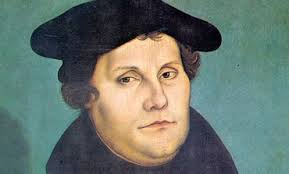
Often heresy and errant theology (which are not exactly the same) are produced by men who are embittered towards God or trying to win the approval of others. In other words, because biography shapes theology (as in the case of Friedrich Schleiermacher), it is possible for bad theology to crop up from some misunderstood crisis in life. At the same time, good theology is sweetened by the grace given in times of suffering. Martin Luther said suffering was essential for making a theologian. A good theologian, by implication, must think rightly about God in trying times. And thus he or she must begin with delighting in the Lord. Continue reading

Looking at the Old Testament on Good Friday


isaacAlthough the centerpiece of the Bible—Christ’s cross—is revealed in the New Testament, we cannot understand its meaning without the Old Testament. Indeed, Paul says Christ’s death and resurrection happened “according to the Scriptures” (1 Corinthians 15:3, 4), which means according to the Old Testament Scriptures. Similarly, Peter says the prophets were led by the Spirit of Christ to “predict the sufferings of Christ and the subsequent glories.” He writes more fully,
Concerning this salvation, the prophets who prophesied about the grace that was to be yours searched and inquired carefully, inquiring what person or time the Spirit of Christ in them was indicating when he predicted the sufferings of Christ and the subsequent glories.  It was revealed to them that they were serving not themselves but you, in the things that have now been announced to you through those who preached the good news to you by the Holy Spirit sent from heaven, things into which angels long to look. (1 Peter 1:10–12)

Peter says something even more radical about the cross of Christ a few verses later:

With the precious blood of Christ, like that of a lamb without blemish or spot. He was foreknown before the foundation of the world but was made manifest in the last times for the sake of you. (v. 20)

The cross wasn’t the tragic conclusion of a series of unexpected events. It was God’s predestined plan to put Jesus to death. Continue reading

Approaching Good Friday and Resurrection Sunday: A Few Video Resources

But when the fullness of time had come, God sent forth his Son, born of woman, born under the law, to redeem those who were under the law, so that we might receive adoption as sons. And because you are sons, God has sent the Spirit of his Son into our hearts, crying, “Abba! Father!” So you are no longer a slave, but a son, and if a son, then an heir through God.
— Galatians 4:4–7 —

Looking for ways to prepare for Good Friday and Resurrection Sunday?

A few years ago Justin Taylor and Andreas Köstenberger teamed up to write a book called The Final Days of JesusIn it they produced a harmony of the Gospels, a “play-by-play” of everything that happened from the day Jesus entered Jerusalem on Palm Sunday to the day of his crucifixion (Good Friday) to the day of his vindication (Resurrection Sunday). This is a great resource, but maybe one to schedule for next year.

In the meantime, consider a shorter series of videos based on the book. In what follows Justin Taylor has teamed up with Köstenberger and a number of other biblical scholars (e.g., Douglas Moo, Grant Osbourne, Nicholas Perrin, and Paul Maier) to lay out the historical background and theological significance of Christ’s final week in eight 4-minute videos. And explanation for the dates and the content of these videos can be found in their book.

As you prepare this Holy Weekend, these videos would be a great encouragement. To watch them all would take less than an hour (approx. 40 min.). In that time you would be greatly encouraged and instructed with how and why Jesus did what he did as he approached his cross, the reason for which he came to earth.

Psalm Sunday, March 29, AD 33.

Monday, March 30, AD 33.

Tuesday, March 31, AD 33.

Wednesday, April 1, AD 33.

Maundy Thursday, April 2, AD 33.

Good Friday, April 3, AD 33.

Saturday, April 4, AD 33.

Resurrection Sunday, April 5, AD 33.

For those in the Woodbridge, Virginia area looking for a Good Friday service, please join us at Occoquan Bible Church at 7:00pm. And if you are looking for a church home, we’d love to have you join us on Sunday (at 9:30am or 11:00am).

Soli Deo Gloria, ds

On Biblical Theology and Interpretation

Christ in OT“Jesus became the direct and primary source of the
church’s understanding of the Old Testament”
— David Dockery, “Typological Exegesis”
in Reclaiming the Prophetic Mantle, 174 —

If reading the Bible well is a passion for you, you will appreciate the reflections of these interpreters of Scripture.


The Text, the Whole Text, and Nothing But the Text. Willem VanGemeren is right when he argues that the historical-grammatical interpretation is the way to read the Bible on its own terms.

Hermeneutics refers to the manner in which we listen to the text, relate it to other texts, and apply it. Hermeneutics calls for a discipline of mind and heart, by which the student of Scripture may patiently study the biblical text in its various contexts, including historical, grammatical, literary, and cultural.  This approach is best known as historical-grammatical analysis. (Van Gemeren, The Progress of Redemption, 27)

The Textual Horizon is not Enough. And VanGemeren is also correct to caution against exegesis which fails to consider the larger framework of the Bible.

The problem with the historical-grammatical method, however, is that students of the Word may be tempted to think that they have control over the text when all they have done is examine its constituent parts—but what grasp do they really have of its message?  Only after seeing how the parts fit together and how they relate to the rest of the book and to the rest of Scripture can the student master the clear message of the text.  Proper exegetical theology, therefore, requires synthesis. . . .

Interpretation also involves equal concern for the Old and New Testaments.  When the two parts of the Bible are held in careful balance, the continual tension between law and gospel, token and reality, promise and fulfillment, present age and future restoration, Israel and the church, and earthly and spiritual only enhances a christological and eschatological focus. (Van Gemeren, The Progress of Redemption, 29, 38) Continue reading

The Wisdom of the Cross: Paul’s Use of Isaiah in 1 Corinthians 1

crossFor it is written, “I will destroy the wisdom of the wise,
and the discernment of the discerning I will thwart.”
— 1 Corinthians 1:19 —

In 1 Corinthians 1:19 Paul quotes from Isaiah 29:14 to make a case that the cross has destroyed and is destroying the wisdom of the wise. This verse sets the trajectory of this pericope (vv. 18–25), and with a second quotation from Jeremiah 9:23 in 1 Corinthians 1:31 (“Let the one who boasts, boast in the Lord”), it frames Paul’s double argument: the cross of Christ humbles the wise (vv. 18–25) and the call of God is for those who see how humble they are (vv. 26–31).

In the context of 1 Corinthians, this is the first of “at least fourteen clear quotations from the Old Testament.”[1]  And as is typical with New Testament quotations of the Old Testament, the verses supply conceptual and linguistic material for the apostles. In Paul’s case,

The backbone of the discussion in 1:18–3:23 is a series of six OT quotations (1:19; 1:31; 2:9; 2:16; 3:19; 3:20), all taken from passages that depict God as one who acts to judge and save his people in ways that defy human imagination. Paul thus links his gospel of the cross to the older message of judgment and grace proclaimed in Israel’s Scripture, and he challenges the boastful pretensions of his readers.[2]

Therefore, to understand the full import of 1 Corinthians 1:19, we must return to Isaiah 29 (and Isaiah 25) to see how that ancient prophet anticipates what Paul says to the Corinthians. In the process, we will learn a few things about how Paul reads the Bible, with an eye to the cross. Continue reading

Reading the Bible Better: What Makes a Valid Chiasm?

chiasm_textStructure is not simply artificial device or literary elegance. It is a key to meaning. Oversight of structure may result in failure to grasp the true theme.
— Ernst Wendland —

This week, I enjoyed participating in my second Simeon Trust workshop. To those who teach the word regularly I can think of few ways to invest three days that will encourage and equip you more in your “Word work.” (You can also find great resources on their website).

At our workshop we focused on Prophetic literature, specifically on the book of Isaiah. Therein, the topic of finding a text’s structure was discussed, which brings us to the point of this post: chiasms.

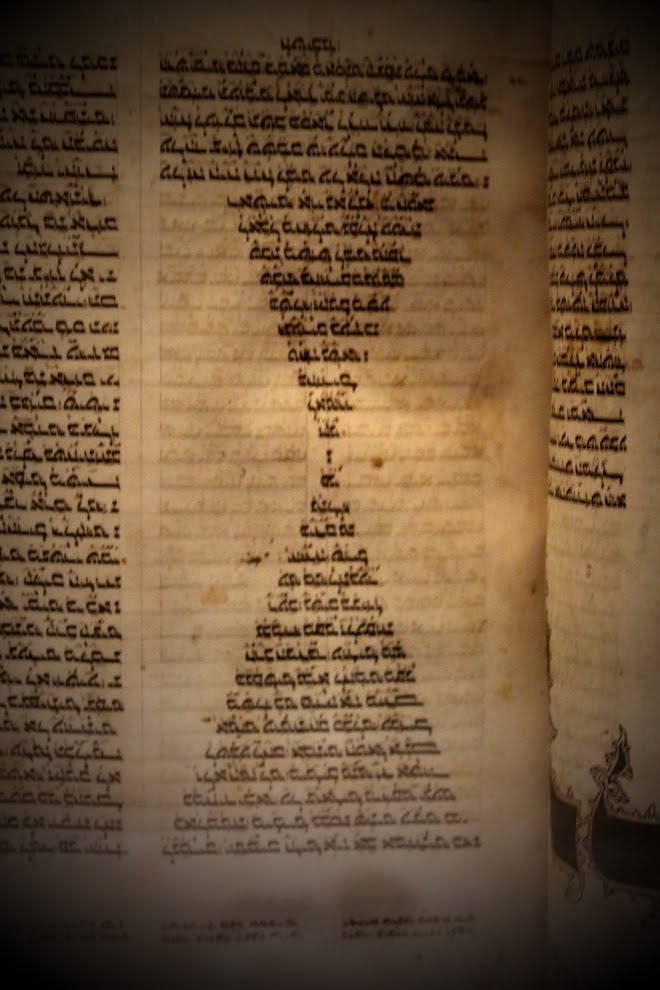
Chiasms are literary structures that shape the words of Scripture in a X-like manner (hence, chiasm for the Greek letter X [Chi]). That is, chiasms work like a series of concentric circles, with an outer ring (A, A’), an inner ring(s) (B, B’), and an emphasized center (C). For instance, Jonah 1 presents a chiasm, with multiple layers.

A The LORD HURLED a storm (4)

A1 The mariners were afraid and joined YHWH in hurling cargo (5a)
A2 Jonah was unafraid and went down to sleep (5b)

B The captain confronted Jonah with God’s Words (‘Arise, call out …)

C The sailors query Jonah (7–8)

D Jonah identifies himself (9)

E The sailors are exceedingly afraid (10a

10b  X Fleeing the Presence of the LORD = God’s Discipline

E’ The sailors want to know what they can do (11)

D’ Jonah suggests that the sailors drown him – repent? (12)

C’ The sailors try to save him and themselves (13)

B’ The sailors call out to YHWH ‘let us not perish’ (14)

A’ The men HURLED Jonah into the sea – the storm stopped (15)

A1’ The men feared YHWH exceedingly (16)
A2’ Jonah was swallowed by a fish (17)

(For other chiasms see Genesis 1–11Matthew 3:1–4:17; 1 Corinthians 11–14).

While most acknowledge the use of chiasms in Scripture, there is greater disagreement on what designates a true chiasm. Put into the form of a question: How do we know when a passage is truly “chiastic” and not just the literary creation of the interpreter? What validates a chiasm? Continue reading

What Does the Bible Say about the Doctrine of Election?

electionIn the Bible, the word “election” is used in a number of ways. For instance, in Matthew 24 Jesus speaks of “the elect” (vv. 22, 24, 31); in Romans 9 Paul explains “God’s purpose of election” (v. 11); and in Ephesians 1:4–6, Paul says the Father “chose us in him before the foundation of the world,” and “in love he predestined us for adoption as sons through Jesus Christ, according to the purpose of his will.” These are but three examples that undergird the doctrine of election.

While debated, the doctrine is plainly biblical. ‘Chose,’ ‘elect,’ ‘election,’ and ‘predestined’ are Bible words. And when they are read in conjunction with passages that speak of God’s unique relationship with his sheep (John 10:26), his children (John 11:51–52), the ones given to the Son before the foundation of the world (John 17), and his appointment of some to believe (Acts 13:48), the evidence for unconditional election is incredibly strong. As George Mueller said of the doctrines that he once thought “devilish,”[1]

Being made willing to receive what the Scriptures said, I went to the Word, reading the New Testament from the beginning, with a particular reference to these truths. To my great astonishment I found that the passages which speak decidedly for election and persevering grace, were about four times as many as those which speak apparently against these truths; and even those few, shortly after, when I had examined and understood them, served to confirm me in the above doctrines.[2]

That being said, my point is not so much to advance a theological argument for the doctrine of election, but to observe more plainly how the Bible speaks of election. As Mueller stated, the New Testament authors assumed election was true. It was, in fact, part of their cultural heritage. The Jewish people were the covenant people because God chose them from among the nations (Deut 7:7). Yahweh blessed apart from the Gentiles (Rom 9:1–3). Accordingly, the doctrine of election is commonplace in the New Testament. Continue reading

The Cross of Christ Shapes Every Area of Life

obc-1 corinthiansYesterday, I preached on “The Wisdom of the Cross” from 1 Corinthians 1:18–25. While most of the message concentrated on the doctrinal message of the cross and its radical contrast to way the world approaches life (i.e., man’s wisdom), I closed the sermon with a handful of quick applications, listed below.

For the church, the cross must be our shared story that shapes our communion.

For individuals, the cross must be the wisdom that shapes every area of our lives.

  • In your hour of decision, let the self-sacrifice of Christ crucify your false desires; let the promise of resurrection embolden you to take God-honoring risks. (Luke 9:23–27)
  • In your hour of temptation, remember you are already dead to sin; sin no longer has dominion over you. (Romans 6)
  • In your hour of faith, praise Christ for purchasing your belief and obedience. (Ezekiel 36:26–27; Ephesians 2:8–9)
  • In your hour of failure, look again to the cross for your pardon and acceptance. (1 John 1:9–2:2)
  • In your hour of prayer, come boldly before God because of Christ’s blood. (Hebrews 4:14–16)

As we go into the week, may we give praise to God for Christ’s work on the cross. And may we continue to center our lives on Christ and his cross. As Paul teaches he is not an additive to our already full lives; he is the wisdom of God to bring our lives in conformity to God’s will.

May Jesus receive all praise and glory, as we live with ever-deepening dependence on the wisdom and power of the cross.

Soli Deo Gloria, ds

Playing (and Not Playing) Sports to the Glory of God

ballNorman Dale: You know, most people would kill to be treated like a god, just for a few moments.
Barbara Fleener: Gods come pretty cheap nowadays, don’t they? You become one by putting a leather ball in an iron hoop. I hate to tell you this, but it’s only a game.

Growing up, Hoosiers was one of, if not my absolute, favorite movie. Its story about the improbably state championship of a small town basketball team  fueled countless hours of basketball drills and hardwood dreams. It also fed my idolatry with basketball, that persisted until the Lord saved me from my sins and my selfish dreams.

In reflecting on sports, I wouldn’t say everyone who dreams of playing college (or professional) sports is sinning. I wouldn’t paint others with the same idolatry I had, but I would say that as my children are just now beginning to come to an age where sports is an option, I’m thinking about sports entirely differently than I did when I was 12 years old. As much as I would enjoy watching my children succeed in sports, I am much more concerned with savoring Christ and serving him as Lord.

I doubt I’m alone. I know many who love Jesus and sports. Indeed, I believe Paul himself had a positive view of athletics. But what Paul says about sports in 1 Timothy 4:7–8 bears repeating today: disciplining ones body for sports was and is secondary to cultivating godliness. Christians who play sports should think and play and participate differently. But how?

If you are wrestling with the role sports should play in your children’s lives, here are some helpful resources. Be prepared, like your ball coach’s end-of-practice wind sprints, they are sure to produce some discomfort. But, as they say, “No Pain, No Gain.” Continue reading

Waters That Unite: Five Truths About Water Baptism

 baptism1Too often baptism is seen as waters that divide. In the New Testament, however, baptism publicly identifies Christians with their Lord and one another. Especially in Paul, baptism is appealed to as a means of unity in the church. Those who have died and risen again with Christ are known by their common baptism (Romans 6:3–6). As Paul says in Galatians 3:25–29, all those who are “one in Christ Jesus” have been “baptized into Christ.” Baptism, therefore, is a means of identifying those who are one in Christ.

This unifying purpose of baptism explains why Paul is emphatic about baptism in 1 Corinthians 1. Instead of unifying the church in Corinth, it was dividing it. In response to the news that the church was fractured by personality cults (“I am of Paul, I am of Apollos, I am of Cephas, I am of Christ,” v. 12), Paul reminds the Corinthians of their unity in the gospel (see 1:17–2:16). He reproves them for they way baptism was playing a part in dividing them, and in the process gives us five truths about baptism. Continue reading