10 Things You Should Know About the Priesthood

priestcolorCrossway has a helpful series of blog articles called “10 Things You Should Know . . .” These articles summarize key ideas from some of Crossway’s recent books. And this week, they posted my contribution about the priesthood.

Here are the first three things you should know. The rest you can find here. The book you can find here. And a sermon series on the priesthood can also be found here.

1. The Edenic origin of the priesthood.

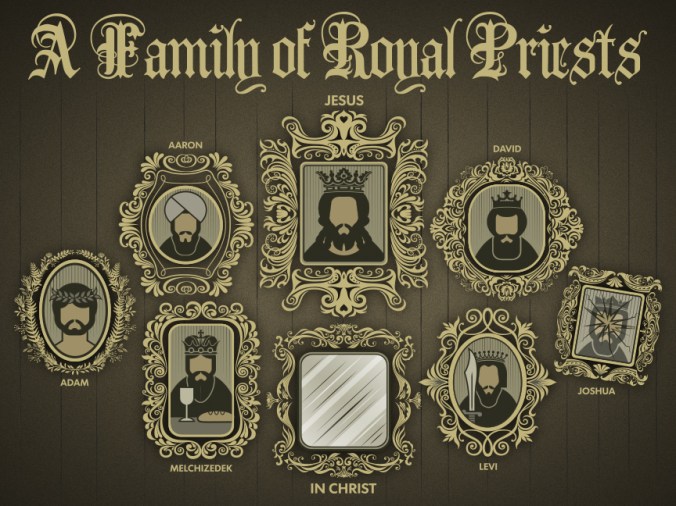
In Eden, God created mankind in his image to reflect his glory. In this setting, God crowned man with glory and honor (Ps. 8:5), authorized him to subdue and rule (Gen. 1:28), and gave him priestly instructions for serving in his garden-temple (Gen. 2:15; cf. Num. 3:8). This is the prototype of royal priesthood from which all other priests will be molded. In other words, when the priesthood is legislated in Israel, it will pick up language and imagery from Eden. At the same time, the Law of Moses divided the royal and priestly roles originally united in Adam. Thus, only a second Adam can unite priesthood and kingdom in a manner similar to Eden.

2. The cosmic fall of the priesthood.

When Adam sinned and fell short of God’s glory (cf. Rom. 1:21–23; 3:23; 5:12, 18–19), God expelled him from God’s garden-sanctuary (see Ezek. 28:11–19), destroying any chance of Adam serving God as priest-king. In the fall, Adam’s sin made sacrifice necessary, as indicated by the events of Genesis 4. Because death was the punishment for sin, blood must be shed. To be certain, the full consequence of sin and the need for a priest would require later revelation to explain (see Leviticus), but it is worth noting the original intent and downfall of the priesthood. For the rest of the Bible, we find a search for someone who could stand before God and serve as a mediator (cf. Job 9:33–35).

The Royal Priesthood and the Glory of God

The Royal Priesthood and the Glory of God

David S. Schrock

David Schrock traces the theme of priesthood throughout the Bible and displays how Jesus, the great high priest, informs the worship, discipleship, and evangelism of the church.

3. The fraternal development of the priesthood.

From Eden to Sinai, priestly ministration continued, but in a very ‘itinerant’ fashion. In the days of the Patriarchs, firstborn sons grew up to be mediators for their families. Job is a good example of this (Job 1:5), as is Abraham. In the Abraham narrative (Gen. 11:27–25:18), we find Abraham building altars (Gen. 12:7, 8; 13:4, 18), interceding for others (Gen. 18:22–33), and obeying God by offering a sacrifice (Gen. 22:1–18). While Abraham and his sons lacked the title of priest, these “priests” play an important role in understanding the earthly “priesthood” of Jesus—a priest in function, but without legal title. At the same time, the priestly service of firstborn sons helps explain Israel’s role as a royal priesthood (Ex. 19:6).

For the last seven points, see Crossway’s 10 Things You Should Know About the Priesthood in the Bible.

Soli Deo Gloria, ds

Isaiah’s Search for Godly Offspring: A Storyline for the Son(s) of God

josue-michel-eCZ24v-sQyM-unsplashAnd what was the one God seeking? Godly offspring.
— Malachi 2:15 —

Maybe’s its odd to start of meditation on Isaiah by citing Malachi, but as I will show, Malachi 2:15 encapsulates a key theme that runs through the book of Isaiah—namely, the presence of godly offspring in the place of God’s dwelling (Zion). From the beginning to the end of Isaiah, the search for godly offspring is a central theme that holds the book together. And if we are going to understand the message of Isaiah—and not just verses from Isaiah—we need to see how it fits together.

The Search for Godly Offspring Begins

When Isaiah begins, he immediately brings us into God’s courtroom, where Yahweh, the sovereign ruler  of the cosmos is bringing a judgment against his people Israel. Isaiah 1:2–4 reads,

Hear, O heavens, and give ear, O earth; for the Lord has spoken: “Children [sons] have I reared and brought up, but they have rebelled against me. 3 The ox knows its owner, and the donkey its master’s crib, but Israel does not know, my people do not understand.” 4 Ah, sinful nation, a people laden with iniquity, offspring [seed/s] of evildoers, children [sons] who deal corruptly! They have forsaken the Lord, they have despised the Holy One of Israel, they are utterly estranged.

Here is the problem: God had redeemed the seed of Abraham in order to make them a kingdom of priests and a holy nation (Exod. 19:6). Yet, by the eighth century B.C., during the reigns of “Uzziah, Jotham, Ahaz, and Hezekiah, kings of Judah” (1:1), the city of God had become corrupt. Jerusalem traded in iniquity, so that wickedness marked all their ways and evil impelled all their intentions. As Isaiah 1:1–18 makes clear, the godly offspring were absent. And as a result, Isaiah 1–5 recall God’s intentions to empty Zion of all wickedness, so that he could once again create sons and daughters who would bear fruit for his glory.

This vision is how Isaiah begins his prophecy, and it helps us to see how the whole book will proceed. That is to say, by paying attention to the overlapping themes of sons and seeds (i.e. offspring), mothers and daughters, childbirth that succeeds and childbirth that fails, we get a clear(er) picture of what God is expecting of Israel and what God is planning to do for his rebellious people.

In truth, anyone who has been around church on Christmas knows the famous verses of Isaiah 7:14 and 9:6–7. But I suspect most don’t know how those verses fit into the structure of Isaiah and how the whole book anticipates the birth of Christ and the new birth promised by him (see John 3).

One way we misread Isaiah is to climb aboard the promise of Immanuel in Isaiah 7:14 and make it a connecting flight to Matthew 1:23. Positively, this approach may heighten our confidence in the predictive nature of the Old Testament—a truth I gladly affirm—but negatively, it fails to understand what Isaiah 7:14 means (in context) and how all of Isaiah is anticipating the virgin birth of God’s Son.

While direct flights are great when traveling from coast-to-coast, they are not advisable when seeking to understand the Bible cover-to-cover. And thus, in what follows I will trace the promise of seeds, sons, childbirth, and motherhood through Isaiah to show how the whole book anticipates the coming of Christ and all those children who will be born by the Spirit—the godly offspring that God has formed in his new covenant people. Continue reading

Doctrine and Life: Let Us Not Divorce What God Has Joined Together

jonathan-simcoe-pSjwUXBMnlc-unsplashKeep a close watch on yourself and on the teaching [doctrine].
Persist in this, for by so doing you will save both yourself and your hearers.
— 1 Timothy 4:16 —

Doctrine and life. Life and doctrine.

In Paul’s first letter to Timothy, he calls his pastoral protegé to embrace both and not let go of the other. And for anyone who cares about life or doctrine, we must also care about the other also. For doctrine without life is dead and life without sound doctrine is leading to death.

In truth, when doing theology, if it does not lead someone to the giver of life, it is dead theology. But simultaneously, life that downplays doctrine is equally deadly. This is why Paul repeatedly refers to sound doctrine in his Pastoral Epistles. He knows that sound (lit. healthy) doctrine does not give life; the Spirit of God does. But anyone born of the Spirit needs to know and grow in the life-giving doctrines of God. This is why he says that by paying attention to doctrine, “you will save both yourself and your hearers.”

Simultaneously, because he knows that knowledge by itself can puff up (1 Cor. 8:1), and that not all studies in the Law are lawful (1 Tim. 1:3–11), he calls for Timothy to guard his life and his doctrine. Too many are the knowledgable theologians who did not guard their lives. And too many are the false professors who have general sense of theology but no life. Thus, we must always pursue doctrine for the sake of knowing the life-giving God. To expound this idea further, let me turn to two theologians who knew both doctrine and life. Continue reading

Who Can Stand Before His Cold? A Biblical Meditation on God’s Snow

black wooden fence on snow field at a distance of black bare trees

“He hurls down his crystals of ice like crumbs;
who can stand before his cold?”
— Psalm 147:17 —

As we sit in Northern Virginia under blue skies and a blanket of snow, we wait for roads to be cleared and power to return. Yesterday, in less than six hours our warm Sunday turned into a cold, icy, snowmaggeddon Monday. And as of Tuesday, many were still waiting to be freed from the accumulated ice crystals on I-95. Let’s pray for them.

For those who do have power, though, but no place to go, perhaps it would be worthwhile to redeem the extra time today with a brief meditation on God’s Word and the power of God’s weather. As Job 37:13 says, “Whether for correction or for his land or for love, he causes it to happen.” What does God cause to happen? Everything in creation. And as this verse implies, nothing happens on the earth that God did not intend in heaven.

Such sovereignty demands our respect. And more than respect, it calls for us to tremble before the One who is our Maker, Sustainer, and Engineer of every snowflake. To aid in that proper response to God, I wrote up this devotion a few years ago, when we were inundated with thirty inches of snow. Today, as we sit waiting warmer days, and praying for the care of those who are suffering cold, we would do well to reflect on the God who made the world and who designed cold to be a means by which we would tremble—physically tremble—before him.

He is God. And we are not. And may our dependence on him in this day and in every snowy (or sunny) day help us to respond to him with reverence and adoration. If you have time, here’s the meditation that traces the theme of snow through the whole Bible. Continue reading

The Word of God Made Possible: What the Reformation Teaches Us About Reading the Bible

kiwihug-L4gw27XZN1I-unsplashFrom the time of Moses until now, God’s people have always been a people of the Book. At times, such Word-centeredness has been lost, as in the Late Medieval period or the Modernist era, but in its healthiest moments the church has prioritized God’s Word and has been blessed as a result.

Today, as we celebrate the Word made flesh at Christmas, and as we make plans for reading the Word in the New Year, it is good to remember why and how we read should Scripture. And so, taking a few notes from our Protestant forebears, we can see how their commitment to God’s Word brought revival to the hearts of those who read Scripture and reformation to the churches who committed themselves to applying God’s Word to every aspect of life.

In what follows, I offer nine quotations from five Protestant Reformers: Martin Luther, Phillip Melanchton, John Calvin, Thomas Cranmer, and Heinrich Bullinger. These quotations come from Mark Thompson’s illuminating chapter on the Reformers view of Scripture in Reformation Theology (RT). May the wise counsel of Luther, Calvin, and others be an encouragement to you, as you pick up the Word of God and read. Continue reading

The Coming of Christ is the Fulfillment of the Pentateuch: A Christmas Meditation on Matthew 1–7

gareth-harper-dABKxsPTAEk-unsplashDo not think that I have come to abolish the Law or the Prophets;
I have not come to abolish them but to fulfill them.
— Matthew 5:17 —

When we say that Jesus fulfilled the law, we often abstract what the law means. That is, instead of letting “the Law” be the five books of Moses (Genesis–Deuteronomy), we often put the law into the paradigm of the law and the gospel, or some other theological construct. Such formulations are good, but they are also one step removed from the biblical text.

In Matthew 5:17, the place where Jesus says that he has fulfilled the law, he actually identifies “the Law” and “the Prophets,” which tells us he has the five books of Moses in mind when he says “law.” Jesus does the same in Matthew 7:12. And throughout Matthew’s Gospel, when Jesus speaks about the Law (see 11:13; 22:40; cp. 5:18; 12:5; 22:36; 23:23), we find an ongoing focus on Moses’s five books. In fact, this focus on the five books of Moses, what we call the Pentateuch, is seen not just in the way Jesus uses the word nomos (Law) in Matthew, but in the way Matthew himself introduces Jesus.

Here’s my thesis: In the first seven chapters of Matthew, the tax collector-turned-apostle presents Jesus as the fulfillment of the Pentateuch. In canonical order, Jesus fulfills each book of the Law in each of the opening chapters of Matthew. Here’s my argument at a glance.

Matthew 1 Genesis Jesus is the New Adam
Matthew 2 Exodus Jesus is the New Moses
Matthew 3 Leviticus Jesus is the New Priest
Matthew 4 Numbers Jesus is the New Israel
Matthew 5–7 Deuteronomy Jesus is the New Covenant

Such a comparison between Matthew and Moses requires a thorough acquaintance with the Law, but for those familiar with Matthew, we know he has an intimate knowledge of the Law and employs it to structure his book and to tell the story of Jesus. And here, as we meditate of the birth of Christ, I want to sketch in brief how the coming of Christ fulfills each book of the Pentateuch. Continue reading

Putting First Things First in the Study of Last Things: Or, How to Find Eschatological Unity in Church

robert-bye-6PLB5SKWiIY-unsplashEschatology, by its etymology, is “the study (logos) of last things (eschatos).” Yet, when we let the Bible, instead of the Bible dictionary, define eschatology, we find a different priority and wider application than just fixing our attention on the end of time. As G. K. Beale helpfully reminds us, “The apostles understood eschatology not merely as futurology but as a mindset for understanding the present within the climaxing connection of redemptive history” (in Making All Things New: Inaugurated Eschatology for the Life of the Church, 4).
In other words, as I tell my theology students, eschatology begins in the beginning of the Bible and carries the storyline until the end. As Isaiah 46:9 says, God was planning the “final things (eschatos) before they happen” (LXX). And thus in Genesis 1–2, the setting (Eden), the commission (subdue and rule), and the command (be fruitful and multiply) are all realities that point to the end or goal of creation. Just compare Genesis 1–2 with Revelation 21–22.

As we know all too well, the First Adam failed in his duties, and set the stage for a long history of redemption. Into that history God spoke promises that would come to fulfillment at the end of time. And as most evangelical scholars agree, the end of time (i.e., the latter days) broke into the present in Christ’s death and resurrection. Accordingly, we who follow Christ, as well as those who currently reject him, live in a time between the times—the end has come, but the end is still coming. This is sometimes called the “already” and “not yet.”

Eschatology, therefore, is not just a study of what is going to happen in the future. As the New Testament shows again and again, the future has already begun (see Acts 2:17; Heb. 1:2; 9:26; 1 Pet. 1:20). At the same time, not all the promises of God have reached the final consummation, and so we await our blessed hope in the return of Christ and labor in his vineyard until he comes. And part of that labor includes studying the Word of God and understanding what eschatology is and is not. Yet, the study of eschatology often produces more heat than light, and local churches are often perplexed by how to best unite over the varied interpretations of the rapture, the millennium, the future of Israel, etc. What are we to do? Continue reading

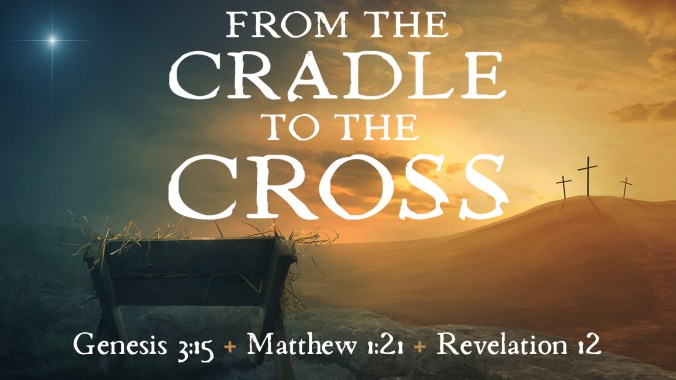
The Seed of the Woman Has Come: The Real Reason for the Season (Genesis 3:15)

1920x1080 Cradle

15 I will put enmity between you and the woman, and between your offspring and her offspring;
he shall bruise your head, and you shall bruise his heel.”
— Genesis 3:15 —

When we lived in Indiana, our parsonage was located next to the church. The church sat at 1200 North Ewing, our home was next door at 1202 North Ewing. At the same time, our house sat next to a snake pit. And to be clear, I’m not talking about the church. Rather, I am referring to the swamp-ish depression that ran alongside the parking lot, what we might call 1198 North Ewing.

Indeed, right next to the church building, the place where the bride of Christ would gather every Sunday, there was a nesting-ground for snakes. It was very much like Genesis 3. And how did we know that we had a snake infestation?

Well, every year, we had snakes in our garden, on our driveway, and in our house. And during the five years we lived there, I became quite skilled at picking up the shovel and beheading the snakes that drew near.

Now, why do I bring up snakes, especially as at Christmas time? The answer is that Christmas is often filled with trees and lights, but not enough trees and snakes. It’s like we get our messaging about Christmas from the Victorian Era of Charles Dickens, instead of letting the victory of Christ over the serpent be the reason for the season.

And so, to make Christmas more meaningful, I suggest we add a few pictures of dead snakes to our holiday decorations. Let me know if you have a crafty friend on Etsy who can work that up for us.

For as strange as it sounds to think about snakes at Christmas time, the fulfillment of Genesis 3:15 is why we celebrate the birth of Christ. His birth in Bethlehem is but the first step for the Son of God towards the cross on which he would hang like the bronze serpent (see John 3:14–15). And by keeping the impaled serpent in view at Christmas time we are reminded that the babe born in a manger is the Victorious Warrior who now reigns on high.

In truth, Christmas is a war memorial. Or at least, we discover the military imagery as soon as we read the birth story in light of the Big Story. In fulfillment of all the Old Testament prophecies (see Isa. 7:14; 9:6–7; 11:1ff.; etc.) we celebrate at Christmas the arrival (read: invasion) of God’s king entering the enemy occupied territory.

Accordingly, the goal of Christmas is not to merely coo over baby Jesus, but to bow down before him as the King of kings and Lord of lords. For it is the victorious Christ whose birth we celebrate. And we celebrate his birth because in his life and death, we finally see the head of the serpent crushed, just as God promised at the very beginning.

The Seed of the Woman

The first promise of the gospel, the protoevangelion found in Genesis 3:15, was the theme of this week’s sermon. And in that sermon, I tried to show how this promise is enlarged and illustrated in the history of Israel. And for those celebrating the birth of Christ this year, this sermon outlines how the birth of Christ begins to fulfill the promise of the seed (singular) of the woman coming to crush the seed of the serpent, and thereby saving the seed (plural) of the woman.

This is a gospel promise that runs from Genesis to Jesus and one that is outlined in the chart below and in the sermon entitled “The Seed of the Woman.” Indeed, as Christmas draws near, may we celebrate the fact that the babe born in Bethlehem is the killer of serpents and victorious warrior-king. Continue reading

Typology That Is True to the Text: What Elijah and Elisha Point Out for Modern Interpreters of Scripture

roadway sign in desert land

How does typology work? Is it something that we do when we interpret Scripture? Or, is it something that Scripture does and we recognize when we read and interpret? In other words, is typology a method of interpretation, distinctive from a literal interpretation and similar to an allegorical method? Or, is typology something that is inherent to Scripture itself?

This is no small question. Volumes have been written to debate the point. And for more than the last decade I have thought about, written about, and preached about this very thing. It my conviction, outlined in a forthcoming article co-written with Sam Emadi, that typology is found in Scripture and it not something that the interpretive community brings to Scripture. To illustrate, consider the storyline of Elijah and Elisha. Continue reading

Regeneration Precedes Faith: Six Passages in Paul That Prove Faith is a Gift

photo-1416958672086-951aa7064010 2Continuing the theme of monergism in salvation, we come to the debate regarding faith and regeneration. Does regeneration empower faith? Or does faith produce regeneration? Both are necessary for salvation, but what is their relationship? And how do we know?

Historically, Reformed theologians have understood faith as a divine gift to God’s elect, a gift that was planned in eternity, purchased at the cross, and personally granted in regeneration. By contrast, Arminians, Wesleyans, and other advocates of free will aver that faith is possible for all men and hence is not a special gift of grace to God’s elect, but a gift of grace to all who would freely receive it.

As one who gladly affirms a Reformed view of salvation, I believe this latter position minimizes the work of God in salvation. Instead of putting man’s final destiny squarely in the hands of God, an Arminian view conjoins the work of God and man. Theologically, this undermines grace. Pastorally, this contribution of faith produces (or leaves unchanged) man’s inveterate thirst for self-determination and creates communities that lack a spirit of humility. In God’s grace, other doctrines may ameliorate these realities or produce humility. But, by and large, a church that teaches—explicitly or implicitly—that you are capable of making such a decision for Christ impedes the humility which the gospel is meant to foster (see Rom. 3:27–30).

So, how we understand God’s work of salvation matters immensely for our sanctification, discipleship, and Christian fellowship. Still, it must be a doctrine derived from Scripture and not from tradition alone. To that point, we might ask: Where do we find teaching that says regeneration precedes faith and/or that faith is a gift of God? Good question. And in Paul’s Epistles, we find at least five passages that teach us that faith is a gift. Let’s consider each below. Continue reading