Exploring Kenotic Christology: A Book Review

kenoticc
 
This review goes back a couple years, but it gets at an issue that continues to be espoused—namely the idea that Christ “emptied” (kenosis) himself of some of his divine attributes.

Evans, C. Stephen (ed.).  Exploring Kenotic Christology: The Self-Emptying of God.  New York: Oxford University Press, 2006. 360 pp. $34.95.

Exploring Kenotic Christology is a compilation of 12 essays edited by Stephen Evans.  From start to finish the goal of the book is to make a place for the “kenotic view” of Christ’s incarnation alongside, or in replace of, the “classical view.”  Introducing the writers, Evans writes, “Most of the authors can fairly be described as advocates of kenotic Christology, at least in the sense that they are convinced that this approach is a promising one to explore, even if not all of them are convinced of its final adequacy” (5).

In the assigned essays, this statement holds up.  While making a case for kenosis as a viable doctrinal interpretation, the authors do so with modesty and regard for the history of the church.  They recognize their position as the minority view and are very conscious of the Councils of Nicea and Chalcedon.  They frame their works within the boundaries prescribed by these historic councils, and they seek to demonstrate how their views better develop the confessions of 325 and 451.

The topics in this book range from biblical interpretation to doctrinal formulation, historical and systematic, to philosophical implications and complications.  The dialogue centers around classic Christology, that which has been espoused since the early church, and the more recent development of kenotic Christology.  Thomas Thompson chronicles the rise of this theory in 19th century Germany with Gottfried Thomasius “first articulating this new approach” (78).  His name, along with Wolfgang Gess and Hugh Mackintosh, are mentioned frequently in the book as the forebears of this approach.

The differences between the classical view and the kenotic view are as follows: Classical Christology posits that when the Son of God became man, he added humanity to his divine nature, but he never lost any of his divine attributes.  His deity was veiled in humanity, but he was all the while God incarnate.  This view follows the Chalcedonian formula of “one person, two natures” and has been explicated through the centuries by theories such as Thomas Morris’ two minds view.  Often this approach appeals to mystery and ineffability when considering how humanity and deity coinhere, and when more specific details are pressed theologians often appeal to the communication idiomatum.  While giving an answer for how deity and humanity are conjoined in Christ, kenotic Christology wants to go further.

Appealing to the term ekenosin in Philippians 2:7, kenotic Christology emphasizes Christ’s “emptying.”  It is not that the Son took on flesh (cf. John 1:14), but in order to do so he had to leave behind certain properties or aspects of deity.  Looking to explain the manner in which deity took on humanity, kenoticists are dissatisfied with appeals to mystery.  They appeal to the Bible to find ways of describing God the Son’s humiliation.  They charge classical views with grounding their claims in views of God that are found outside the Bible—in natural theology and philosophical presuppositions of what God must be like.

Assessing their arguments, it seems that a kenotic view of Scripture does agree with orthodoxy.  Mackintosh’s four axioms, for instance, suppose “(1) the deity of Christ; (2) his personal pre-existence; (3) his true humanity; and (4) the unity of his person” (91).  Likewise, Gordon Fee’s chapter, “The New Testament and Kenosis Christology” appeals to Philippians, Hebrews, and the Synoptic Gospels to support his doctrinal claims.  Likewise, the overall argument of the book, while recruiting philosophy and theology, does aim at explicating Scripture.  In fact, some of the arguments against classical Christology’s reliance on natural theology and philosophy, while narrow, have a certain Sola Scriptura appeal.  So there are positive elements to the book.

With that said, there are some troubling features as well.  First, many of the authors appeal to God’s self-limitation to explain how the Son could “empty” himself.  They admit to the (temporary) loss of divine attributes of omniscience or omnipotence and explain it by God’s divine power to limit himself.  However, this radically reshapes who God is and opens the door to all kinds of unwanted entailments.  Open Theism being just one.

Second, with self-limitation comes a whole new formulation for God.  Kenotic Christology is willing to redefine immutability, simplicity, and even our understanding of the Trinity to a more social model.  In fact, the whole subject of divine attributes is brought into question, so that God’s “omni’s” may be accidental attributes, not essential.  This radically deforms Christianity’s understanding of who God is.  While they appeal to the Bible for a more “biblically informed” doctrine of God, they disregard these doctrines too easily.  They construe them as extra-biblical accretions from the natural theology of Anselm and others.

Third, while rejecting classical views of God and the incarnation on the basis of faulty philosophical positions, Evans et al are just as guilty.  Frequently, Evans sequesters free will theism and incompatiblistic freedom to advance his argument, yet in doing so he relies on a faulty belief system.  These Arminian notions do not best articulate Scripture’s teaching about God, his creation, and the people made in his image. Therefore, any doctrine built on their foundation will be skewed.

Overall, the kenotic model, while picking up many important and biblical elements of Christ’s incarnation, does not make sense of all the biblical data.  It keys in on the change in the incarnation, but it does not retain Christ’s unchanging deity (cf. Heb. 13:8; Col. 1:19; 2:9)  Even in the primary prooftext, Philippians 2:7, kenotic proponents fail to recognize that “emptying” is coupled with addition, “taking on the form of a bond-servant.”  Therefore, to single out Christ’s loss is to consider only one side of the equation.

Likewise, the systemic effect of reshaping other doctrines to fit this model demands too much.  Better to synthesize the self-sacrificing, humbling work of the incarnation with the unchanging, all-glorious, omnipotent Son of God, than to throw out his deity because it makes more sense.  There is a mystery to the incarnation and one that should be explored, but one that should not minimize Christ’s deity or devalue his humanity.  In the end, the kenotic theory of the incarnation does the former, it brings into question the sustained deity of Christ and it misshapes the whole Godhead.

Soli Deo Gloria, dss

B. B. Warfield and the Second Beatitude

warfieldNinety-three years ago today, Benjamin Breckenridge Warfield, a native of Kentucky and a world-renowned theologian went to be with the Lord. His death came six years after his wife’s, a woman who had spent years bedridden in their home in Princeton, New Jersey.

Nearly fifty years earlier (1876), Warfield had married Annie Pearce Kinkade. She was the descendent of Revolutionary War hero, George Rogers Clark. And when they wed, they were ready for a lifetime of happiness together. Presumably Warfield would teach; Annie would tend to the home and raise children.  I say presumably, because such were not the circumstances God gave them. Continue reading

Can Anything Good Come From Geneva?

reformersToday, Kevin DeYoung asked the question, “What Do You Think of When You Think of the New Calvinism?” His response would be like mine. I am grateful for the men, Reformed in their soteriology, who have enlarged my vision of God for the last decade. Without them, I would still be an open theist (or worse), struggling with the anxieties that come from a misshapen view of God. Instead, because of the ministries of John Piper, Albert Mohler, and Mark Dever—to name only a few—I stand ready to rejoice in the Lord and risk on his behalf. And I stand, not because of my own strength, but because of the strong hand of the Lord who upholds me.

Now there are many, some of my closest brothers in Christ, who do not agree with me on the value of Reformed theology. For many there is suspicion, uncertainty, and diffidence towards ‘Calvinism’ and the men and women who assume the name ‘Calvinist.’ To echo the words of Nathanael, they might ask, “Can anything good come from Geneva?”  Continue reading

Calvin, Indefinite Language, and Definite Atonement

lambIn his chapter on “Calvin, Indefinite Language, and Definite Atonement,” Paul Helm observes that Calvin’s universal language is pastoral in nature and necessary (and biblical) because of humanity’s epistemic condition. In other words, because humanity is ignorant of the future, the decree of God, and who God’s elect are, it is most appropriate for the pastor (and all Christian witnesses) to offer the gospel freely to all people. In fact, it is spiritually dangerous to call men and women to look for evidences of grace in themselves as ‘pre-conditions’ for election. Rather, following Calvin’s teaching, one’s election can only be known in the mirror of Christ.

On this point Helm quotes Calvin who rightly observed,

But if we are elected in him, we cannot find the certainty of our election in ourselves; and not even in God the Father, if we look at him apart from the Son. Christ, then, is the mirror in which we ought, and in which, without deception, we may contemplate our election. For since it is into his body that the Father has decreed to ingraft those whom from eternity he wished to be his, that he may regard as sons all whom he acknowledges to be his members, if we are in communion with Christ, we have proof sufficiently clear and strong that we are written in the Book of Life. (John Calvin, Institutes of the Christian Religion3.24.5, quoted in Helm, “Calvin, Indefinite Language, and Definite Atonement,” From Heaven He Came and Sought Her118)

Accordingly, may we look unto Christ today. The invitation to come is available to all, and all who come will discover God’s covenant love that he set on his elect before the foundation of the world.

Soli Deo Gloria, dss

Christ’s Priesthood and Definite Atonement

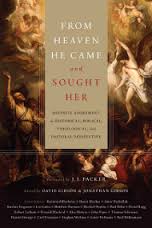
from heavenLast month, Justin Taylor interviewed a number of the contributors to the new book, From Heaven He Came and Sought Her: Definite Atonement in Historical, Biblical, Theological, and Pastoral Perspective, edited by David Gibson and Jonathan Gibson. One of the questions concerned how Christ’s priesthood might relate to the extent of the atonement. In the book, Wellum develops this biblical-theological theme to argue that a right understanding of Christ’s priesthood necessitates a definite atonement.

I could not agree more. I spent the last four years talking to him about the matter on a weekly basis. At the same time, I wrote my dissertation arguing the same point. In my estimation, the “priestly argument” is the missing link in the exegetical case for definite atonement. While many have made biblical cases against the logical step from penal substitution to definite atonement, it is the priestly office that requires both.

To familiarize yourself with the priestly argument, consider Wellum’s brief answer and then keep your eye out for Wellum’s chapter in From Heaven He Came and Sought Her. 

JT: What is the connection between Christ’s priestly ministry and definite atonement?

Stephen Wellum: In Scripture, the relationship between the role of the High Priest and the act of atonement is tight. Under the old covenant, the High Priest serves as the mediator for a particular covenant people. We see this on the Day of Atonement where the High Priest has the incredible privilege of entering into the Holy of Holies, on behalf of the people and as the covenant mediator of Israel. But it is important to note that the Priest’s act of sacrifice and intercession is a definite work.

As our Lord Jesus brings all of this to fulfillment, this same particular work is stressed. Christ is the new covenant head, mediator, and its great High Priest. As the new covenant head, his work is specific and effective for all those in that covenant. However, Scripture also teaches that everyone without exception is not in the new covenant. All people enter this world in Adam and under the dominion of sin, and it is only by Christ’s priestly work and the Spirit’s application, that we are transferred from Adam to Christ. The priestly and covenantal categories of Scripture demand that we view Christ’s work as definite.

I totally agree, and wrote my whole dissertation under Dr Wellum, attempting to tease this out from all of Scripture. Therefore, I find it interesting that to date, I have not found a substantive refutation of the priestly argument. Let me know if you know of any.

For opposing views on From Heaven He Came and Sought Her, see the reviews of Jason Duesing and Robert Yarbrough. Interestingly, in his helpful review, Duesing does not address (read: have space to address) Wellum’s chapter. For those who have read the book, or may read the book, I’d be interested to hear what you think.

Soli Deo Gloria, dss

The Doctrine of the Trinity: Three Perichoretic Persons

trinityA few weeks ago I began a three part series on the Trinity. The first post affirmed God’s oneness. The second began to explicate how the one God is three persons. Today, I finish my series by looking at how the one God in three persons lives and moves in the world he created.

In Perfect Motion: How the Father, Son, and Spirit Work in the World

Because God created the world outside himself, creation is not a part of God. Yet, God in his omnipresence is present to bless, or curse, or to sustain his creation. In all places, at all times, and without diffusion of his deity or fluctuation of his power, God is active in the world.

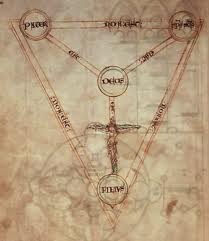
However, as a triune God, each member of the Trinity performs a unique but unified role in creation. Together Father, Son, and Spirit created the universe; they preserve the cosmos; and they effect salvation for all the ones whom the Father gave the Son before the foundation of the world (see John 17). In short, their external activities are as harmonious, congruent, and seamless as their internal essence. Continue reading

The Incarnation: Getting a Handle on Five Heresies

cappadociansYesterday, I gave a short introduction to a number of terms related to the Incarnation of our Lord. Today, I want to offer a short description of five heresies that have infected the church throughout the centuries.

These five heresies are named after four people (Arius, Apollinarius, Nestorius, and Eutychius—can you tell these guys aren’t from Kansas?) and one Greek word (dokein meaning “to seem” and dókēsis meaning “apparition, phantom”). These heresies are related to one another in history, and some of them actually came by means of trying to correct another. What I have spelled out below is but the simplest explanation of each term, with practical application at the end. Continue reading

More Than Baby Talk: A Primer on the Incarnation

gloryPutting our children to bed is always a precious time to read the Bible, sing hymns, and talk about the day. But precious as it is, it is not always simple.

A few days ago, as our five year old was minutes from dream land, he began asking questions about Jesus’ birth. I listened to my wife explain that Jesus had always existed. And I heard him respond, “Yes, but he was also born,” exposing the challenge that if Jesus was born than he must have had a beginning. Right?

Perhaps, we have the making of a little Arian in our home (as in Arius from the fourth century Africa, not the Third Reich in twentieth century), or perhaps he is simply experiencing the challenge that we all face when we begin to press into the incarnation of Jesus Christ. What does it mean that the eternal Son of God who was with God before the beginning of time (John 1:1) took on flesh and became a man in time?

The Incarnation

The subject of the incarnation is puzzling for adults let alone little boys with active imaginations. Continue reading

Prolegomena Matters: Engaging with Michael Bird’s Evangelical Theology

prolegomenaYesterday, I posted my review of the first section in Michael Bird’s Evangelical Theology: A Biblical and Systematic IntroductionAs with most theology textbooks, Bird opens with a discussion of how to do theology. In theological circles this is called the prolegomena and it portends to how the rest of the book will be developed.

As I mentioned in that review, I am encouraged by his focus on the gospel but concerned about how he is actually going to do his theology. In my review I mentioned in passing four general concerns. Today, I want to substantiate those concerns. Continue reading

Evangelical Theology’s Prolegomena: Strong on the Gospel, but Suspect on Its Sources

ET

Michael F. Bird. Evangelical Theology: A Biblical and Systematic IntroductionGrand Rapids: Zondervan, 2013. 912 pp. $49.99.

This month marks the release of Michael Bird’s new book, Evangelical Theology: A Biblical and Systematic Introduction (henceforth, ET). Professor Bird is lecturer in theology at Ridley Melbourne College of Mission and Ministry in Melbourne, Australia. He is the author of numerous books on topics ranging from the person of Christ to a commentary on Colossians—of which I gave high praise a few years ago. He also blogs at Euangellion.

Technically, Bird is a New Testament scholar. And yet, like another biblical scholar-turned-systematic theologian (Wayne Grudem), Bird is presenting the church with gospel-driven theology that stands on his careful exegesis. Yet, his book is not so much a desire to give an exegetical theology as much as he has written his book to provide an evangelical theology. You can see him speak to the need for a truly “evangelical” theology in the following video.

As a part of Zondervan’s blog tour, I’ve been commissioned to review the introductory section of ET, what is known as the prolegomena (“first words”). Fulfilling that commission, let me outline my review under three headings: (1) a summary of the section, (2) the strength of Bird’s gospel-centrality, (3) the stumbling block of his sources. Continue reading