Waters That Unite: Five Truths About Water Baptism

 baptism1Too often baptism is seen as waters that divide. In the New Testament, however, baptism publicly identifies Christians with their Lord and one another. Especially in Paul, baptism is appealed to as a means of unity in the church. Those who have died and risen again with Christ are known by their common baptism (Romans 6:3–6). As Paul says in Galatians 3:25–29, all those who are “one in Christ Jesus” have been “baptized into Christ.” Baptism, therefore, is a means of identifying those who are one in Christ.

This unifying purpose of baptism explains why Paul is emphatic about baptism in 1 Corinthians 1. Instead of unifying the church in Corinth, it was dividing it. In response to the news that the church was fractured by personality cults (“I am of Paul, I am of Apollos, I am of Cephas, I am of Christ,” v. 12), Paul reminds the Corinthians of their unity in the gospel (see 1:17–2:16). He reproves them for they way baptism was playing a part in dividing them, and in the process gives us five truths about baptism. Continue reading

A Better Understanding of Baptism

baptismBobby Jamieson is a clear thinker and compelling writer. He is also a good friend. But it’s not his friendship that impels me to commend his two books. Rather, it is the fact that I think his two books on baptism (Going Public: Why Baptism is Required for Membership and Understanding Baptism) succeed in answering the question: If baptism doesn’t save, why does it matter?

In a day when church membership is often taken lightly and popular ecclesiology focuses on activities and attractions more than exegetical essentials, Jamieson’s two books explain why Scripture requires baptism and why churches need to reclaim the value of this ordinance.

In what follows, I want to highlight three arguments from Understanding Baptism addressing three different kinds of people. First, he makes a case for why Christians reticent to be baptized should be baptized. Second, he explains why baptism is necessary for membership. And third, he shows how membership in the local church is the natural result of baptism.

In truth, this blog can’t do justice to all the Scripture Jamieson considers in his two books. Rather, if you find yourself in one of these camps—(1) an unbaptized believer, (2) baptized but not (intending to become) a church member, or (3) a member indifferent towards baptism—my aim is to spur you on towards picking up his book and going to the Bible to see what it says about baptism and the church. Continue reading

How Does the Church Glorify God?

church Now to him who is able to do far more abundantly than all that we ask or think, according to the power at work within us, to him be glory in the church and in Christ Jesus throughout all generations, forever and ever. Amen. 
— Ephesians 3:20-21 —

A close reading of Scripture shows that God pursues his glory in all areas of life. In creation and redemption, heaven and earth, the world was made to bring him glory. It is not surprising, therefore, to find Paul praying that God would get glory in the church. But what does it mean?

What does Paul mean when he prays, “to him be glory in the church and in Christ Jesus throughout all generations” From the context of Ephesians, I would suggest there are at least three ways the church uniquely glorifies God.  Continue reading

Is God the Author of Sin?

stormIs God the author of sin?

This question has been asked often in the history of Christian doctrine. Some theologians, ostensibly embarrassed by God’s absolute sovereignty and what that means for sin deny his total control of the universe.  For instance, open theist Gregory Boyd writes,

Jesus nor his disciples seemed to understand God’s absolute power as absolute control. They prayed for God’s will to be done on earth, but this assumes that they understand that God’s will was not yet being done on earth (Mt. 6:10). Hence neither Jesus nor his disciples assumed that there had to be a divine purpose behind all events in history. Rather, they understood the cosmos to be populated by a myriad of free agents, some human, some angelic, and many of them evil. The manner in which events unfold in history was understood to be as much a factor of what these agents individually and collectively will as it was a matter of what God himself willed. (God at War:The Bible and Spiritual Conflict53)

By contrast, others like Augustine of Hippo (5th C.), John Calvin of Geneva (16th C.), and Jonathan Edwards of New England (18th C.) have affirmed that God who never does evil still permits, decrees, and even employs evil so that his larger purposes of grace and glory might be accomplished.  On this Edwards says in his treatise on The Freedom of the Will,

If by Author of Sin, be meant the Sinner, the Agent, or the Actor of Sin, or the Doer of a wicked thing; so it would be a reproach, to suppose God to be the author of sin. In this sense, I utterly deny God to be the author of sin. . . . But if, by Author of Sin, is meant the permitter, or not a hinder to Sin; and at the same time, a disposer of the state of events, in such a manner, for wise, holy and most excellent ends and purposes, that sin, if it be permitted or not hindered, will most certainly and infallibly follow: I say, if this be all that is ment, by being the Author of Sin, I do not deny that God is the Author Sin, (though I dislike and reject the phrase, as that which by use and custom is apt to carry another sense) it is not reproach for the Most High to be thus the Author of Sin.” (p. 246).

Rightly, God is not evil and thus in his creative agency cannot do evil. Yet, in his divine sovereignty over time and space, he can “permit,” “ordain,” and even “author” sin in a way analogous to the way Shakespeare blamelessly authored the death of Macbeth. An author is not morally culpable for writing into their script the acts of evil men—whether fictitious (as in the case of Shakespeare) or real (as in the case of our Triune God). Therefore, since God did declare the end from the beginning (Isa 46:9–10), he wrote into the Script—what theologians call “his will of decree”—a world created inestimably good, ruined by sin, restored by his Son. Continue reading

Theology is Not Just for Theologians

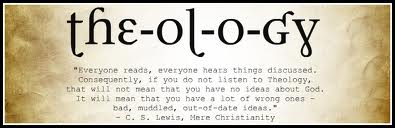
theology

In other words, The­ol­ogy is prac­ti­cal: espe­cially now.
In the old days, when there was less edu­ca­tion and dis­cus­sion,
per­haps it was pos­si­ble to get on with a very few sim­ple ideas about God.
But it is not so now. Everyone reads, everyone hears things discussed.
Consequently, if you do not listen to Theology, that will not mean
that you have no ideas about God [i.e., theology].
It will mean that you have a lot of wrong ones —
bad, muddled, out-of-date ideas.
— C.S. Lewis —

Theology rightly understood is not a tangential part of Christian faith; it is the source, strength, and substance of vibrant faith. As A. W. Tozer famously said, “What comes into our minds when we think about God is the most important thing about us” (Knowledge of the Holy1). This is the core of theology—thinking God’s thoughts after him. And true theology is thinking biblically-informed thoughts about God. Theology is not an academic discipline consisting of esoteric terms, but sound doctrine that gives life and strength to every child of God made alive in Christ.

Sadly, this way of thinking about theology is often missed. Even among pastors, those called to instruct in sound doctrine, there is a sense in which theology is secondary to the real work of the ministry. Evangelism, discipleship, worship services, and church growth are elevated above “theology,” but only because they assume that each discipline and practice of the church is a-theological. In the short run, such doctrinal inattention may not create observable problems, but in the long run it will.

Paul understood this and that is why he writes in 1 Timothy 4:16: “Keep a close watch on yourself and on the teaching. Persist in this, for by so doing you will save both yourself and your hearers.” Faithful shepherds and growing sheep follow Paul’s model and give appropriate emphasis to theology as it informs and energizes spiritual life. In fact, close attention to the New Testament shows that wherever the apostles are giving practical instruction, they are doing so from deeply theological wells.

Mark Dever, in the preface of his book on 1 Corinthians (Twelve Challenges Churches Facemakes this very point. Continue reading

Don’t Waste Your Blizzard: A Snowy Meditation on God’s Power and Purity

snow“He hurls down his crystals of ice like crumbs;
who can stand before his cold?”
— Psalm 147:17 —

10:00am on Saturday: With sixteen inches on the ground and sixteen hours left of Jonas I look outside my window and think: “Who can stand before his cold?”

10:00am on Sunday: Unable to gather with our church family, what can I say to my children about the blizzard of 2016? How can I help them know the God of creation and redemption, through this memorable storm? How can we pray for those suffering under its effects?

What follows is a biblical theological long-read on what Scripture says about snow, icy cold, and winter weather, along with a short family devotional for anyone interested.

(No) Snow in the Beginning

In the beginning, there was water but not snow. On the second day God separated the waters in the sky from the waters on the earth (Gen 1:6–8); on the third day he gathered the waters on the earth, forming the dry ground (Gen 1:9–10). In Genesis 2, we learn “mist was going up from the land watering the whole face of the ground” (v. 6) and “a river flowed out of Eden to water the garden, and there is divided and became four rivers” (v. 10). So before Adam sinned (Genesis 3) and God subjected the earth to futility (Romans 8:18–22), the had plenty of water, but no subzero temperatures to create ice crystals and snow squalls. Continue reading

For His Name’s Sake: Why the Church Must Do More Than Local Evangelism

worldThere is a popular argument that persists among American evangelicals that prioritizes domestic evangelism over against international missions. Often it is put in the form of a handful of questions:

  • “Why should we spend our time reaching the lost overseas when there are so many lost in our community?”
  • Or, “Why spend our money on foreign missions when there are millions nearby who need to hear the gospel?”
  • Or, “Wouldn’t it be more effective to focus on the lost here?”

On the surface such an argument may sound plausible, even effectively evangelistic. It certainly appeals to the pragmatic. But examined by the Scriptures, it will not hold. For Scripture does not simply speak of evangelism in commercial terms—finding the fastest way to sell the gospel to the most number of people. Regularly, it speaks of the advance of the kingdom crossing boundaries, reaching nations, and extending the glory of God to the ends of the earth. In fact, the glory of God depends not only on the vastness of redemption, but its variety. Therefore, for those who care about God’s glory should also care deeply about reaching the nations.

Continue reading

With Assurance and Affection: A Primer on How to Read Scripture

bibleWith the final seconds of 2015 ticking down, some bookish people are considering what they will read next year. Those who prize the Bible above all books are considering what reading plan they should adopt in 2016. At our church, we recommend three different reading plans for three different kinds of people (see Ben Purves’s blogpost). I will have more tomorrow on reading plans for those who don’t like to read.

For today, I want to tackle a different question: How will you read the Bible in 2016?  Continue reading

Creation, the Trinity, and the Incarnation: What “God with US” says to “ME and God”


manger “Behold, the virgin shall conceive and bear a son,and they shall call his name Immanuel”(which means, God with us).
– Matthew 1:23 –

At Christmas, we remember the Eternal Son of God took on human likeness, so that the people made in his image might be reunited with their Maker. Most often when we consider the birth of Christ, we focus on the historical details—and rightly so. But it is equally appropriate to consider what the Incarnation teaches us about the Trinity and how the Trinity (God’s one-in-threeness) teaches us to reject self-centered individualism in order to live in new covenant community. Continue reading

My ETS Presentation: “You Can Make Me Clean,” The Matthean Jesus as Priest and the Biblical-Theological Results

ets

Update: This paper has been accepted for publication in a future edition of the Criswell Theological Review.

Tomorrow, my good friend Nicholas Piotrowski and I will present our paper (“You Can Make Me Clean”: The Jesus as Priest and the Biblical-Theological Results). Our argument in brief is the Gospel writers, and Matthew in particular, presented Jesus in priestly actions, even as they  withhold the title “priest” from him. Our test case is the healing of the leper in Matthew 8:1–4, where Jesus proves to be a greater priest than the sons of Levi who were supposed to adjudicated cases of leprosy (Leviticus 13–14).

We’ve been working on this paper, a mashup from our two dissertations, for the last two years—yes, that’s how academic writing goes. We’re convinced that this minority view shines light on the way the Gospels are written and even more on the work that Christ did in his earthly life and sacrificial death.

Here’s the introduction. Let us know what you think.

The munus triplex [Jesus’ triple office of prophet, priest, and king] is an important biblical-theological and systematic category. While it is common to observe in the Gospels Jesus’ role as “the prophet who is to come into the world” (John 6:14; cf. also Matt 17:5 and parallels with Deut 18:15) and the royal “Son of David” (cf. esp. Matt 1:1; 21:9), theologians often turn to Hebrews for Christ’ priestly office.  Lately, however, scholars are increasingly appreciating the historical Jesus’ self-consciousness as a priest.[1] The result is to bring more attention to the Gospels for understanding Jesus’ munus sacerdotal. This paper singles out Matthew specifically where Jesus is put forward as Israel’s eschatological priest.­[2] From this flow several biblical-theological considerations.[3]

The reason scholars dismiss Christ’s earthly priesthood is manifold.  Linguistically, in all four Gospels, Jesus is not once called a priest.[4] Covenantally, Christ does not qualify as a priest. Born under the old covenant, Jesus’ Judean lineage would disallow him from serving in the temple.­[5] Theologically, there is strong reason for denying Christ’s earthly priesthood: his priestly service would come to depend upon his resurrection and his appointment as a better priest.[6] This is the argument in Hebrews, and many scholars reason that it is anachronistic to read Christ’s priesthood back into the Gospels. Philosophically, since the Enlightenment an academic aversion has existed towards any notion of “priest-craft.”[7] Proportionately, due to the extensive attention given to other aspects of his person and work, it is understandable how Christ’s priesthood can be overlooked. For these reasons and more, the idea that Christ is a priest in the Gospels is underrepresented.[8]

It is our contention, however, joining the growing chorus, that the Gospels are filled with evidence for Christ’s earthly priesthood. . . .

Looking forward to make our case tomorrow. If you’re at ETS, we’d love for you to come join us in Room 402 at 8:30AM. If you’re not, I will (probably) post a PDF tomorrow for the seven people in the room and anyone else interested in considering this argument.

Soli Deo Gloria, ds

_________________

[1] Citing a handful of exceptions, Brant Pitre rightly observes, “If there is any single subject which modern historical scholarship on Jesus has almost completely neglected, it is the subject of Jesus and the Jewish priesthood” (“Jesus, the New Temple, and the New Priesthood,” in Letter and Spirit, vol 4., Temple and Contemplation: God’s Presence in the Cosmos, Church, and Human Heart, ed. Scott Hahn and David Scott [Steubenville, OH: Emmaus Road Publishing, 2008], 71). Crispin H. T. Fletcher-Louis has outlined several reasons for the prior neglect of this subject, and contributed greatly to redressing it (“Jesus as the High Priestly Messiah: Part 1,” JSHJ 4 [2006]: 155–75; idem, “Jesus as the High Priestly Messiah: Part 2,” JSHJ 5 [2007]: 57–79).

[2] Jesus is not “presented” exclusively as a priest in Matthew, but as prophet, priest, and king. The onus of this paper is to show the ways he functions as a priest.

[3] To be sure, however, this is not a “redaction-critical” study.  The final form of Matthew, nonetheless, is the result of redacting forces; either of Mark, Q, the oral tradition, or some inexorable web of all of them.  We do not attempt to ferret out how the redaction occurred, but to explore to rhetorical results once it was done.

[4]A word study of the Gospels and Acts finds 122 occurrences of “priestly terminology” (priest, high priest, priesthood, etc.). However, the number of times that such language refers to Christ or Christians is zero, which would understandably lead anyone dependent on that method of research to abandon the effort (Vanhoye, Old Testament Priests and the New Priest, 63–66).

[5]Technically, if Karl Deenick (“Priest and King or Priest-King in 1 Samuel 2:35,” WTJ 73 [2011]: 325-39) is correct that 1 Samuel 2:35 points to a Davidic priest, Jesus’ Davidic lineage would not disqualify him from priesthood. It would do the opposite. But it is still necessary to show, as Hebrews 5 does, how a son of David could supersede the Levitical priesthood.

[6]See David Schrock, “Resurrection and Priesthood: Christological Soundings from the Book of Hebrews,” SBJT 18.4 (2014): 89–114.

[7]Peter J. Leithart, “Attendants of Yahweh’s House: Priesthood in the Old Testament,” JSOT 85 (1999): 3–4.

[8]For a survey of how scholars understand Christ’s priesthood in the gospels, see Crispin H. T. Fletcher-Louis, “Jesus as the High Priestly Messiah: Part 1,” Journal for the Study of the Historical Jesus 4 (2006): 155–75; idem, “Jesus as the High Priestly Messiah: Part 2,” JSHJ 5 (2007): 57–79.