
An Ecclesiology of Churches: Why the Universal Church Is Best Regarded as a Myriad of Local Churches


lights To the church of God that is in Corinth, to those sanctified in Christ Jesus,
called to be saints together with all those who in every place call upon the name
of our Lord Jesus Christ, both their Lord and ours.
– 1 Corinthians 1:2 –

When someone says, “I’m a part of the universal church,” what do they mean? Do they mean they are a Christian and by implication they must be a member of the world-wide communion of saints? In our day of individual expression and come-as-you-are spirituality, I think this is what many mean. But it’s not just those who try to do Christianity on their own that may feel a pull towards the universal church sans the local church. There are plenty of well-read, Bible students who have also found fellowship and community outside a local assembly.

But if that is so, where do universal church-ers, to borrow a phrase from Jonathan Leeman, celebrate communion? Under whose authority are they? And does such spiritual oversight need to come from a church? Is there any connection between the church they attend on Sunday and the elect of God from all nations? If not, why go to a local church at all? But if there is a relationship between the local church and universal church, what is it?

How Do I Get to the Universal Church?

I ask these questions because I suspect many Christians have not given lengthy thought to the relationship between the church or churches they attend on any given Sunday (i.e., a local church) and the elect of God who will one day gather around the throne of Christ (i.e., the universal church). After all, when was the last time you heard a sermon on the differences and distinctives of the local and universal church? Continue reading


Two Truths For Troubled Times: A Meditation on Psalm 46

battle

Come, behold the works of the Lord,
how he has brought desolations on the earth.
He makes wars cease to the end of the earth;
he breaks the bow and shatters the spear;
he burns the chariots with fire.
10  “Be still, and know that I am God.
I will be exalted among the nations,
I will be exalted in the earth!”
11  The Lord of hosts is with us;
the God of Jacob is our fortress. Selah
— 
Psalm 46:8–11 —

Has the election season of 2016 brought unusual stress? If so, consider the words of Psalm 46, a psalm which gives us to truths for troubled times.

In that passage, the Sons of Korah — a people whose own existence depended on the sheer grace of God in the face of cataclysmic judgment (see Numbers 16) — speak of fearlessness in the face of a crumbling world. They write,

God is our refuge and strength,
a very present help in trouble.
Therefore we will not fear though the earth gives way,
though the mountains be moved into the heart of the sea,
though its waters roar and foam,
though the mountains tremble at its swelling. Selah

My question: Where do they find the grace to say “we will not fear though the earth and that is in it gives way”? To most of us when the foundations shake and the rafters rock, we tremble. And in that trembling we look for cover, yet hasty searches for safety in tremulous times often leads to devastating results.

The answer comes to us in verse 1, “God is our refuge and strength.” Because he is a refuge, we don’t need to look for another. And because he is present with us in the chaos of this fallen world (“a very present help in trouble”), therefore we will not fear. Still, such fearlessness takes more than the right answers to theology exam; it takes personal knowledge of a God who is with us and for us. Continue reading

A Reformation Day Meditation: The Law, the Gospel, and Martin Luther


martinRemember your leaders, those who spoke to you the word of God.
Consider the outcome of their way of life, and imitate their faith.
– Hebrews 13:7 –

Today, October 31, the world celebrates Halloween. But Protestants with a sense of history will celebrate the birth of the Protestant Reformation. On October 31, 1517 the Augustinian Monk, Martin Luther, “published” his grievances against the Roman Catholic Church’s system of indulgences. In an era before “open letters” and the Internet, Luther “published” his “95 Theses” to the Wittenberg Castle Door.

We celebrate this event not because it divided Protestants from Catholics, but because it recaptured the gospel from the clutches of a corrupt church. The Protestant Reformation esteems the centrality of Christ, the authority of Scripture, and salvation that comes entirely by God’s grace through Spirit-empowered faith. In other words, the Reformation reclaimed five solas: Solus Christus (in Christ alone), Sola Gratia (by grace alone), Sola Fide (through faith alone), Sola Scriptura (from the Scripture alone), and Soli Deo Gloria (for the glory of God alone).

Next year marks the 500th anniversary of this monumental event. In remembrance of this, our church will take time in 2017 to consider its historical and theological significance. For some of you, you may be interested in attending ‘No Other Gospel” a conference in Indianapolis (April 3–5) hosted by The Gospel Coalition. (Fittingly, the price goes up after today). For others, you may be interested in studying the five solas. Matthew Barrett has edited a new series on The Five Solas by authors like Thomas Schreiner and Steve Wellum. I would commend them to you.

For now, let’s reflect briefly on the gospel which the Reformation recovered. Continue reading

A Plate Full of Faithfulness: How Food Reveals and Reforms Our Faith (1 Corinthians 10:23–11:1)

sermon photo“God is most glorified in us when we are most satisfied in him,” is John Piper’s famous dictum fusing God’s passion to be worshiped and man’s passion to be happy. Yet, spoken into our hyper-individualistic culture, this glorious truth might lead some to think glorifying God is an individual’s task.

In truth, God is glorified as we use our freedom to serve others. We cannot glorify him if we care nothing for our neighbors or God’s creation. This is the point of 1 Corinthians 10 where Paul concludes his instruction about food sacrificed to idols by saying we are not to seek ourselves, but the good of others. God is glorified in eating and drinking that aims to strengthen others, not just ourselves. Likewise, if eating and drinking are shaped by the gospel, then it stands to reason (once again) that every area of life must be gospel-shaped.

In this week’s sermon, we consider a theology of food and drink and all of life as Paul finishes his discussion about food sacrificed to idols in 1 Corinthians 10:23–11:1. You can listen to the sermon here and read the sermon notes here. Discussion questions and resources for further study are below. Continue reading

More Than a Feeling: What Does Love Really Look Like?

buildMaybe you’ve heard or maybe you’ve said statements like this about your church: “I felt so loved in that church,” or “This church feels so loving.” I hope people say that about your church and mine, but I wonder: What does love “feel” like in the church, really? Is it just that, a feeling, or is it something more concrete? Or maybe it is something of both? Can we see love, or should we close our eyes and put out our antennae to pick up the vibe? I jest a little, but it’s an important question, because it will shape our aims in church. What does a loving church look like?

Thankfully, the Apostle Paul doesn’t leave us wondering. Love looks like a construction zone, or at least it looks like people denying themselves to build up others and using their gifts to help “construct,” or edify, others in the church. On this point Richard Hays observes a predominant theme in Paul’s letters. The temple-conscience loves to use the verb oikodomein (‘to build up’) and the noun oikodomē  (‘upbuilding, edification’) “to refer to loving actions that benefit the whole community” (Richard Hays, First Corinthians175).

Consider a sampling of verses which show this. Continue reading

Liturgical Lathes: Exposing Modern Temples with Their Faux-Gospels

latheI suggest that, on one level, Victoria’s Secret is right just where the church has been wrong. More specifically, I think we should first recognize and admit that the marketing industry—which promises an erotically charge transcendence through media that connects to our heart and imagination—is operating with a better, more creational, more incarnational, more holistic anthropology then much of the (evangelical) church. In other words, I think we must admit that the marketing industry is able to capture, form, and direct our desires precisely because it has rightly discerned that we are embodied, desiring creatures whose being-in-the-world is governed by the imagination. Marketers have figured out the way to our heart because they ‘get it’: they rightly understand that, at root, we our erotic creatures—creatures who are oriented primarily by love and passion and desire. In sum, I think Victoria is in on Augustine’s secret.
– James K. A. Smith, Desiring the Kingdom, 76 –

What is Augustine’s secret?

In my first post on this subject, I traced James K. A. Smith’s argument that we are more than just thinking beings. We are loving beings, people of deep desires, who are powerfully shaped by our habits and practices (hence homo liturgicus). As Augustine put it, there exists within humanity, two kinds of cities—the City of God and the City of Man. And each city is driven by a particular kind of love; one ordered by the kingdom of God, the other by the kingdom of this age. This is (part of) Augustine’s secret, one that he discovered himself as he came out of a lifestyle of deep sexual sin.

In truth, made in the image of a God who exults over his people with loud singing (Zechariah 3:17) and burns with fire in his righteous jealousy (Exodus 20:5; Hebrews 12:29), we are a people of great passion. Passions are what drive us, and our bodies (with their faculties of thinking or acting) serve as instrument to express and carry out these passions. Accordingly, it is impossible cultivate virtue or eradicate vice with mental effort alone. We must “learn to control our bodies” (1 Thessalonians 4:4) and use our bodies as instruments which bring God glory (1 Corinthians 6:18–19).

But how? Continue reading

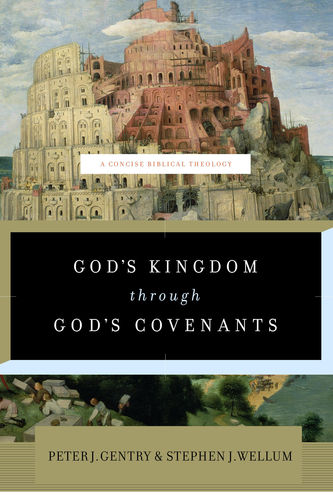
On Typology: Ten Axioms from God’s Kingdom through God’s Covenants

ktcIn the opening pages of their “concise biblical theology,” God’s Kingdom through God’s Covenants (GKTGC), Stephen Wellum and Peter Gentry lay out a description of typology that is worth considering. In what follows, I’ve synthesized their discussion into ten axioms. All of the quotations are from GKTGC; the references to other authors are found in their discussion (pp. 38–43). I’ve also taken the liberty comment and expand their thoughts in a few places.

1. Typology is not allegory.

This is an important distinction, one that is often confused. Wellum and Gentry write, “The major difference is that typology is grounded in history, the text, and intertextual development, where various ‘persons, events, and institutions’ are intended by God to correspond to each other, while allegory assumes none of these things.” Moreover, “‘allegorical interpretation’ depends on some kind of extratextual grid to warrant its explanation.” (38)

2. Typology is textual-historical.

Citing Richard Davidson,  Wellum and Gentry explain, “Typology is symbolism rooted in historical and textual realities.” But more than isolated (synchronic) symbols scattered in Scripture, biblical types (i.e., redemptive events explained by inspired Scripture) fit into a larger system of revelation. Richard Lints defines this when he says, “The typological relationship is a central means by which particular epochal and textual horizons are linked to later horizons in redemptive revelation.” (39) Continue reading

Israel and the Church: Continuity, Discontinuity, or Something of the Two?

haysIn his influential study on intertextuality, Echoes of Scripture in the Letters of PaulRichard Hays argues the apostle Paul’s hermeneutic is “functionally ecclesiocentric rather than christocentric” (xiii). In a series of essays, he shows how the apostle applies Old Testament texts to the New Testament church, and in so doing he questions the commonly held assumption that Paul wrote with a Christocentric approach to the Old Testament.

In comparison to the Gospels, especially Matthew and John, Hays shows that Paul is much more reticent to cite messianic prooftexts. Rather, writing to local churches who are comprised of the eschatological people of God (cf. 1 Corinthians 10:11), he applies the Old Testament scriptures semi-directly to the church. I say semi-directly, because the old covenant scriptures only apply through the mediation of Jesus Christ, a point Hays goes on to affirm: “christology is the foundation on which [Paul’s] ecclesiocentric counterreadings are constructed” (120).

For Hays, his aim is to observe the hermeneutical principles at work in Paul’s letters. My question is more systematic. What does Paul’s method of interpretation say to us about the relationship between Israel and the Church? Debates rage between Dispensationalists who make a clear division between Israel and the Church and Covenant Theologians who have ostensibly replaced Israel with the Church. Thankfully, these hard divisions have been revised in recent years—Progressive Dispensationalists see more continuity between Israel and the Church (even as they retain a unique place for Israel), and Covenant Theologians like Richard Gaffin and Anthony Hoekema have centered Old Testament promises in Jesus Christ and his new covenant people. Still, the debate continues: how should we relate the testaments? Continue reading

Beholding Christ at the Lord’s Table: Penal Substitution (Old Testament)

altarAnd can it be, that I should gain an interest in the Savior’s blood?
Died he for me, who caused his pain? For me, who him to death pursued?
Amazing love! How can it be that thou, my God, shouldst die for me!
— Charles Wesley, “And Can It Be That I Should Gain”

Substitution stands at the heart of cross—the innocent dying in place of the guilty, the righteous for the unrighteous, the sinless for the sinful. English hymnody is filled with this truth, because the Bible repeats the emphasis—Jesus Christ, sinless son of God, laid down his life in the place of his beloved. But hymnody is not the only place in Christian worship where Christ’s substitution is proclaimed; when we come to the Lord’s Table we also remember his death in our place.

In recent years, there has been no little debate about this truth. More than a few books have been penned arguing against penal substitution. Negatively, some have said penal substitution posits an angry, blood-thirsty God. Others, more constructively, argue that Christ came to defeat the powers and principalities (Christus Victor) and give a moral example of love in his death. To the latter, we can whole-heartedly affirm—Jesus did come to defeat the devil (1 John 3:8) and provide an example of holy love (1 Peter 2:21). But he did so by nailing his people’s sin to the cross, disarming the devil (Colossians 2:13–15) and providing an atonement for those who would imitate him (read the context of 1 Peter 2:21, esp. v. 24).

Therefore, to pit penal substitution against any other aspect of the cross obscures the necessity and beauty of Christ’s death in our place. In fact, it is by remembering Christ’s substitution that we rightly understand God’s love (1 John 4:8–10), and how a holy, triune God reconciles sinners to himself. Therefore, when we approach the Lord’s Table, we must remember see how the meal portrays his substitution.

Today, let us consider three Old Testament passages which teach penal substitution and which prepare our hearts to worship the Son of God who gladly took our sin on his shoulders and died in our place. Continue reading

Hearing the Voice of God: Ten Axioms About God’s Authorship of Scripture

bible“The fear of the Lord is the beginning of wisdom.”
– Proverbs 1:7 –

“The fear of the Author is the beginning of literary understanding”
– Kevin Vanhoozer[1]

This morning, I have the privilege of beginning a series of “studies” on hermeneutics and biblical interpretation among the men at my church. The title I’ve chosen is “Toward Doxology and Discipleship: Presuppositions and Principles for a Trinitarian Reading of Scripture.”

Influenced by the work of Kevin Vanhoozer, my aim is to lay out three presuppositions in the next three months concerning the three horizons of communications—author, text, and recipient(s). By taking a trinitarian approach—where we see the Father as speaker, the Son as the content of Scripture, and the Spirit as the One who enables people  to rightly receive understand God’s speech—can are ready to rightly read Scripture.

Only after this triad of communicative presuppositions, can we employ biblical principles that cohere with God’s inspired Word.  That’s the goal of the next three studies, where I hope to outline the three horizons of the biblical text to show how every interpreter of of the Bible must do justice to the textual, covenantal, and canonical horizons (so Edmund Clowney, Richard Lints, etc.). Only by reading texts with respect to grammar and history, covenantal or epochal placement in the Bible, and the final revelation of Christ in God’s canon can we fully appreciated all Scripture has to say to us, indeed what God is speaking to us even today (see Hebrews 3:7).

If you are interested, I’ve included my notes for this week and listed below my ten concluding “axioms” that show the cash value of starting with the doctrine of God, and more specifically why bringing his Authorship to the forefront is imperative for good hermeneutics. If hermeneutics is “your thing,” or if it is not, I’d love your feedback. Continue reading