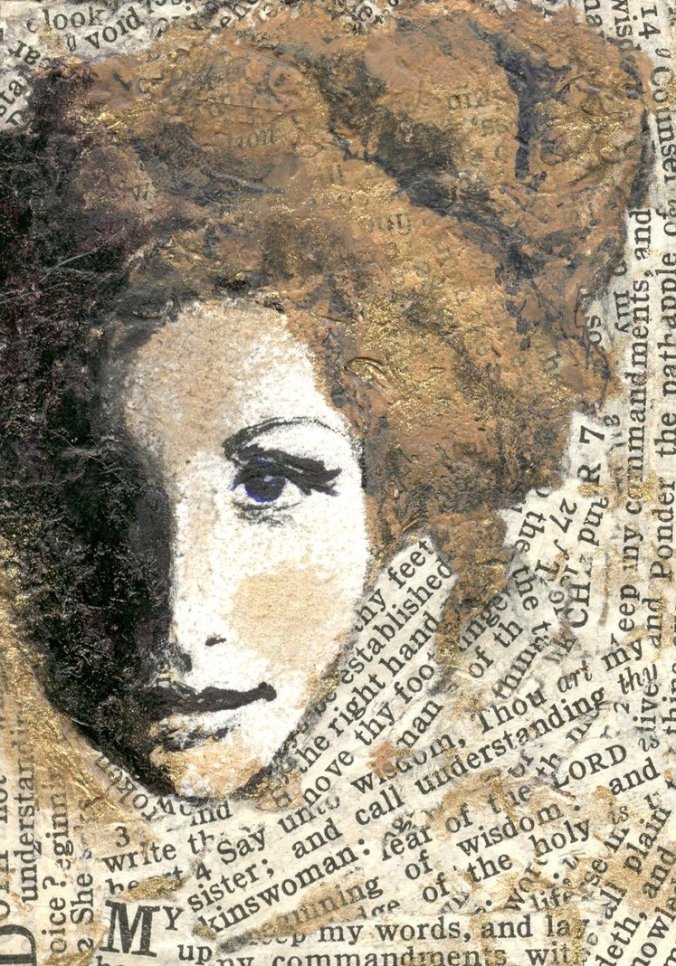
In Proverbs 8 we find wisdom personified, a woman speaking who is sometimes called Lady Wisdom.
In church history, this chapter has raised all sorts of exegetical and theological questions with respect to eternal deity of Christ—Did God “possess” (ESV), “make” (HCSB), or “create” (LXX) wisdom in verse 22? Is wisdom speaking of Christ directly or indirectly (typologically) or not at all?
These are the debates made famous by the heretic Arius, who denied Christ’s eternal deity, and they are important questions, but my focus is not on this debate. Rather, I want to consider how Proverbs 8 speaks of wisdom with respect to righteousness and reward in verses 8, 15, 16, 18, 20.
In these verses we discover at least four truths about wisdom and righteousness and reward. They are worth our consideration and application, especially as we see how Christ is God’s Wisdom, who teaches his (once foolish) disciples to walk wisely after they have come to trust in his wisdom (cf. Matthew 11:28–30). Continue reading

 In Ephesians 6:1–3 Paul calls believing children (i.e., children in the Lord) to obey (v. 1) and honor (v. 2) their parents. In verse 1, Paul gives the motivation, “for this is right,” and in verses 2–3, he motivates children with the fifth commandment, ‘the first commandment with a promise.’ And importantly, the promise says, “that it may go well with you and that you may live long in the land [or, on the earth].”
 In his short study on biblical covenants,
  With his characteristic biblical insight and cultural engagement, Tim Keller’s book on marriage,
  There are many who have read Paul’s instructions to husbands and wives in Ephesians 5:22–33 as an accommodation, or even an appropriation, to the Greco-Roman culture. However, Clinton Arnold in his outstanding commentary on this section, shows why that cannot be true. Taking an extended look at “The Roles of Wives in Roman-Era Ephesus and Western Asia Minor” (pp. 372–79), Arnold shows why Paul’s words are radically counter-cultural—both in his day and in ours.
 Last week, I taught on the Mount of Transfiguration in Mark 9. And in my studies I discovered just how much this passage depends on the events of Sinai. In what follows, I will try to show a few of the connections and why reading these passages together is so fruitful for understanding the revelation of God’s glory in Christ’s transfiguration.
 As our church finishes up a month-long study on the spiritual disciplines—personal and public—I turn to
  Via Emmaus