
Common Grace: How God Blessed the Nations in the Age of Abraham

rainbowGod’s covenant with Noah is often described as the covenant of common grace, and rightly so. In the wake of God’s judgment on the earth, the heart of humanity remains unchanged (cp. Gen. 6:5 and 8:21), yet for God to bring redemption to the world, some measure of preservation must be granted. Therefore, with strong covenantal language—berith occurs 7 times (vv. 9, 11, 12, 13, 15, 16, 17) in Genesis 9—God promises to uphold creation: “While the earth remains, seedtime and harvest, cold and heat, summer and winter, day and night, shall not cease” (8:22).

These promises to Noah envelope all creation and articulate God’s common grace—his universal beneficence towards a world filled with sin. In other words, common grace is common because it encompasses all humanity universally, not because it is mundane. Common grace is distinct from saving grace in that the former does not atone for sins or grant eternal life. Rather, it grants “grace” to the righteous and the unrighteous (cf. Matthew 5:45) and provides a historical context for saving grace to operate.

That being said, common grace is not equally apportioned. It is not like the periodic table, where every element possesses the same atomic weight. Rather, common grace is specific in that it often depends upon the saving grace given to God’s chosen people. In other words, just as common grace is promised through the Noahic covenant, so common grace continues to be mediated through other covenantal mediators. In Scripture, the first instance of this is Abraham.
Continue reading

The Lord’s Supper as the Origin of Christ-Centered Hermeneutics

jesus.jpegThere are many arguments for reading the Bible with Christ at the center. But where do they come from? Are they the product of biblical interpreters? Or is there a source found in Scripture itself?

In answer to this question, the best place to see the Bible’s Christ-centeredness may come from Christ himself. Not only does he say explicitly that all Scripture speaks of him (John 5:39), but in the Passover he interprets the most important event in Israel’s history as his own. As Alastair Roberts and Andrew Wilson note, “Jesus is specifically identifying the unleavened bread as representing his body, . . . and he is telling his Jewish followers to celebrate the Passover in memory of him, not just their liberation from slavery in Egypt” (29). Continue reading

Feeding on the Lord: So Much More Than a Metaphor

breadHunger. It’s one of the most basic of human desires. And in the Bible it is one of the most important concepts related to salvation, faith, and one’s experience with God.

Physically, hunger and our attempts to fill our stomaches are experiences that unite all mankind. While experienced differently in famine-afflicted Africa or affluency-afflicted America, an “empty stomach” is something that speaks to everyone.  We cannot go without food, and thus we search for something to fill us up and give us life.

Spiritually, the language of food, famine, eating, nourishment, and emptiness fills the Bible. From the plethora of fruit trees given to Adam and Eve in the Garden, to the Manna in the wilderness, to the loaves and fishes that Jesus provided for his followers, God has provided physical sustenance. At the same time, food has been a source of destruction—sin entered the world through eating the forbidden fruit; Esau lost his inheritance when he chose stew over his birthright, and Paul says that men ate and drank destruction on themselves when they wrongly ate the Lord’s Supper.

So clearly, food plays a key role in our physical and spiritual pursuit of God. At the same time, Scripture often speaks of eating metaphorically. Psalm 34:8 reads, “Taste and see that the Lord is God.” And Psalm 36:8 says that the children of man “feast on the abundance of your house, and you give them drink from the river of your delights.” Apparently, our experience with food—physical bread, meat, and drink—is meant by God to teach us what it means to feed on the Lord and drink from his streams of life.

Still, I suspect that for all we know about food, we may struggle to understand what it means to feed on the Lord. If God is Spirit (John 4:24), then how do we feed on him? And if he is invisible, where do we go to find fullness in him?

Just this last week, I preached a message on feeding on the Lord. My repeated command: Feed on the goodness and grace of God. But how? I can imagine someone saying, “That’s sounds great, but what does that mean?” So here is my answer to that question: What does it mean to feed on the God who is invisible? Continue reading

A Filter, A Lens, and A Prism: Three Ways Christ Applies the Law of Moses to New Covenant Disciples

law

One of the most challenging aspects of reading the Bible is applying the old covenant law to the new covenant follower of Christ. As the book Five Views on Law and Gospel illustrates, there are multiple ways in which Christians have sought to apply the Old Testament and its legal demands to the church today. And one of the most familiar ways is to differentiate three parts of the law.

Typically divided as moral, civil, and ceremonial, the tripartite approach to the Old Testament argues that some laws are eternal and unchanging (the moral); others are related to the theocracy given to  Israel (the civil); still others are related to the system of priests, sacrifices, and the temple (the ceremonial). In Christ, the civil and ceremonial came to their completion, while the moral law continues unabated.

The trouble with this approach is that the Old Testament never specifies the tripartite division and in many places the moral, civil, and ceremonial overlap. Still, we must make some sense of the way parts of the law continue and others do not. And historically, the tripartite division has a long tradition of helping Christians think carefully about the Bible, the Law, and the Gospel. Still, it is not the only way and there may be better approaches.
lunde

Addressing this subject, I have found help in the way Jonathan Lunde uses three images to describe the way in which Christ fulfills the law. In his book Following Jesus, the Servant Kinghe spends three chapters outlining the way Christ fulfills the law of Moses. Focusing much of his attention on the Sermon on the Mount, he specifies the way Christ functions as filter, lens, and prism. In some ways, Christ brings the laws of Moses to an end (filter); in others, he clarifies what the law already meant (lens); and still in other ways, he heightens the demands of the law (prism).

While these three approaches (filter, lens, prism) are extra-textual and only illustrative, I find them more helpful in getting at what the text says. They make us consider what Jesus does and does not say about the law. And instead of foisting an extra-textual grid on the Bible, like the tripartite division of the law, they make us listen closely to the text itself to see how Jesus mediates between old and new covenants.

Because this approach is explicitly Christ-centered, in a way that the tripartite division of the law is not, I find it to be a surer guide. Likewise, because it does not create a whole system of categorization (which the Bible does not have), it lets the text of Scripture speak. It also permits more freedom to disagree about certain points—as I do below in two ways—and helps us go back to the feet of Jesus to learn how he approaches the old and new covenants. Continue reading

Blessed are the Pure in Heart, For They Will See God (Matthew 5:27–30)

sermon05

Blessed are the Pure in Heart, For They Will See God (Matthew 5:27–30)

Sexual sin. It is a destructive issue we face more often than we like to admit.

Whether it is lust, pornography, adultery, same-sex attraction, or any number of other desires that deviate from God’s good design, we are inclined to bury these parts of our lives in the dark. Yet, in Sermon on the Mount, Jesus wisely and lovingly shines a light on our hearts. Getting to the heart of sexual sin, he explains what lust is, where it comes from, and how, by God’s new covenant grace, it be put to death.

This Sunday we looked at Matthew 5:27–30 to learn from Jesus what lust is and how to combat it. And the answer, which may or may not come as a surprise, is to look more at the beauty and goodness of God than to merely turn away from the flesh. While external barriers and accountability are helpful, it is a heart full of Christ that empowers us to flee from sexual lust.

You can listen to this sermon online, and you can find discussion questions and related resources below. In particular, there are notes below that deal directly with the subject of pornography. Continue reading

“Disciples Make Disciples”: A Vital Truth That Needs Further Elaboration

trekking-299000__480.jpg“Disciples make disciples”

It’s an axiom that is thrown around by Christians who rightly make “making disciples” a priority for genuine discipleship. But is it really true? Do disciples make disciples? Or is there more to the story?

Based on the Great Commission in Matthew 28:19, we might think that Jesus words give definitive answer: Yes, disciples make disciples.

Yet, Jesus’ final words in Matthew’s Gospel are not the only word on the subject. And in fact, as we seek to make disciples—as we are commanded—we should remember that our calling to make disciples is part of God’s larger work of redemption. This should both encourage us, motivate us, and remind us that the work of making disciples is not the mission of few committed “disciple-makers,” it is the calling for all those who call Jesus “Lord,” and thus something we should all strive to grow in. Continue reading

Razing Cain: How Christ Crucifies a Heart of Anger (Matthew 5:21–26)

sermon05Razing Cain: How Christ Crucifies a Heart of Anger

This Sunday we looked at Matthew 5:21–26, where we saw the first of six lessons Jesus gives us about the law of Moses applied to his new covenant disciples.

Interpreting the sixth commandment, “Do not murder” (Exod 20:13; Deut 5:17), Jesus stressed the importance of making peace with those whom we have sinned against. In Sunday’s sermon we looked briefly at how Jesus applied Moses Words, but more importantly we considered a multitude of applications found in Jesus Words.

You can listen to the sermon online. Discussion questions and additional resources are listed below. Continue reading

Circumcising the Heart: Eleven Things Jesus Teaches Us About Anger

angerIn Matthew 5:21–26 Jesus outlines his interpretation and application of the sixth command, “Thou shall not murder” (Exod 20:13; Deut 5:17). And though Jesus words are only six verses in length, we can learn at least eleven truths about anger from Christ’s wise words.

1. Anger is a matter of the heart.

As the cliche goes, the heart of the matter is the matter of the heart. And in Jesus first of six “antithesis” he clarifies that the point of command, “thou shall not murder,” is not really an antithesis at all. Rather, the command to not shed another’s blood is meant to awaken the heart of someone prone to anger. In other words, it is misguided to believe the Lord only cared about the heart in the New Testament.

The Lord has always cared about the heart. Each of the ten commandments were instructed to train the hearts of the Israelites. Deuteronomy 10:16 called upon the Israelites to “circumcise their hearts.” And the common indictment against Israel, under the old covenant, was the problem of their hearts (cf. Isaiah 29:13; Psalm 95).

Hence, Jesus is not giving a new commandment here, but reminding his disciples what the intentions of God were, are, and forever will be. In the law, God called his people to not murder so that it would awaken in them a desire to love, serve, and protect their neighbor. Therefore, Jesus rightly recalls the laws original intent and that the sixth command addresses a heart of anger. Continue reading

Seven Evidences the Sermon on the Mount is an Exposition of the New Covenant

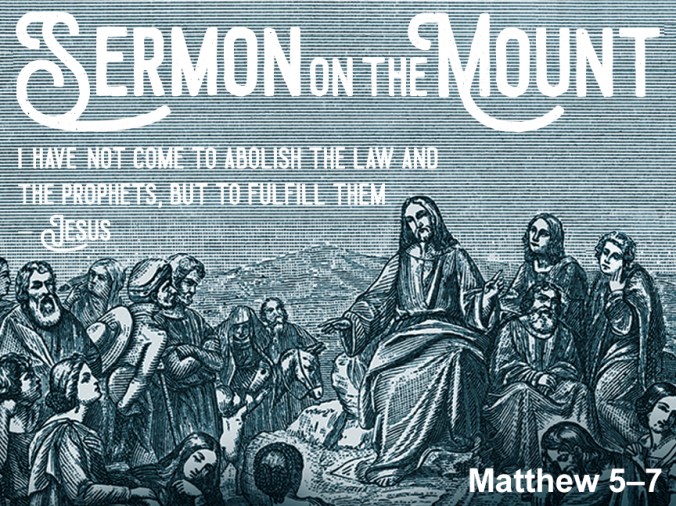
joel-filipe-241154-unsplashWhat is the Sermon on the Mount about? And more basically, what is the Sermon on the Mount? Is it a newer, more stringent law for Christ’s disciples? Is it an ideal which drives disciples to seek mercy? How should we understand it?

Many answers have been given, but I believe the best understanding of Jesus’s Sermon in Matthew 5–7 is that it is an exposition of the new covenant. Rather than a new law that exceeds that of the old covenant, I would propose that it is the eschatological word of Christ which fulfills the Law and the Prophets. And in what follows I want to outline seven reasons for that view.

Seven Evidences the Sermon on the Mount is an Exposition of the New Covenant

For sake of space, I am not going to expound every point with exhaustive detail. Rather, I will trust that the points are somewhat familiar and that stringing them together has the cumulative effect of proving the Jesus’s Sermon on the Mount is an exposition of the way Jesus expects his kingdom disciples to walk according to the new covenant he is bringing. Continue reading

From Cain to Covenantal Continuity: Three Quotes on Matthew 5:21–26

kiwihug-284614-unsplash.jpgWhen reading Matthew 5:21–26, the first of six illustrations from Jesus on how to read and apply the Law of Moses, there are a number of interpretive factors to consider. In fact, we need to consider the meaning of the “anger,” the relationship of the Law-covenant to the Jesus’s fulfillment, and the way Jesus employs imagery from the first recorded murder.

In these three quotations from Charles Quarles, Jonathan Pennington, and Dale Allison we get a grasp on how the lexical, epochal, and canonical contexts should contribute to our understanding Jesus’s teaching. Continue reading