 As we move from Genesis to Exodus in Track 1 of the Via Emmaus Reading Plan, here are resources for the second book of Moses. If you missed the first month’s resources for Genesis, you can look here. Below is a recap on the Via Emmaus Reading Plan and a number of helps for reading Exodus.
Discipleship
Reading God’s Word and Seeing God’s World through the Lens of Two Biblical Ages

For salvation is nearer to us now than when we first believed.
Romans 13:11b
Redemptive history has two overlapping ages. And unless you grasp how the new age brings the future into the present, without entirely swallowing up the old age—yet!—you will have a difficult time understanding how the Bible fits together and how God is working in the world. To say it differently, your doctrine, especially your eschatology, will shift off-center if you don’t consider both ages as described in Scripture. Either you will see too much of God’s kingdom present today, or you will withhold too much of the kingdom until some later time period. This approach to the kingdom of God is sometimes called inaugurated eschatology and I have discussed that here.
In what follows, I want to sketch out how necessary it is to see both ages and how the entirety of the Bible depends on rightly grasping this two-age perspective. First, we will consider how the Old Testament teaches us to look forward to a new age. And instead of considering this in the abstract, we will note at least twelve specific expectations given by the prophets, such that when the authors of the New Testament describe them as fulfilled in Christ, they are telegraphing the way that the new age has come. Continue reading
Strong and Courageous: Why Resisting Tyrants is an Act of Love
 Last week, a few members of our church put on our masks, boarded planes, and traveled to the Founders Conference, where we heard from the likes of Voddie Baucham, James Dolezal, Tom Ascol, and the leaders of Just Thinking, Virgil Walker and Darrell Harrison. In short, the trip, drenched in warm Florida sun, was encouraging, and the messages, saturated with biblical truth, were edifying—especially with respect to the subject of standing for Christ in an age that has become increasingly hostile towards Christians.
Addressing that subject and the new religion of universal autonomy and equality, Tom Ascol and Jared Longshore have released a new book called Strong and Courageous: Following Jesus Amid the Rise of America’s New Religion. Falling in line with newer books like Glenn Sunshine’s Slaying Leviathan and Rod Dreher’s Live Not by Lies, as well as older books like Francis Schaeffer’s A Christian Manifesto, and even older books like Samuel Rutherford’s Lex Rex: The Law and the King and Junius Brutus’s Vindiciae Tyrannos: A Defense of Liberty Against Tyrants, this new volume promises to bolster the church at a time when public silence and civil cowardice are spreading faster than COVID.
In other words, this book comes at a time when Christians and especially pastors need courage. And this will be a book I hand to many pastors, as it provides bold and biblical arguments that stand against the online pablum that undercuts biblical courage with Christian civility (read: niceness). Indeed, when a Christian’s best testimony to his neighbors is found in waiting patiently for governing officials to permit churches to gather again, thus denying Christ’s command to gather, we have a new instance of Corban—replacing the law of God with human traditions. But thankfully, some are seeing through this misguided application of Scripture and are providing solid food for God’s flock. And in Strong and Courageous, Ascol and Longshore do just that. Continue reading
A Little Help With Daniel 11:1–12:4: Three Aids for Reading This Challenging Chapter
 Daniel 11 is a challenging passage of Scripture. Primarily, its difficulty rests in the fact that modern, Western readers do not know the history that stands between Daniel and Jesus. Such historical ignorance of about 550 years makes a crucial difference in knowing how to understand this long and complex passage. This is especially true with respect to Antiochus IV, who defiled the Jerusalem in 167 BC by offering unclean sacrifices on the altar, producing what Daniel calls the abomination of desolation. Both Daniel and Jesus speak of this event, and only when we understand how Daniel 11 points to this historical event, based upon God’s heavenly decrees (i.e., the book of truth in Dan. 10:21) can we rightly interpret this passage.
Indeed, Daniel’s prophecies are so precise, many scholars believe that Daniel must have been written after the fact.[1] Such a reading stands, however, on a commitment to explain away elements of predictive prophecy. By contrast, those who believe God inspired the Word of God have no little trouble letting the text speak. Scripture teaches us that God has declared the end from the beginning (Isa. 46:10) and that nothing occurs by accident. Rather, God has decreed in eternity what will take place in time. In fact, Daniel 10:21 speaks to this very thing, when the angel of the Lord states, “But I will tell you what is inscribed in the book of truth . . .”
As stated, Daniel 11 is a small portion or reflection of God’s eternal and immutable decree. In answer to Daniel’s prayers and his longing to see the temple of God rebuilt, God sends a fourth and final vision in Daniel to strengthen him and show him what will come next. Daniel 11, therefore, is a history that begins in the days of Daniel (535 BC) and runs until the days of Christ and his resurrection. In fact, as I preached two Sundays ago, I believe that Daniel 12:1–3 is fulfilled (better: has begun to be fulfilled) in the resurrection of Christ. And thus, Daniel 11 gives us a vision of history that runs for more than 500 years and that has implications even to our own day, as the resurrected Christ continues to raise people from the dead.
Still, to understand Daniel 11 in context, we might need a little help. In what follows, I offer three such ‘helps.’ First, I offer a link to the sermon I preached on Daniel 11. Second, I share below an account of a make-believe prophet of America that might provide insight into how we should read Daniell 11. Third and last, I’ve included a PDF of the notes I gave to our church when I preached on Daniel 11. They give a play-by-play of the historical turns in Daniel 11:2–35. Then, drawing on the work of Mitchell Chase, they offer an attempt to read Daniel 11:21–35 as parallel to Daniel 11:36–12:3. I believe Mitch has found a number of key connections in the text which confirms this approach to the chapter. I outline these in the PDF as well. May these resources be a help to you. Continue reading
On Reading Genesis: Four Approaches with Many Resources
January 1, 2021.
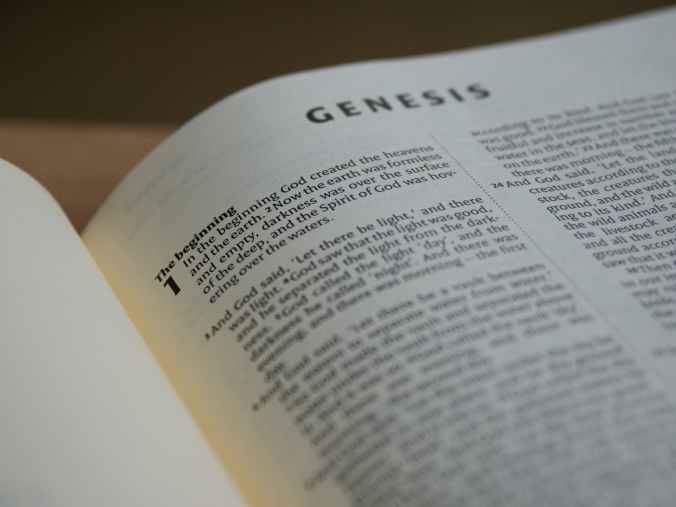
With the new year comes the chance to begin a new Bible reading plan (or to continue your reading plan from last year). If the new year leads you to Genesis, as the Via Emmaus Bible Reading Plan does, you might be looking for some resources to aid in your reading—especially, if your plan does not give you a day-by-day, play-by-play. To that end I am sharing four reading strategies, with some helpful resources to listen and read. Be sure to read to the end, as some of the most helpful resources come at the end. Continue reading
Reading for Scripture Saturation in 2021: (Re)Introducing the Via Emmaus Bible Reading Plan

9 How can a young man keep his way pure? By guarding it according to your word.
10 With my whole heart I seek you; let me not wander from your commandments!
11 I have stored up your word in my heart, that I might not sin against you.
12 Blessed are you, O Lord; teach me your statutes!
— Psalm 119:9–12 —
AN 2022 VERSION OF THIS POST IS FOUND HERE.
With 2020 ending and 2021 approaching, you may be thinking about how to read the Bible in the new year. I hope so. The Word of God is not a trifle; it is our very life (Deut. 32:47). Man does not live on bread alone, but on every word that proceeds from the mouth of God (Deut. 8:3; Matt. 4:4). With that in mind, we should aim to read the Bible and to read it often!
Truly, the Bible is not a book to read once, or even once a year. It is meant to be imbibed and inhabited, adored and adorned, studied and savored. Mastery of the Bible does not mean comprehensive understanding of Scripture; it means ever-increasing submission to the Master who speaks in Scripture. This is why in the closing days of the year, it’s good to consider how we can saturate ourselves with Scripture in the next year.
Personally though, I wonder if our daily reading plans help us with this idea of Scripture saturation. Often, such plans call for reading single chapters from various parts of the Bible. And the daily routine can invite checking the box without understanding the book. So my question has been: does such reading help us or hinder us in our Bible reading? Continue reading
Let Us Fix Our Eyes on Heaven and the Christ Who Reigns There: A New Year’s Reflection on COVID Regulations and Social Justice

As we prepare to welcome 2021 this week, this post is meant to consider how the largely unexpected and unprecedented events of 2020 have impacted us, especially the church and its pastors. May the Lord give us wisdom to keep our eyes fixed on Christ and courage to say so.
At the time of America’s founding, heterodox pastors attacked the doctrine of hell, while many of the Founders appreciated religion for its earthly and civic benefits. A century later, theological liberals exchanged the reality of heaven for the earthly message of the fatherhood of God and brotherhood of mankind. In the last century, prosperity preachers have promised heaven on earth, while many pragmatic pastors have made earthly success as important as—and often more important than—entrance into heaven.
Looking from the past to the present, it shouldn’t surprise us that the message of heaven has been threatened. Going back to Eden, there have always been those who have doubted God’s judgment and misjudged God’s eternal gospel. Movements like the social gospel, the prosperity gospel, and liberation theology have, in various ways, exchanged the glories of heaven for “Christian” messages that focus on the here and now. And always, when heaven is lost, the lost suffer.
Today, we are seeing a de-emphasis on heaven in a new way. Unlike theological liberals who might affirm universalism where everyone goes to heaven or deny the reality of hell, some evangelicals are mis-stepping with heaven on the basis of their ministerial focus. Without abandoning their orthodox confessions, Bible-believing churches are veiling heaven by focusing their attention on matters related to earth.
In 2020, you don’t have to be a “liberal” to downplay heaven in your daily living. You don’t have to preach a message of prosperity to illicitly transport heavenly blessings to earth. You don’t even have to deny Scripture to lose the heavenly mission of the church. In fact, you can hold firmly to the faith and lose heaven by doing nothing at all. The cultural winds of 2020 are that strong! Here’s what I’m getting at: Unless you realize how the events of this year are causing pastors and churches to focus almost exclusively on earthly matters, you will lose heaven—if not its doctrine, than its declaration.[1]
In what follows, I will highlight two cultural winds that are blowing Christians off course. Instead of preaching the glories of heaven and discipling the nations to obey all the Lord of heaven has commanded, churches are being tempted to give all their attention to (1) COVID regulations and (2) social justice. As a result heaven is assumed and not asserted. My argument, then, is that without Spirit-empowered effort, focus on these earthly concerns will cause us to mute the message of heaven. And if this is not corrected by faithful pastors, the reality of heaven—not just its emphasis—may soon be lost by some too. Continue reading
Thinking Wisely about Sickness and Disease: A Biblical and Pastoral Response to COVID by Brian Tabb

In preparation for Sunday School this week, I have been reading various articles and books on COVID-19 and how churches should think about the pandemic and respond to it. This week I will try to share a few of these resources that I have found helpful.
The first article to mention is Brian Tabb’s “Theological Reflection on the Pandemic.” In his article, he surveys what Scripture says about sickness. And most importantly he draws the connection between sickness and sin. Eschewing a mechanical connection between sin and sickness, i.e., that sickness is always a result of sin, he rightly avoids the other error—that sickness has nothing to do with sin. He writes,
Thus, the Scriptures do not present disease as morally neutral or “indifferent” like the philosophers.9 Rather, disease and other causes of pain and suffering are part of this broken world infected with sin, and these terrors have no place in the new creation, when God will roll back the curse, wipe away every tear, and make all things new (Rev 21:4–4; 22:3; cf. Isa 25:8). (p. 3) Continue reading
Voting is a Strategy, Not a Sacrament Nor a Sign of Superior Virtue

The heart of man plans his way,
but the Lord establishes his steps.
— Proverbs 16:9 —
So yesterday, one of my heroes, the pastor-theologian and prolific author, John Piper, posted a compelling argument for why he cannot vote for Trump or Biden. His words are worth reading, and they are worth responding to.
For as much as I agree that the morality of our leaders are of national importance and that the realities of Christ and his kingdom outstrip all earthly elections, I also believe Piper’s estimation of voting is mistaken. And so instead of addressing the sum of his argument, I want to highlight one point—namely, that voting is a strategy, not a sacrament, nor the tell-all signal of our eternal hope. Continue reading
How Did You See That? A Case for Scripture Saturation
 Sometimes in a class or after a sermon, someone will ask? How did you see that, which is shorthand for saying: How did you make the connection from Joshua’s baptism to that of Jesus? Or, Daniel in the Lion’s Den to Jesus’s death and resurrection?
Many times the answer is: Well, I read it. I heard another teacher preach it. Or, a commentary made the connection. Other times, however, I must say: Well, I just remembered it—from reading the Bible last year, this week, or, even sometimes, ten years ago. This latter answer leads the point of this post.
Good preachers don’t just know and use the good commentaries. They have good biblical instincts; instincts that come from reading, re-reading, studying, discussing, and sitting under God’s Word. Certainly, this means reading good books, but it also means reading the Good Book. A. LOT.
In seminary, this approach to Scripture was given the term: Scripture Saturation. This term comes from David Prince, who in answering this same question said plainly that such connections are found not by reading commentaries, but by saturating yourself with Scripture. No commentary. he argued and I am repeating, can replace the reading of the Bible, for often it is only through Scripture Saturation that various connections are made. Often, it pleases the Spirit to reveal things to us, only as we read the Bible.
Today, this question surfaced again in an online Simeon Trust workshop on Ecclesiastes. In this session, Ryan Bishop showed a connection between Ecclesiastes 8:14–17 and Isaiah 55:8–9. The question came up: How did you see that? And the answer was not that Alec Motyer or Barry Webb showed it to me, but “I remembered it from a sermon I heard a year or so ago?”
That’s how it works: By reading, re-reading, studying, discussing, meditating, stewing over, and sitting under the Word, we become saturated with God’s Truth. And then, with hearts full of the Bible, it comes to mind as we read other portions of Scripture, or prepare a message, or share the gospel with a friend. Many times, the Spirit begins to bring to life connections that we would not see in any other way.
Indeed, commentaries are helpful, even necessary for arriving at a faithful understanding of the Bible. They are typically written by men and women who are saturated with Scripture. But more than reading books about the Bible, reading Scripture again and again is the best way to understand the Bible and to see its contents.
I call this the “parable principle.” God often reveals his biblical truth only through repeated readings. At the same time, he conceals his truth from those who think a singular reading of the Bible will disclose all that Scripture has to say. Such a reality makes reading the Bible imperative and exhilarating, as we continue to see how the whole Bible fits together. Moreover, this principle explains why seasoned preachers will see things that younger teachers do not. Conversely, those who read the Bible as a unified whole (even if young) will be more prepared to see the connections in Scripture before those who read verses and books as isolated compartments in the Bible (even if older).
In practice, sometimes we only see things after we’ve read them a few dozen or a few hundred times. That’s not because they weren’t there in the text from the beginning. Rather, such progressive understanding comes from our minds being renewed by more and more of the Bible. Indeed, just as the apostles were identified because they had been with Jesus (Acts 4:13); the same is true for disciples today.
For this reason, we should give ourselves to reading the Bible and reading the Bible a lot. While preachers can and should certainly focus their devotional reading to their current sermon series. It is also important to read from the whole Bible and to do so regularly. Earlier this year, I outlined a way of reading Scripture that focuses on such saturation.
If interested, you can find the outline here. And if you have kept up with this blog you may see some of the ways I have been reading Scripture this year. And others may notice how I’ve failed to live up to the promise of providing content each month. I do apologize. I’m reading, but haven’t kept up writing. Lord willing there will be more coming.
Fortunately, the best part about a Bible reading plan is reading the Bible. So brothers and sisters, keep reading God’s Word. Keep delighting in what you find there. Don’t aim to check off a box or get through a plan. Feed yourself on God’s Word and watch how the world of the Bible opens up and reveals to you the glory of God in the face of Christ.
Soli Deo Gloria, ds
 Via Emmaus