Unmasking Prosopological Exegesis: Defining a New (and Improved?) Way to Read Scripture

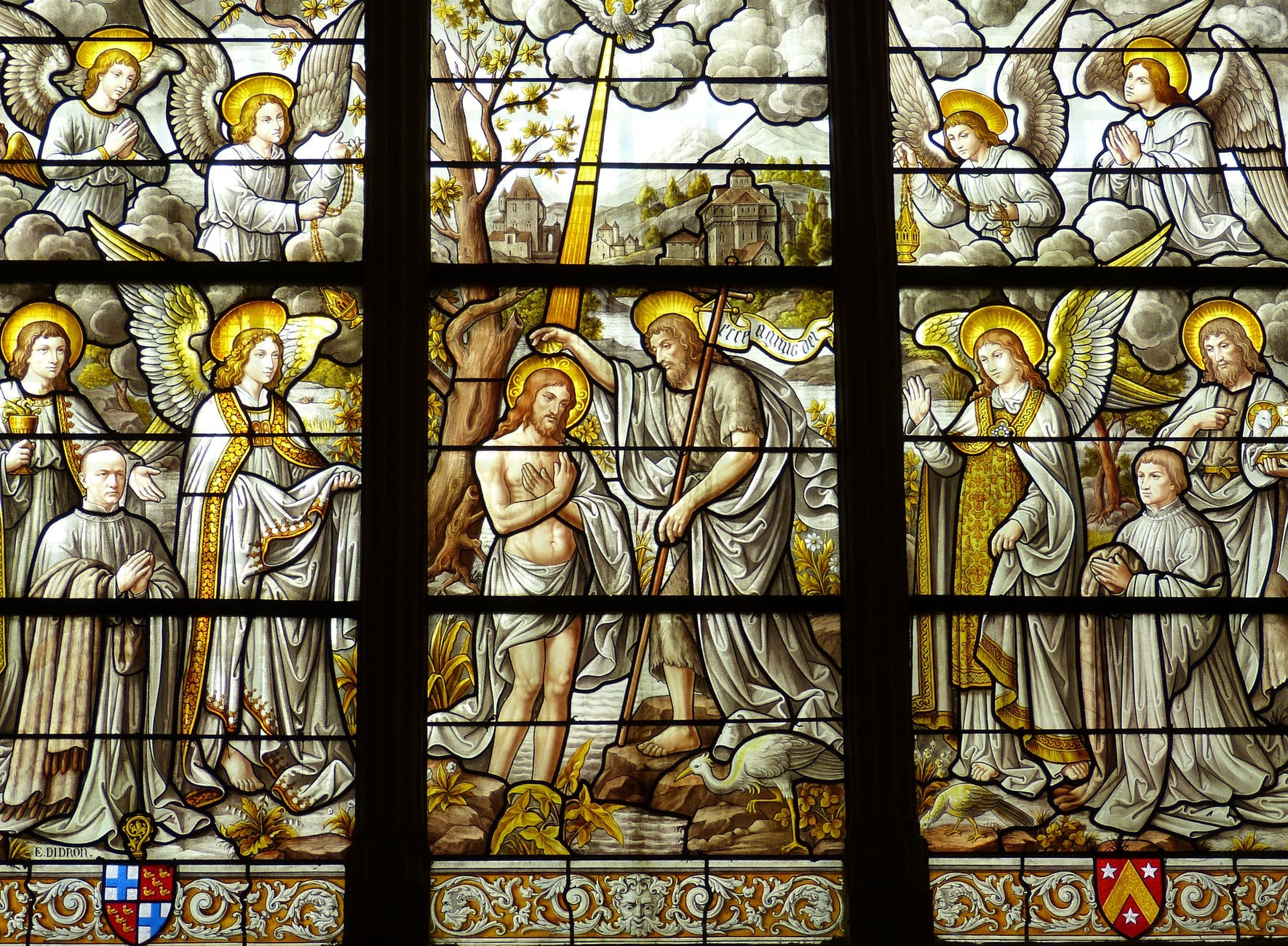
rosary and face mask on top of a bible

Prosopological exegesis.

Have you heard of it? If not, that’s alright, I suspect this technique for reading Scripture will run its course in the next decade and be replaced by another interpretive fad in the 2030s. In the mean time, however, this way of (mis)reading Scripture will find its way into articles, book, commentaries, and pulpits. And for that reason, students of the Word and especially teachers who rely on the scholarship of others (read: all of us), should be( a)ware of this approach to reading the Bible Christologically. 

To those who have been stuck in hermeneutical circles that deny typology and the need to read Scripture canonically, prosopological exegesis (PE) may sound like a great gain, as the voices of God are “unmasked” in certain parts of the Old Testament. But as Peter GentryJim Hamilton, and Jim Dernell have each argued, this ostensibly Christ-centered approach to the Old Testament misreads God’s Word. Instead of following OT texts and types until they come to their full revelation in the New Testament, as God the Father, Son, and Spirit are revealed as the one God in three persons, PE takes a shortcut to the persons of the Trinity. For this reason, it is a “naughty” way to read Scripture, as Michael Carlino argues in his new piece at Christ Over All:Give Diamonds, Not Coal: Why Prosopological Exegesis is Not the Gift You Are Looking For.”

Tomorrow, I will share my own concerns with prosopological exegesis. But today, I will offer an explanation of what PE is. What follows, then, is part of my Southern Baptist Journal of Theological article, “Reading the Psalms with the Church: A Critical Evaluation of Prosopological Exegesis in Light of Church History.” You can find this SBJT article here, along with another article that gives a constructive proposal for reading the Psalms. In both articles, I show why PE is not a reliable method to reading Scripture, and what follows is the start of that argument—namely, defining what prosopological exegesis is.
Continue reading

Reading for Scripture Saturation: (Re)Introducing the Via Emmaus Bible Reading Plan

rod-long-DRgrzQQsJDA-unsplash

How can a young man keep his way pure?
By guarding it according to your word.
10  With my whole heart I seek you;
let me not wander from your commandments!
11  I have stored up your word in my heart,
that I might not sin against you.
12  Blessed are you, O Lord;
teach me your statutes!
— Psalm 119:9–12 —

A few years ago, I introduced a reading plan focused on Scripture saturation more than Scripture box-checking. As a new year begins, I return to that reading plan for myself and for others who might be interested in focusing on one (or two or three) books in a month, instead a daily selection of Bible readings.

As we all know, or should know, the Word of God is not a trifle; it is our very life (Deut. 32:47). Man does not live on bread alone, but on the very word that proceeds from the mouth of God (Deut. 8:3; Matt. 4:4). So we should aim to read the Bible and to read it often!

Truly, the Bible is not a book to read once, or even once a year. It is meant to be imbibed and inhabited, adored and adorned, studied and savored. Mastery of the Bible does not mean comprehensive understanding of Scripture; it means an ever-increasing submission to the Master who speaks in Scripture. This is why in the closing days of the year, it’s good to consider how we can saturate ourselves with Scripture in the new year.

And today I offer a reflection on why a reading plan dedicated to saturating in Scripture may be a help for those who need to slow down and meditate on God’s Word. Or, for others, why a plan that encourages reading larger sections of Scripture might help Bible readers see more clearly the full message of the Bible.

Continue reading

The Servant-King Who Brings Peace to Earth: An Advent Message on Isaiah 49–54

three kings figurines

But he was pierced for our transgressions; he was crushed for our iniquities;
upon him was the chastisement that brought us peace, and with his wounds we are healed.
­­– Isaiah 53:4–5 –

I heard the bells on Christmas Day / Their old, familiar carols play,
and wild and sweet / The words repeat / Of peace on earth, good-will to men!

And thought how, as the day had come, / The belfries of all Christendom
Had rolled along / The unbroken song / Of peace on earth, good-will to men!

Till ringing, singing on its way, The world revolved from night to day,
A voice, a chime, A chant sublime / Of peace on earth, good-will to men!

These are the opening words to Henry Wadsworth Longfellow famous Christmas song, “I Heard the Bells on Xmas Day.” You’ve probably heard it, but if not I’d recommend the version by Caroline Cobb + Sean Carter. At the same time, you may not know the story behind the song, but it’s worth the telling.

Continue reading

Trust in the Lord, the Promises of God Incarnate (A Sermon on Isaiah 28–35)

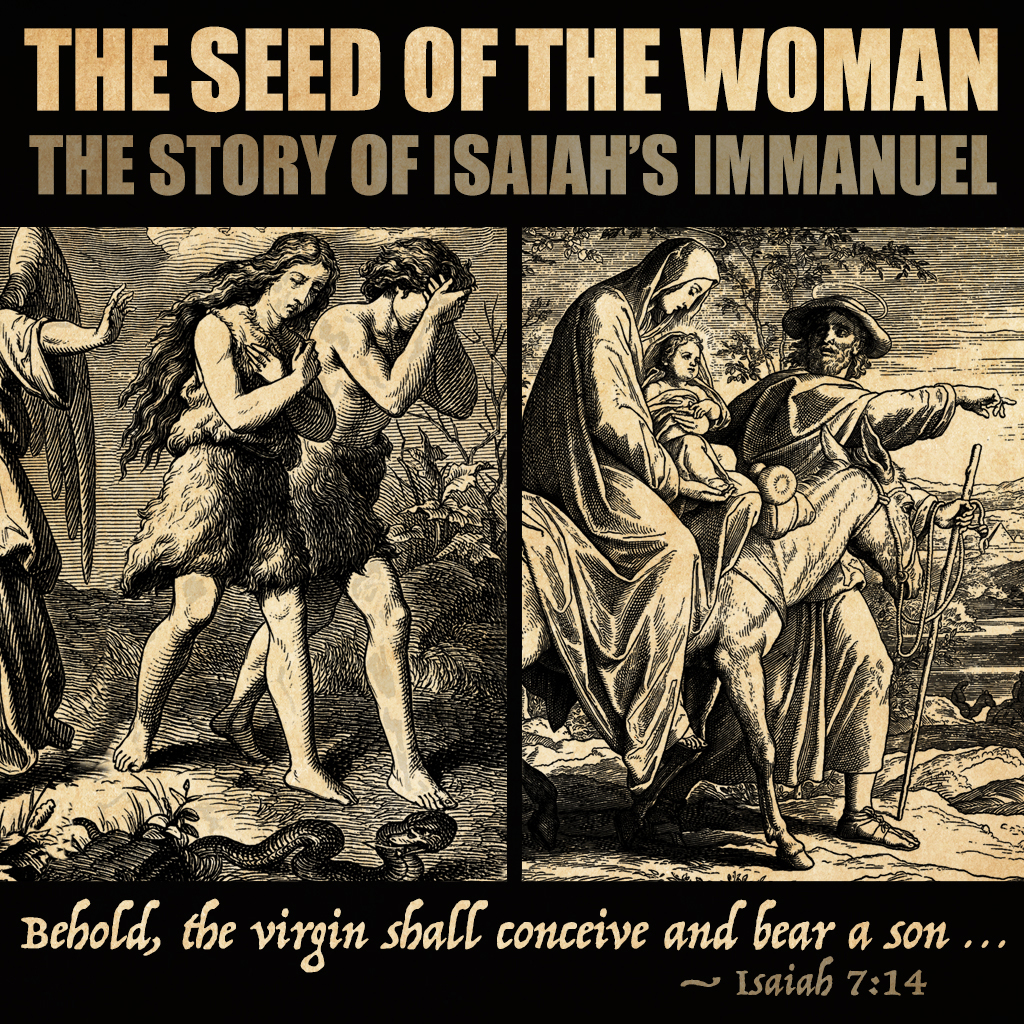
Seed of the Woman 1024x1024With Thanksgiving behind us and Christmas Carols upon us, the holiday season is now here. And with the holidays comes the making of many lists.

Santa has his list. And I am sure many readers of this blog have theirs. Whether it is a list of things to get done for Christmas or a list of this to wrap up before the new year comes, lists are a part of life. And lists can be all sorts of things.

They can be harmful, if your list is filled with grudges. Or, they can be helpful, if they help you remember all that your need to do. And they can even be misunderstood, if they are intercepted and read out of context.

Recently, my daughter found a list of family names with corresponding items under each. Still learning how to read, she thought it was surely a list of Christmas presents. But actually, when examined, this list contained all the school work to be done before Christmas. Such are the ways of lists. They can help, but they can also mislead.

In fact, lists can have negative consequences when we read the Bible. If you haven’t noticed, Scripture is not written in list form. Oh, it has lists. The first eleven chapters of Genesis contain two of them; they are called genealogies. Likewise, throughout the Bible, you can find lists of names, places, treasures, and laws. In short, the Bible is not against lists; it’s just that, on the whole, the Bible is not a list.

Resultantly, when we grind the Bible into list form, as many sermon-makers are quick to do, we run the risk of missing its message. Even more, when we turn the Bible into lists, we often miss the Messiah!

That said, there are times when it is helpful to put the truths of Scripture in list form. Systematic theologies do that, as do many sermons. And though I think the listicle sermon often misses the shape of the text, there are times for it. And this Sunday was one of them.

After riding an airboat through Isaiah 1–12 and a helicopter over Isaiah 13–27, I offered a sermon with four encouraging truths from Isaiah 28–35. Without abandoning the literary structure of the text, I focused on the applications that came from these eight chapter. To find those applications of the gospel, you can listen to the sermon here. You can also find the literary structure of Isaiah 28-35 here.

So far, preaching Isaiah 1–35 has been a challenge, but it has been a happy challenge, as it has forced us to see how the whole book fits together and leads us to Christ. Truly, Isaiah is glorious book, so let’s keeping reading it. And as you do, I pray these sermons may help you as you read.

Soli Deo Gloria, ds

Salvation and Judgment From Zion to Zambia: An International Comedy (A Sermon on Isaiah 13–27)

Seed of the Woman 1024x1024

Salvation and Judgment From Zion to Zambia:
An International Comedy (Sermon Audio for Isaiah 13–27)

Sermon Handout: Isaiah 13-27 PDF Slides

Has the Bible ever made you mad? Have you ever stopped reading the Bible because you couldn’t understand it? Are there parts of the Bible that you have avoided because they are too difficult to comprehend? To each of these questions, I can offer an affirmative response, with illustrations to prove it.

For instance, a number of years ago Isaiah 13–27 was one of those places. Or rather, it was somewhere in Isaiah 13-19. Reading those chapters, with their endless judgments against ancient foreign powers, I got frustrated and put the Bible away. Looking for a word of encouragement, the endless oracles made no sense.  After all, what do Philistines and Moabites have to do with me? As it turns out, there are lots of ways that God’s judgment on these nations applies today (see Rom. 15:4; 2 Tim. 3:16-17), but it took some time to see it.

Fast forward two decades from the time I closed the book on Isaiah 13–19, and I can say that these chapters are some of the most exhilarating in the Bible. But such exhilaration requires learning how to read them on their own terms. And on Sunday, that’s what I attempted to do as I preached Isaiah 13–27.

Based on literary clues in the text, we find that Isaiah 13–27 is a single unit, broken into three main sections, maybe four (13-19 / 20 / 21-23 + 24-27). Accordingly, to hear the message of this section (1 of 7 in the book), requires listening to the whole thing. Just as understanding The Count of Monte Cristo requires reading beyond the imprisonment of Edmond Dantès, so too these chapters must be read from beginning to end—-just as the whole book of Isaiah must be read to understand its good news.

Indeed, while stretching for the preacher and the listener, I attempted on Sunday to show how this whole section hangs together and offers an international comedy. Moving from the bad news of God’s judgment on wicked nations to the good news of salvation offered to a remnant from all nations, I showed how these 15 chapters work together to bring us hope for a glorious future.

If you are interested in hearing how this all goes, I would encourage you to begin with last week’s sermon on Isaiah 1–12 here. (Don’t miss the Isaiah 1-12_Handout). And then with another set of Isaiah 13-27 notes in hand, you can listen to this week’s sermon on Isaiah 13–27 here. All told, it is my hope to preach Isaiah in 7 sermons. So stay tuned for an ongoing overview of this glorious book.

Soli Deo Gloria, ds

 Pressing Deeper into Isaiah 1–12: Seven Chiasms in Seven Sections

julia-kadel-YmULswIbc3I-unsplashIn so many ways, the book of Isaiah is like a set of Russian Stacking Dolls. You know, the ones pictured above that share the same shape but not the same size. Similarly, the book of Isaiah is composed of countless chiastic structures that fit within one another. Already, we have something of this in the way that the chiastic structure of Isaiah 1–12 anticipates the whole book.

Adding to this first post, I am going to focus in this post on the first twelve chapters themselves. And what we find in each section is a chiastic structure, which reveals the main point of each section. Again, what follows depends heavily on the exegetical work of David Dorsey (The Literary Structure of the Old Testament). In outline form, I will give a summary of each section, combined with a textual outline that is adapted is from Dorsey’s book (pp. 218–19). After putting forward this outline, I will draw our three interpretive conclusions that help us understand Isaiah and marvel at Isaiah’s God.

N.B. The following outlines should be understood as incomplete and written in pencil. In other words, you can find other plausible and helpful outlines from scholars like J. Alec Motyer. Exegetical outlines are always subordinate to the text of Scripture itself. But they are helpful, especially in larger books, because they help provide a grid for reading. To that end, I offer these seven chiastic structures. Continue reading

The Dramatic Arc of Isaiah 1–12: How Seeing Literary Structure Unveils the Glory of God

landscape photo of the view of city with rainbow above

“This is an unusual and fascinating book.”

One might think this commendation describes the Bible, or at least the book of Revelation. But in fact, these words come from Richard Averbeck’s endorsement of David Dorsey’s book about the Bible, The Literary Structure of the Old Testament (Baker, 1999). Indeed, his full endorsement reads as follows,

This is an unusual and fascinating book. It is the first comprehensive treatment of the inherent structure of the Old Testament books and its significance for understanding their meaning and message. Expositors will find it of inestimable value for looking at the books in a way that is true to the literary nature of the Old Testament itself and the theological significance of that structure. (From the back cover)

Dorsey’s book is unlike any other book I have read. For in 39 chapters—surely that was on purpose—he introduces his method (ch. 1–5), outlines every book in the Old Testament (ch. 6–38), and offers some final reflections (ch. 39). In all, his book provides students of Scripture with a comprehensive reading plan for seeing the literary structures of every book in the Old Testament. With careful attention to literary details, his book, though it came out in the year of Y2K fears, is not flight of fancy into Bible coding. Rather, it offers a well-argued case for reading Scripture on its own terms.

For readers of this blog, you know how much value this approach to Scripture. Following the persuasive argument of David Helm, I believe every inspired text has an inspired structure. Accordingly, the faithful reader (or preacher) must discern the “inherent structure” in the text, in order to uncover the meaning of the original author.

I have often shared the literary structures I have seen in the Scripture. And in our church, this care for literary structure is the starting place with our teachers. (For those with ears to hear, you know this is a shameless plug for Simeon Trust). Surely, getting the structure is not the end of our study, but it is a necessary step. Good exposition depends on rightly dividing the word of God, and discerning the biblical structures helps the disciple cut with and not against the grain of Scripture.

To that end, as I preach through Isaiah over the next few weeks, I will share some of Dorsey’s work. In doing so, I hope it will help those who are following our Advent Reading of Isaiah. And more, I hope it will persuade you to begin looking for these structures in Scripture. So, without any more prolegomena, let me offer an outline of Isaiah 1–12, which in turn prepares us for the whole book of Isaiah. Continue reading

The Story of Isaiah’s Immanuel: An Advent Reading Plan

pink pencil on open bible page and pink

It’s beginning to look a lot like Christmas. Or at least, the stores are beginning to roll out their Christmas wares. Merchants and suppliers are setting their sights on the holidays, and starting next week, we will too.

On Sunday, November 13, our church will begin a six week series on the book of Isaiah. You know, the one that is 66 chapters long and contains some of the most memorable verses in the Bible.

Isaiah 6:1–3. In the year that King Uzziah died I saw the Lord sitting upon a throne, high and lifted up; and the train of his robe filled the temple. Above him stood the seraphim. Each had six wings: with two he covered his face, and with two he covered his feet, and with two he flew. And one called to another and said: “Holy, holy, holy is the Lord of hosts; the whole earth is full of his glory!”

Isaiah 7:14.  Therefore the Lord himself will give you a sign. Behold, the virgin shall conceive and bear a son, and shall call his name Immanuel.

Isaiah 9:6–7. For to us a child is born, to us a son is given; and the government shall be upon his shoulder, and his name shall be called Wonderful Counselor, Mighty God, Everlasting Father, Prince of Peace. Of the increase of his government and of peace there will be no end, on the throne of David and over his kingdom, to establish it and to uphold it with justice and with righteousness from this time forth and forevermore. The zeal of the Lord of hosts will do this.

If you are familiar with Isaiah, I suspect you are most familiar with parts and portions, famous passages and key persons—Uzziah dying (ch. 6), Hezekiah ailing (ch. 38), and the Suffering Servant saving (ch. 53). Until a few years ago, this is how I read Isaiah too. I knew the key theological passages and the Christmas verses. But I did not know the book of Isaiah or its overall message.

Accordingly, I didn’t understand why Isaiah has four birth narratives in Isaiah 7, 8, 9, 11 or  more than a dozen chapters dedicated to judging the nations (Isaiah 13–27). Moreover, I was aware of four servant songs in Isaiah 42, 49, 50, 53 which point to Christ (Acts 8), but I didn’t see how the four Spirit songs of Isaiah 60–62 also anticipated the Holy Spirit. Long story short, I had read Isaiah for years, but only in the last couple did the message begin to come together.

Seeing the message of Isaiah has been a glorious joy, as it tells the story of salvation and judgment, where God redeems a people immersed in sin, so that he can forever dwell with his redeemed on his holy mountain. That’s a simplified version of Isaiah’s message, and for the next six weeks, that’s what we are going to consider. Continue reading

Why the Lord’s Supper Requires Baptism: A Typological Approach

religious artwork

Who can take the Lord’s Supper is a question of no little dispute among those who call themselves Baptist (yes, this is a Baptist blogpost). In my estimation, the best answer to the question of baptism and Lord’s Supper goes something like this:

Those who have undergone believer’s baptism (the initiation rite of the new covenant) are permitted to eat at the Lord’s Supper (the continuing rite of the new covenant).

In what follows, I will offer a biblical typology to explain why baptism should precede Lord’s Supper. Rising from the Old Testament, these symbols of the new covenant do not arise de novo from Jesus or apostles. Rather, as we appreciate the Old Testament pattern of water-crossing that leads to feasting in God’s presence, we will see why baptism must precede the Lord’s Supper.

In short, OT “baptisms” are types of the NT baptisms and the Passover is the chief type of the Lord’s Supper. To understand baptism and the Lord’s Supper requires understanding the symbolism of these OT events. But also, because these OT “water crossings” are paired with a meals in God’s presence (e.g., Passover), we see that baptism and Lord’s Supper should also be paired together. This is the basic argument and we will consider it below in four steps, giving primary attention to the way baptism and the Lord’s Supper are informed by the book of Joshua. Continue reading

Why Baptists Do Not Count Infant Baptisms: A Friendly Response to Joe Rigney

vishal-banik-JdMihDkP-vc-unsplashWhen it comes to pastors and theologians who stand strong on the Word, strong against the world, and strong in their wise dealings with complex issues, few compare to Joe Rigney. When it comes to contemporary theologians, therefore, I consider his writing some of the best.

When I visited Minneapolis a number of years ago, I had an enjoyable lunch with him and a few other faculty at Bethlehem College and Seminary. And when he took the reins to lead that school I rejoiced. I am thankful for Joe Rigney and will continue to read his works and point people to his writing.

Yet, for that very reason, when he writes something that not only stands against my theological convictions, but something that confuses some of the sheep in my congregation, it is necessary to reply. In what follows, I will offer a three-point engagement with Joe’s recent piece, “Do Infant Baptisms Count? Reconsidering Open Membership.” To be clear, I am not responding point by point to Joe Rigney, but offering three substantial arguments for rejecting open membership.

While Joe spells his Baptist identity with a lower case B, and I spell mine with a capital B, the point of difference between us is more than grammar. The issues raised by his article range from the local to universal church, from the nature of the new covenant to the membership of new covenant church, and how churches differing on baptism should relate to one another.

These are important matters which have spawned books, pamphlets, and shorter articles. In what follows I won’t offer a comprehensive reply to Joe’s arguments, but I will offer a substantial one. Again, I write this as a friend and admirer of Joe and his labors. But as a pastor and a seminary professor of a school that seeks to affirm the confessionalism of Presbyterians and Baptists, without muddying the waters between them, I offer this rejoinder. Continue reading