Reading for Scripture Saturation: Introducing the Via Emmaus Bible Reading Plan

rod-long-DRgrzQQsJDA-unsplash.jpg

How can a young man keep his way pure?
By guarding it according to your word.
10  With my whole heart I seek you;
let me not wander from your commandments!
11  I have stored up your word in my heart,
that I might not sin against you.
12  Blessed are you, O Lord;
teach me your statutes!
— Psalm 119:9–12 —

With 2019 ending and 2020 approaching, many are thinking about how they might read the Bible in the new year. And rightly so—the Word of God is not a trifle; it is our very life (Deut. 32:47). Man does not live on bread alone, but on the very word that proceeds from the mouth of God (Deut. 8:3; Matt. 4:4). So we should aim to read the Bible and to read it often!

Truly, the Bible is not a book to read once, or even once a year. It is meant to be imbibed and inhabited, adored and adorned, studied and savored. Mastery of the Bible does not mean comprehensive understanding of Scripture; it means ever-increasing submission to the Master who speaks in Scripture. This is why in the closing days of the year, it’s good to consider how we can saturate ourselves with Scripture in the next year.

Personally though, I wonder if our daily reading plans help us with this idea of Scripture saturation. Often, such plans call for reading single chapters from various parts of the Bible. And the daily routine can invite checking the box without understanding the book. So my question has been: does such reading help us or hinder us in our Bible reading? Continue reading

Seeing the Streams of Scripture: A Biblical-Theological Approach to Philippians 2

trail-wu-2a1TKBuc-unsplash.jpgBy myself I have sworn; from my mouth has gone out in righteousness a word that shall not return: ‘To me every knee shall bow, every tongue shall swear allegiance.’

— Isaiah 45:23 —

And being found in human form, he humbled himself by becoming obedient to the point of death, even death on a cross. 9 Therefore God has highly exalted him and bestowed on him the name that is above every name, 10 so that at the name of Jesus every knee should bow, in heaven and on earth and under the earth, 11 and every tongue confess that Jesus Christ is Lord, to the glory of God the Father.
— Philippians 2:8–11 —

Whenever we read the letters of Paul we are sure to encounter quotations from and allusions to the Old Testament. Often in the same passage, there are multiple layers from the Law and the Prophets. Commentators are usually in agreement when there are explicit citations or linguistic repetitions. Interpreters of Scripture are much more at odds when there are not direct biblical parallels.

One example of this kind of interpretive difference is found in Philippians 2:5–11. In Paul’s famous “hymn,” there is an unmistakeable quotation from Isaiah 45:23 in verses 10–11. There are also many connections with the Servant in Isaiah 53. But one connection that is more tenuous is the relationship between Christ who obeyed God unto death and Adam who disobeyed God unto death.

In a remarkably balanced presentation on Adam and Christ in Philippians 2:5–11, Matthew Harmon rightly affirms the many conceptual connections between Adam and Christ. At the same time, he rightly denies any linguistic connections between Philippians 2 and Genesis 1–3. This helpfully sets up a discussion concerning what it takes for allusions to be recognized in the Scripture.

Yet, instead of siding with a narrow reading of Philippians 2 which denies all connections between Christ and Adam (a Pauline theme developed explicitly in Romans 5 and 1 Corinthians 15), Harmon shows how the explicit connections between Philippians 2 and Isaiah 53 stands a servant typology that goes back to Israel, and from Israel to Adam. Continue reading

Blessed Are the Peacemakers: Six Old Testament Lessons for the New Testament Church

jonathan-farber-_lpQA9ox6IA-unsplash.jpgWhen the Western tribes of Israel heard that Reuben, Gad, and the half tribe of Manasseh built an altar near the Jordan River, they were ready to go to war (Josh. 22:10–12). This altar threatened God’s favor on Israel, and the obedient sons of Israel were ready to act. Fortunately, before they took up swords against their brothers, they sent a delegation to inquire about this altar.

This peace-keeping mission is what Joshua 22:10–34 describes, and in these verses we find a tremendous model for peace-making in the church today.  In what follows, we will consider six priorities for genuine reconciliation.

Six Priorities for Peace-Making 

First, peace requires a faithful (high) priest.

When the Western tribes learned of the altar, they gathered at Shiloh to make war. Only before proceeding on that path, they sent a priest by the name of Phinehas. Phinehas is well-known to us because of his actions in Numbers 25. There, he atoned for the sins of the people by taking a spear in his own hand and killing Zimri and Cozbi. This appeased God, ended the plague brought on by Israel’s sexual immorality, and proved Phinehas’s faithfulness as a priest.

Now, following his lead, the delegation of Israel went to inquire of their brothers. What becomes apparent in this peace negotiation is that these brothers acted in faith and did not sin against God or them. Thus, a faithful priest was necessary for making peace. Only now with the split between the tribes of Israel, peace is made by putting the sword down and not going to war. The lesson in this is that faithful priests knew how to divide clean and unclean (Lev. 10:11). Phinehas excellence, therefore, is proved by his ability to make this decision.

At the same time, it is vital to see that a priest is still needed to make peace. In the new covenant, Christ is the peace of his people, one who has made peace by his cross and one who preaches peace to those far and near (Eph. 2:14–17). Moreover, Jesus lives to intercede for his brothers (Heb. 7:25). Thus, the unity of the church is preserved by Christ and his priesthood.

Likewise, Jesus as our great high priest also teaches God’s people how to be priests to one another. As Matthew 5:9 says, those who make peace prove themselves to sons of God, which is to say, they prove themselves to be faithful priests in God’s household. (Faithful sonship was always the source of true priesthood). Today, if the church has any unity, it is because Christ is the one who is mediating the new covenant and praying effectively for his people to become peace-makers. Continue reading

Imagine . . . : 16 Observations on Imagination, Theology, Discipleship, and the Church

michael-aleo-DpgzNS1yvWg-unsplash.jpg“Imagine there’s no heaven.”
— John Lennon —

“Many churches are suffering from malnourished imaginations,
captive to culturally conditioned pictures of the good life.”
— Kevin J. Vanhoozer —

In seminary I took a class called “The Worshipping Church,” where one of our assignments included visiting churches outside our denomination. In one of those visits, I went to a local Roman Catholic Church, where before, during, or after the service (I cannot remember), the instrumentalist played the song “Imagine” by John Lennon. If you are unfamiliar, the lyrics begin

Imagine there’s no heaven / It’s easy if you try
No hell below us / Above us only sky

Admittedly, the instrumental tune is soothing, but the casual denial of heaven and hell is satanic. And though the words were not sung aloud in the service, to anyone familiar with the song, it was not too difficult to imagine what the song was saying.

I bring up this occasion not to bemoan the presence of that song in church—it’s exclusion from the worship set should be obvious. I bring up the song “Imagine” to observe the lack of imagination that cripples so many of God’s churches. As Kevin Vanhoozer has observed, “Many churches are suffering from malnourished imaginations, captive to culturally conditioned pictures of the good life.”

Going further, Kevin Vanhoozer’s book, Hearers and Doers: A Pastor’s Guide to Making Disciples through Scripture and Doctrine, reiterates the need for churches to engage the imagination. Indeed, this is more than a hat tip to the arts; as Vanhoozer argues, imagination is a necessary (and biblical!) step between theory and practice, between faith and love.

As he has (for years) sought to bridge the chasm between knowledge and action with what he calls “theodrama” or “the drama of doctrine,” Vanhoozer rightly observes the importance of imagination. And in what follows I want to cite sixteen of his observations on this subject and why it is so vital for the church. Continue reading

For Disciples and Disciplers . . . A Short Biblical Survey of Beauty

waterfallAnd we all, with unveiled face, beholding the glory of the Lord, are being transformed into the same image from one degree of glory to another. For this comes from the Lord who is the Spirit. . . . In their case the god of this world has blinded the minds of the unbelievers, to keep them from seeing the light of the gospel of the glory of Christ, who is the image of God. 5 For what we proclaim is not ourselves, but Jesus Christ as Lord, with ourselves as your servants for Jesus’ sake. 6 For God, who said, “Let light shine out of darkness,” has shone in our hearts to give the light of the knowledge of the glory of God in the face of Jesus Christ.

— 2 Corinthians 3:18; 4:4–6 —

In recent days I have become increasingly convinced that biblical teaching, preaching, and discipleship must do more than transmit information. We must proclaim the Truth of God with the same beauty that we find in Scripture. Indeed, the Spirit of Truth did not inspire the Word in some drab and dull way. It is filled with poetry, irony, mystery, and symmetry—in a word, beauty. And the more we see such Christ-centered beauty, the more we will understand God’s Word and become like the Word made flesh.

To put it biblically, if salvation comes from seeing the glory of God in the face of Jesus Christ (2 Cor. 4:4–6), than sanctification is beautification, where the disciples of Christ reflect the glory of God in ever-increasing ways (2 Cor. 3:18). As Kevin Vanhoozer puts it, “The ‘holy array’ in which the priests of ancient Israel worshiped God (1 Chron 16:29, RSV) now becomes the righteousness of Christ (Gal 3:27), the humility (1 Pet 5:5) that clothes all believers” (Kevin Vanhoozer, Pictures at a Theological Exhibition129). Continue reading

The Happiness That Godly Sorrow Brings: Ten Things About Psalm 32

10 thingsIn preparation for Sunday’s sermon on Psalm 32, here are ten things about David’s confession of sin that leads to joyful song.
1. Psalm 32 is a hybrid psalm containing elements of thanksgiving and wisdom.

Gerald Wilson calls Psalm 32 a “psalm of thanksgiving coupled with instruction encouraging the reader not to resist the guidance of Yahweh but to trust him fully” (Psalms Vol. 1544). Likewise, Peter Craigie concludes Psalm 32 is “a basic thanksgiving psalm [that] has been given literary adaptation according to the wisdom tradition” (Psalms 1–50265).

For those who read the Psalm devotionally, not academically, the classification of the Psalm does not matter as much as how the elements of thanksgiving and wisdom work together. In the flow of Psalm 32, thanksgiving leads to instruction and words of wise counsel arise from God’s forgiveness for which David is thankful. In this way, it is helpful to see how thanksgiving and instruction reinforce one another in Psalm 32 and our lives. Continue reading

Herman Bavinck on the Importance and Difference between Dogmatics and Ethics

bavinck.jpegWhat is theology? And what is it good for? These are questions Christians ask and theologians attempt to answer. In his various works on theology, Kevin Vanhoozer has attempted to explain doctrine in terms of drama (e.g., The Drama of Doctrine). More recently, he has argued for the place of doctrine and drama in the making of disciples (e.g., Hearers and Doers: A Pastor’s Guide to Making Disciples Through Scripture and Doctrine). In Pilgrim TheologyMichael Horton makes the same point—doctrine summarizes the drama, directs doxology, and instructs disciples.
In short, some of the best theologians today know that theology is for living, doctrine is for discipleship, and everything is for worship. Still, theology (truth about God) is not to be confused with discipleship (walking in truth). To say it differently, there is a place for theology and ethics. And recently, I was reminded (or instructed more fully) how these two disciplines are related to one another, but also different.

In the editorial introduction to the first volume of Herman Bavinck’s recently published Reformed Ethicswe find how this great theologian for the Netherlands distinguished theology and ethics. First, in Reformed Dogmatics, he states,

Dogmatics describes the deeds of God done for, to, and in human beings; ethics describes what renewed human beings now do on the basis of and in the strength of those divine deeds. In dogmatics human beings are passive; they receive and believe; in ethics they are themselves active agents. In dogmatics, the articles of faith are treated; in ethics, the precepts of the decalogue. In the former, that which concerns faith is dealt with; in the latter, that which concerns love, obedience, and good works. Dogmatics sets forth what God is and does for human beings and causes them to know God as their Creator, Redeemer, and Sanctifier; ethics sets forth what human beings are and do for God now; how, with everything they are and have, with intellect and will and all their strength, they devote themselves to God out of gratitude and love. Dogmatics is the system of the knowledge of God; ethics is that of the service of God. (xxv–xxvi, Reformed Dogmatics 1:58) Continue reading

Glorifying God in the Grind of Life

christ.jpegQ. What is the chief end of man?
A. To glorify God and know him forever.
— Westminster Shorter Catechism, Question 1 —

There is nothing more important than knowing why you exist. And nothing provides a better answer than this: You were created to glorify God.

Speaking to the people he was redeeming from the nations, God says in Isaiah 43:6–7,

I will say to the north, Give up, and to the south, Do not withhold; bring my sons from afar and my daughters from the end of the earth, everyone who is called by my name, whom I created for my glory, whom I formed and made.”

Speaking of the purpose of redemption, Paul says a millenia later that God predestined, called, and justified his people, so that he could glorify them (Rom 8:29–30). While God does not give his glory to another (Isa 42:8; 48:11); he does all things for his glory, including making mankind in his image to reflect his glory to the world.

Indeed, Habakkuk 2:14, echoing Numbers 14:21 and Isaiah 6:3, says, “For the earth will be filled with the knowledge of the glory of the Lord as the waters cover the sea.” Indeed creation exists as a canvas for God’s glory and mankind exists to know, enjoy, and magnify God’s glory.

It is impossible to read the Bible for any length of time without running into this theme. And it is equally impossible to find our purpose or God’s purpose for us, without attending to this lofty ideal. Yet, because it is lofty, the idea of God’s glory may seem unreachable or mysterious. What does it mean to live for God’s glory, or Paul puts it in 1 Corinthians 10:31—to eat, and drink, and do all things for the glory of God?

That’s the question I will be trying to answer tonight as our college and career ministry kicks off it’s first meeting. In the coming weeks, our church will host a college and career gathering at 7:00pm on the second and fourth Wednesday of the month. The goal is to equip Christians, explore topics of faith for Christians and non-Christians, and to provide a place of mid-week fellowship for those in this seasons of life.

Because the glory of God is so central to life—and also so enigmatic—we will spend our summer thinking about how the glory of God presses into all areas of life. Indeed, we will not fully comprehend God’s glory in our earthly life, nor in eternity—where we will always be experiencing more of his glory—always satisfied and seeking more.

That said, here’s a part of tonight’s lesson, plus a list of future topics we’ll consider. Continue reading

Via Emmaus Podcast: Episode 4

podcastlogo

Two new episodes of the Via Emmaus Podcast are now available.

EPISODE 04 (NT): Matthew 16–25 |  January 30, 2019  |  Anton Brooks & David Schrock

In this episode we Peter’s confession and confusion, Jesus cleansing the temple, the Olivet Discourse, and more. For more resources on these chapters, see

EPISODE 04 (OT): Genesis 15–25 |  January 28, 2019  |  Anton Brooks & David Schrock

In this episode we discuss the birth of Ishmael, the Angel of the Lord, Sodom and Gomorrah, and the promise to Abraham informs the rest of Genesis. For more resources on these chapters, see

Soli Deo Gloria, ds

A Biblical View of the Body

ltbSo glorify God in your body. 
— 1 Corinthians 6:20 —

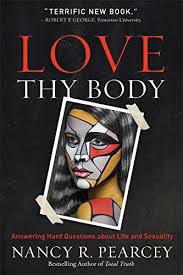
Last night our church discussed the book Love Thy Body: Answering Hard Questions about Life and Sexuality by Nancy Pearcey. I cannot stress how important this book is.

In a room of 30 church-going men and women, few could remember a time when a pastor or church had taught a series on the body. Most instead reflected on the way churches have focused on the soul/spirit to the neglect of the body. Though Scripture has much to say about creation and God’s view of the body, many in the church have been fed a diet of Gnostic wisdom.

Gnosticism is the ancient philosophy that denigrated the material world and the body. It valued the spirit, the mind, the soul; it rejected the material as impure and unholy. Probably more by accident than intention, evangelicals have followed this way of thinking. We have not done a good job teaching a positive view of the body, and we must look to Pope John Paul II to find a robust theology of the body.

In a hyper-confused world that denies the significance of the body, Christians need to give attention to the body. This is why Love Thy Body is so needed, as it tackles all sorts of subjects related to the body. It gives a grid (Francis Schaeffer’s Upper Story and Lower Story House) for understanding why so many hate the body. And it helps Christians to embrace a unified worldview that appreciates the material and immaterial part of mankind. For all these reasons, I would recommend Pearcey’s book.

I would also encouraged believers to arm themselves with Scripture that speaks about the body. To that end, I share this four-fold list. Following the pattern of creation-fall-redemption-resurrection, it gives a number of key texts for appreciating what Scripture says about the body.

Take time to read these verses and what they mean for your body. I am not including any commentary on the verses, but let me encourage you to think about how they give us a realistic and comprehensive view of the body. Continue reading