To Whom Will You Give the Sword? Seven Moral Arguments for Donald Trump

How should I vote for the glory of God?

That is a question that Christ Over All answered in a variety of ways in September of this year. And it serves as the background to this article, where I want to offer a more personal word regarding something that has changed in my own thinking over the last few years, and may help others thinking about their vote this week.

In 2016, when I was still under the sway of Russell Moore, I believed the Leftist media about how bad Donald Trump was, is, and will be. Though he promised to appoint conservative judges, I didn’t believe he had the track record to merit a vote. Likewise, as a 10 year student of Russell Moore at SBTS, and a ERLC research fellow, I largely accepted the line that Donald Trump was immoral, racist, misogynistic, you name it.

Fast forward to 2020, Donald Trump had kept his promise to appoint conservative judges.  Economically, until Covid, he had rebuilt the economy with benefits for working class families. And despite his unseemly (and often unwise) use of Twitter, he withstood endless assaults while seeking to put America first. For these reasons, and more, I voted for Donald Trump.

Following the same line of thinking that made Albert Mohler change his mind about Trump, I put my previous Never Trump interests aside, and voted for the business man from New York.

As Mohler framed it in his 2020 article, “In terms of presidential action, Donald Trump has been the most effective and consequential pro-life president of the modern age.” And this was before Roe v Wade was struck down!

Long story short, I shifted from Anti-Trump in 2016 to pro-Trump (with ongoing reservations) in 2020. Though Trump’s character (e.g., his marital record, his vulgar speech, and his Twitter discourse) continued to be a stumbling block, I voted for Trump in 2020 not based on his personal accolades but his political decisions and the promise of policies that would.

In 2024, I would vote for Trump for the same reasons. Yet, in 2024 I would also say that it has become apparent that the character of the man is not everything that it was made out to be by legacy media or evangelical pundits like David French and Russell Moore. And it is this moral dimension of Trump that impels me to write this reflection.

But first a word on voting itself. Continue reading
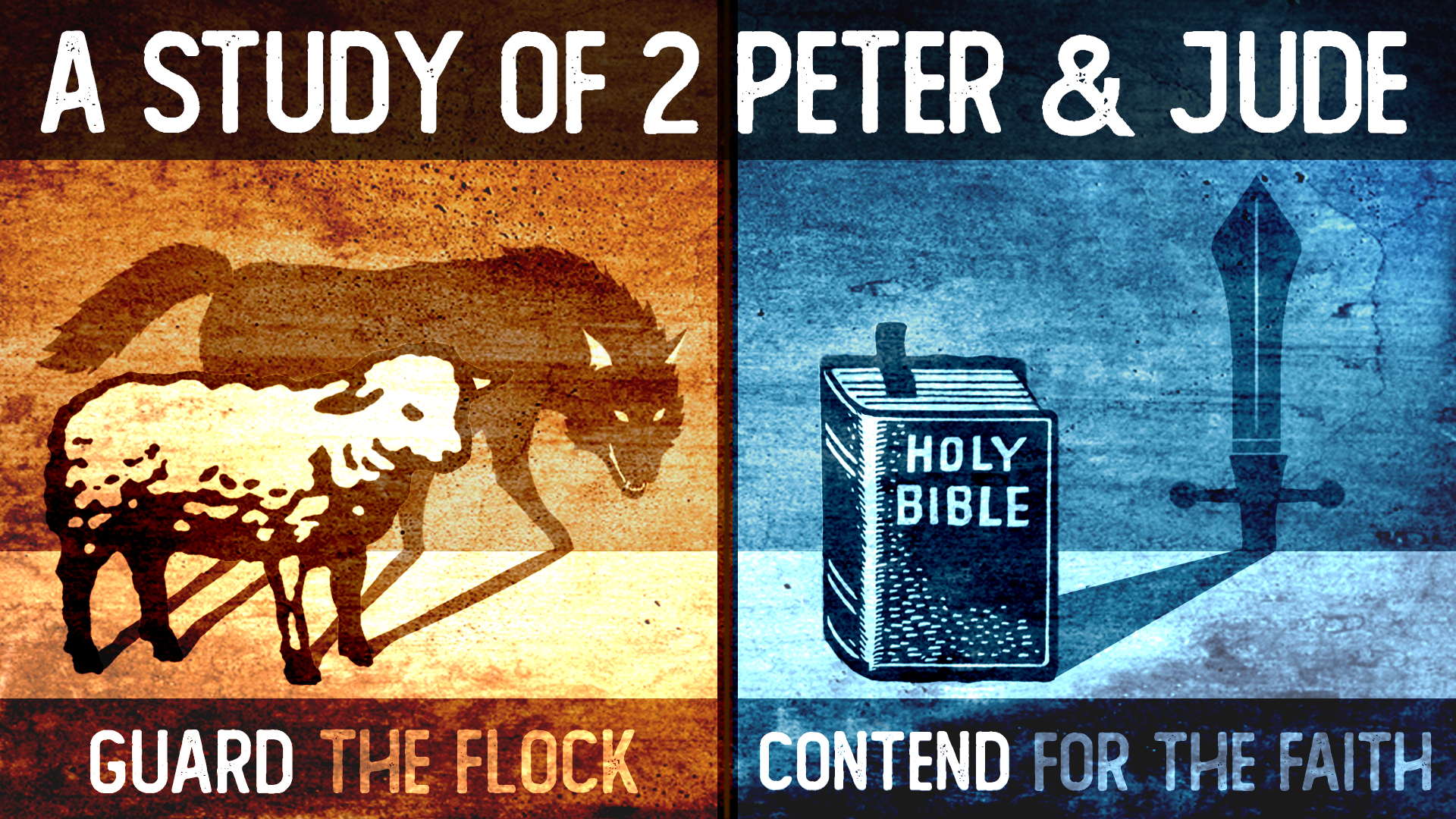
Guard the Flock and Contend for the Faith: An Introduction to 2 Peter and Jude

This summer, when the Southern Baptist Convention met in Indianapolis, Daily Wire reporter, Megan Basham, spoke to a packed room of 1000 people. In her speech, which you can now find online, she revealed various ways that pastors, churches, and other ministries have been targeted by well-funded political activists.

More recently, Megan’s book, Shepherds for Sale: How Evangelical Leaders Traded the Truth for a Leftist Agenda, became a New York Times Bestseller, as it uncovers multiple instances of evangelicals compromising their Christian commitment to the truth to have a place at the world’s table.

In eight chapters, she highlights how false teaching has been brought into the church. These issues include making climate change a Christian mission, opening borders to permit illegal immigration, diluting the pro-life movement, hijacking Christian media, employing the church to promote COVID protocols, preaching Critical Race Theory, refusing to call homosexuality a sin, and weaponizing the claims of sexual abuse.

Sadly, these eight subjects are not just matters that we find outside the church. All too often, they have been brought into the church, and they have been brought into the church by otherwise faithful pastors. Megan’s book highlights these compromises, documents their sources, and calls on faithful Christians to stand against these progressive trends.

Not surprisingly, her book has book has received a great deal of pushback. Yet, what is surprising is how evangelical leaders, including popular authors and one former SBC president, instead of admitting errors have doubled-down and repudiated Megan’s claims. It appears repentance is hard to come by these days, even among those who preach the gospel.

For my part, I have appreciated Megan’s book because it resonates with what I have seen up close and personal. I can count close to ten individuals named in this book who I know personally. And her reporting puts one place what I have seen over the last decade—once faithful friends compromising with the world in small or great ways. To give one example, my former Sunday School teacher, the Dean of the Theology School at Southern Seminary, and the man who signed both of my seminary diplomas is now partnering with an organization (Evangelicals for a Diverse Democracy) that is sponsored by an Interfaith organization led by an American Muslim. If that does not evidence Christianity astray, I don’t know what does.

Long story short, the weakness of the church in America today has not happened by accident alone. It is has also been planned by outside agitators who are looking for Christians willing to sell their birthright for a bowl of stew (Gen. 25:29–34). And sadly, many evangelical leaders have done just that. Megan’s book chronicles the last decade to show how this has happened, and Christ Over All recently sat down with her to discuss her book and why it matters for local churches.

I would encourage you to listen to our podcast and then, if time and interest allows, read (or listen) to her book and pray for the church in America. Every month, we gather on the third Wednesday to pray and one of repeated prayers is for revival to come to America. Yet, such revival will not come until repentance is led by church leaders. Judgment, Peter says, begins with the household of God (1 Peter 4:17). And to be sure, the Spirit, in order to build an unshakeable kingdom (Heb. 12:25–29), is shaking the church in America today.

So, let us pray that he grants us grace and pleas for mercy (Zech. 12:10), even as God exposes many faults in his churches. Today, as in every generation, churches need pruning. And so, let us not despise the discipline of the Lord, but let us trust him and see his lovingkindness in it. Continue reading

Wide are God’s Mercies: Giving Public Praise to Our Lord for His Ongoing Work at Our Church

nathan-dumlao-KYiGu8qqEcM-unsplashMy companion stretched out his hand against his friends; he violated his covenant. 21 His speech was smooth as butter, yet war was in his heart; his words were softer than oil, yet they were drawn swords. 22 Cast your burden on the Lord, and he will sustain you; he will never permit the righteous to be moved.

– Psalm 55:20–22 –

Recently, I received an email that brought to mind a dozen or so events from the last ten years. The email was intended to lay charges against our church, myself, and my fellow elders. And, in a world that offers multiple perspectives, those accusations are certainly one interpretation. However, as we learn from Proverbs 18:17, “The one who states his case first seems right, until the other comes and examines him.”

Today, I have no interest in examining the charges made. They have been examined often over the last six months and before, but I do have an interest in giving thanks to God for the charges that have been made and for the events they recall. For in fact, all of things that were brought to light are, from another angle, testimonies of God’s grace. And thus, I want to give public praise to God for all the ways that his mercies have been made new over the last decade.

When Paul defended himself in 2 Corinthians against the charges of the super-apostles, he boasted in his weaknesses. In what follows, I will do much of the same. But more, I will boast in the kind and loving work of God in a local church that was once featured negatively in a book by Nancy Pearcey.

As with all local churches, ours is made up of members who have feet of clay. And yet, with clay feet we are learning to walk with our Lord, and looking back on the last three decades, God has demonstrated his mercy and grace again and again. And for that reality, I am profoundly grateful. And I share these ten reflections as a testimony to the wideness of God’s of God’s past mercies, which funds the promise of future grace.

Continue reading

Of Weddings and Witnessing: The Evangelistic Pressure to Stay Positive in a Negative World

wedding reception

For even if I made you grieve with my letter, I do not regret it—though I did regret it, for I see that that letter grieved you, though only for a while. As it is, I rejoice, not because you were grieved, but because you were grieved into repenting. For you felt a godly grief, so that you suffered no loss through us.

– 2 Corinthians 7:8–9 –

In a world without sin, sermons on marriage would not be needed.

In fact, without sin, pastors might not be needed either. Or at least, they would not be needed to condemn sin, preach repentance, or offer grace. They might be needed to organize the worship of God in Christ—for God, the almighty, good, and glorious Creator would still be praised. Or, they might be needed to study the history of God’s world and to report their findings.

But, in a world without sin, heralds of the gospel would not be called to preach Christ crucified for wicked sinners, for there would be no sin. Nor would such pastors have the task of identifying idols and destroying every false idea that stands against Christ. Instead, they could just be unswervingly cheerful.

Tragically, in a world overrun with sin, many preachers have taken this path. Famously, when Larry King asked Joel Osteen about the eternal condition of Jews, Muslims, and other unbelievers, Osteen said he didn’t like to talk about sin, only about love and what the Bible says about Jesus.

Yet, what does the Bible say about Jesus? And what does Jesus say about sin? Quite a bit, actually.

The whole reason the Son of God became man was to climb the hill of Calvary and put an end to sin and death. Jesus’s whole ministry consisted of preaching about the kingdom of God and calling sinners to repent (Mark 1:14–15). Thus, it is a misnomer to speak of Christ’s love without addressing man’s sin (cf. 1 John 4:10). Unless we address the wrath of God, we cannot understand his grace or preach his gospel. Continue reading

From Thinking about Israel to Thinking God’s Thoughts After Him: Christ Over All’s January Intermission

2024–02-Thinking-Gods-Thoughts-STEach month, I write editorial transition for the website Christ Over All. These “Intermissions” highlight the past month and introduce the next. Along the way, I offer a few reflections on Christ and Culture. Here is the most recent Intermission: ‘From Thinking about Israel to Thinking God’s Thoughts after Him.’ 

Read it and pass it along to others.

***********

One month into the new year, and we are on pace to repeat at least some of the events of 2020. The Chiefs and the Forty-Niners are back in the Super Bowl, and unless something drastic happens, Biden and Trump will be on the presidential ballot. At the same time, and on the same day, Biden’s Department of Justice threatened six peaceful protestors with eleven years in prison, while it comforted an anxious American populous with the wisdom of Elmo (of Tickle-Me Elmo fame). Equally, Michael Cassidy—the man who beheaded Satan’s statue—has been charge with a hate crime, while countless other beheaders-of-statues remain at large. And all of this as Gov. Abbott of Texas exercises his right as a lesser magistrate to resist the Supreme Court’s Red Carpet treatment for illegal aliens—6.3 million since 2020.

Welcome to America 2024. Continue reading

Who is in Charge? Two Competing Visions of Church Authority

pexels-photo-272254.jpeg

In recent years and hours, lots of discussion has been given to the subject of authority. Who has authority to close the Southern border? Who has authority to mandate vaccines? Who has authority to teach children about the birds and the bees? Who has authority to close churches or constrict their practices? And in the church, who has authority to rule the congregation (1 Tim. 5:17). Is it the congregation? The elders? One elder? The most vocal or influential members? Or some combination?

Who has authority?

Of all the books I have read on the subject, the one that is most promising (I’m still reading it) is David Innes’ book, Christ and the Kingdom of Men: Foundations for Political LifeIn a section on understanding differing spheres of authority, Innes describes authority in the church. He writes,

[C]hurch government has its authority from Christ. The apostles of Christ appointed the original elders in the first churches. The apostle Paul instructed his legate Titus to “appoint elders in every town” (Titus 1:5). They are ministers of Christ who must give an account to Christ (Heb. 13:17). In the first centuries of the Christian church, civil governments were pagan, as they are today in many lands where Christ has gathered his people, and so they could not have had an organizing or overseeing role in the formation of the churches. (32)

Underscoring the source of church authority coming from Christ, Innes turns to the way churches should not receive their authority from the state. “Over many centuries, churches have had to resist civil authorities’ attempts to exert control over church leadership” (32). Indeed, in our day this is a lesson we have had to relearn. As Western civilization has rejected Christ, other gods have filled the void. And we have already seen how the god of statism is rising to power.

At the same time, however, challenges between church and state are not the only place we have a conflict in authority. We also find difficulty in understanding how the church and the self are to be related. Interestingly, Innes includes the “individual person” in his list of spheres. He explains,

It is odd to think of each individual person as a sphere of authority, but there is a God-given authority that one has over oneself. God’s creation mandate for everyone without distinction of rank or role to exercise dominion in vice-regency communicated God’s moral expectation that people would govern themselves and their personal affairs in righteousness. Self-government at this level is the moral responsibility of every human being and thus the moral right of every adult. (30)

While we mostly think about authority at the level of institutions (e.g., family, church, state), self-governance, or what Scripture labels “self-control,” is a sphere of sovereignty. God has given each image-bearer a body, and those bodies can be used as instruments of righteousness or wickedness (Rom. 6:12–23), and thus we must learn to glorify God with our bodies (1 Cor. 6:20). Such glorification certainly includes sexual purity (1 Cor. 6:12–20), but it would also include the way we use our tongues (James 3), minds (Rom. 8:7; 12:1–2), shoulders (Ezek. 34:21), and fingers (see all the bodily features of sin in Romans 3:10–19). Long story short, we must learn to govern ourselves and to say no to the sinful impulses that rise up within us (James 1:13–15). Yet, this is exactly where the modern church is struggling. Continue reading

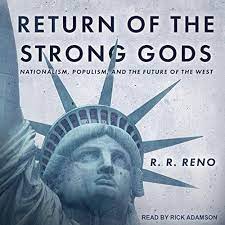
Tolle Lege: The Return of the Strong Gods by R. R. Reno

an aerial shot of the apple park in california

Apple Park in Cupertino, California

From Brexit to the rise and fall of Donald Trump, we have heard a lot about the dangers of globalism and return of populism. Many charged Trump with a kind of nationalism that led to all kinds of racism, fascism, and other political maladies. But many others, would share a concern for commercial giants like Apple, Amazon, and Alphabet Inc. (that’s Google’s parent company) who are assuming powers that transcend geopolitical nations.

In short, debates range today over what is most dangerous: Is it the tyrannical rise of globalism which calls for diversity, antiracism, and economic justice? Or is the greater concern a view of the world that affirms boundaries, borders, and limited budgets?

Those are big questions which touch on every area inch of public life, but connecting them all is a shared history of how to make sure that the fascism of Nazi Germany and the race-based slavery of America don’t happen again. Indeed, the push towards diversity and the denial of strong authorities is strongly associated with a push against the world events that ran from 1917 to 1945. Throw in the boom of technology and the ideologies of the 1960s (chronicled in Carl Trueman’s The Rise and Triumph of the Modern Self ) and you have a starting place for understanding our age.

The Return of the Strong Gods

renoAdding to this understanding in R. R. Reno’s book The Return of the Strong Gods: Nationalism, Populism, and the Future of the West. In this work of history and cultural commentary, Reno begins with the idea of the Open Society put forward by Karl Popper. He argues that Popper, along with many others, pushed hard against the militant authorities of the two world wars and called for a society that had no such “strong gods.” Reno explains how this worked out in the liberal policies of the 1960s and following, and how our world today is suffering under the weight of a world without any strong ideas. In other words, by evacuating strong leaders, strong ideas, strong gods from the world, it created a nice, safe, open space for individuals to express themselves without destroying others. Continue reading

Applying Progressive Covenantalism to the Errant Demands for Corporate Confession: My 2023 ETS Paper

Dividing-the-Faithful-cover

ETS Paper Link:

Waking Up to Corporate Confession:
What Scripture Does and Does Not Say
About Corporate Guilt and Repentance

It has been some time since I have posted here. Actually, it has longer than I remembered (May 2023). But that does not mean writing has slowed. You can find regular content that I am writing and/or editing at Christ Over All, where for the last six months we have looked at a number of pertinent issues, including

At the same time, my new book Dividing the Faithful: How a Little Book on Race Fractured a Movement Founded on Grace released in September. This book responds to Michael Emerson and Christian Smith’s book Divided by Faith. I believe their sociological study surveying black and white relations in the American church is poison pill. Undergirded by progressive views of culture and liberal theology, it leeched Critical Race Theory into the evangelical water supply. And churches, pastors, and scholars have been trying to catch up since.

At the same time that I wrote Divided by Faith, I also wrote an article on the demand for white churches and their pastors to publicly confess their white supremacy and complicity in racism. These demands reached fever pitch in 2020, and to help our church think about these matters I wrote up the attached paper. It just so happens that my paper followed very closely to the progressive covenantalism advocated by Stephen Wellum and Peter Gentry. And so today, at the Evangelical Theological Society, I am reading this paper—or at least, a portion of it.

You can find the whole thing here. And if you read it, let me know what you think. For a teaser, here’s the opening page:

In 2020, the death of George Floyd touched off a series of questions about racism and corporate guilt, not to mention justice and the justice system. In churches across the country, decisions split as to the right public response. Similarly, academics took up the issue, albeit often in more popular platforms. For instance, Michael Rhodes asked online, “Should We Repent of Our Grandparents’ Racism?” And Kyle Dillon wrote for The Gospel Coalition, “Are We Held Accountable for the Sins of Our Forefathers?” In both articles, biblical theology was used to affirm the need for modern individuals to identify with the sins of their fathers.

What can be appreciated in these articles was the way these men applied Scripture, especially the Old Testament, to contemporary questions. What was problematic, however, was the way they made applications that did not address the covenantal differences between Israel and today. As Stephen Wellum has demonstrated in his chapter on doing ethics from the perspectives of Progressive Covenantalism, the Old Testament remains needful for instruction, correction, reproof, and training in righteousness (2 Tim. 3:16–17), but biblical ethicists must recognize covenantal differences when they apply God’s Word.

In this paper, I will pick up where Wellum left off and apply progressive covenantal categories to questions about corporate guilt and repentance. In particular, I will seek to answer some of the following questions:

    • Are new covenant believers responsible for the sins of their ancestors?
    • How should we apply Leviticus 26:40–44, which calls for the need to confess the sins of our fathers?
    • Do the corporate confessions of Daniel, Ezra, and Nehemiah call us to do the same?
    • How does the New Testament understand confession in the corporate sense?
    • And most specifically, if we were to turn the clock back to 2020, what might we say from Scripture about the practice of corporate confessions.

In what follows, I will answer these questions and show how progressive covenantalism provides a more robust biblical answer to ethical questions concerning corporate guilt, generational sin, and corporate repentance.

Again, you can keep going here.

For now, I will keep working on writing and editing at Christ Over All. But Lord willing, in the near future, I will be back on this site to add more biblical and theological reflections. Until then . . .

Soli Deo Gloria, ds

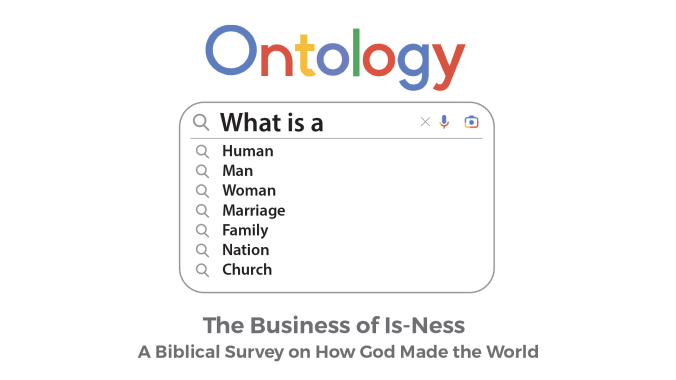
Ontology 101: What is Humanity?

ontology1920x1080-1Since 2013, I have taught the doctrine of humanity a half a dozen times. And in each class, I have put this question on the final exam: What is the most important doctrine for the twenty-first century?

I ask the question because in every era of the church there are unique theological challenges. For instance,

  • In the second and third centuries, the church had to grapple with the relationship between the Old and New Testaments, as well as the errors of Gnosticism.
  • In the fourth and fifth centuries, the church had to defend the deity and humanity of Christ, the proper understanding of the Trinity, and the divinity of Holy Spirit.
  • During the Reformation, the church recovered the doctrine of justification by grace alone through faith alone in the person and work of Christ alone.
  • And nineteenth and twentieth centuries, the doctrine of Scripture had to be clarified, because scientific claims and critical methods of interpretation sought to make the Bible a book like any other.

These are but a few doctrinal disputes that have arisen in church history. By identifying doctrines with decades (or centuries), I am not denying the perpetual need to declare and defend all doctrines, but there are certain pressures in culture that cause the church to reassert or reinforce biblical doctrines. And when it comes to the twenty-first century, there is no more important doctrine than the doctrine of humanity.

That’s why I ask that question on my theology exam, and here is the reason. Continue reading

Ontology 101: What is the Cosmos?

ontology1920x1080-1

Ontology 101: What is the Cosmos?

Where are we? This is an important question, especially if you have been dropped off in a place you don’t know. Or, you are visiting somewhere for the first time.

In truth, lostness is a part of life. When God created the world, he made it big, with large stretches of land and sea. Then, when he brought Noah and his family through the flood, he added mountains and valleys, languages and cultures. As a result, all humans have experienced the paralyzing effects of not knowing where they are and not knowing (for a short time or a long time) how to find our bearings.

Thinking about this, we realize that “finding ourselves” in this world requires more than a good GPS. While we may know our coordinates on the planet, we may be equally confused about how to think about the planet itself. That is to say, while we may have a map on our phones, if we are interpreting the world around us by the tools given to us by a secular and secularizing world, we may not have any idea that God dwells in heaven and we are on earth, in the place that we are (Acts 17:26), because he put us here and defined our boundaries. Moreover, without the right tools for interpretation, we may try to find ourselves in ways entirely at odds with our Creator. Such is the condition of postmodern humanity.

For all the technological know-how that we have acquired, we have lost something valuable in our world—namely, a right understanding of the cosmos. After all, what is the world? Is it something that we must accept as we find it? Or do we have permission to re-engineer the world around our own concepts of justice, goodness, and flourishing? And who decides?

Even for those who have grown up in church, the stories of God’s creation and flood must contend with Darwin and his disciples. The miracles of Jesus must overcome our modern commitment to natural causation. And our belief in Jesus’s virgin birth and third day resurrection must fight off attempts to make these historical events mere allegory or spiritual fictions. And those are a just a few of the ideas that contend for space in our secular.

Taking another step forward in our series, Ontology 101: The Business of Is-ness, this weeks sermon addressed the nature of cosmos. And from Psalm 104, I offered seven pillars for a biblical cosmology. These pillars are

  1. God Created the World to Reveal Himself
  2. God Built the World as a Three Story Temple
  3. God Preserves the World for Man to Enjoy
  4. God Tests Mankind by the World He Has Made
  5. God Permits Good and Evil to Grow in His World
  6. God Will Bring This World to an End
  7. God Will Bring His People Into a New World of Eternal Rest

Those seven pillars not everything that can be said about God’s cosmos, but they offer a good start. And they certainly counterbalance the godless materialism offered in public schools across our nation. Indeed, too many Christians are double-minded when it comes to understand the world. While they know the stories of Genesis, these historical events are often held hostage by the scientism that masquerades as legitimate science today.

In truth, we need to know what astronomy, biology, and chemistry reveal about God’s world. But just as important, we need to know how these studies in general revelation relate to the special revelation of Scripture. Wonderfully, God has made the world and everything in it, and we need to learn from Scripture what the meaning, purpose, and nature of the world is. Indeed, as we inhabit this space, we need to answer the question: Where are we? And the best place to begin is not found on a map, but in the pages of the Bible. To that end, I offer this sermon.

Soli Deo Gloria, ds