Seeing God’s Holiness in the Pentateuch

mosesOver the summer I took ten weeks to preach on the holiness of God in the Old Testament. Or, that’s what I intended to do.

Somewhere in Numbers, I realized that I needed to limit my Old Testament sojourning to the forty years Yahweh led Israel through the Wilderness. Even then, I didn’t have time to consider all that Numbers says about God’s dealings with Israel.

What I did preach and what I pray our church saw, however, was a God relentless in his pursuit of his holiness. Continue reading

Why Non-Pastors Should Read the Pastoral Epistles

pastoralsNext week I will begin preaching the book of Titus on Sunday mornings. Although Titus is only three chapters and forty-six verses in length, it contains a great deal of instruction for the church.

Titus is often grouped with two other Pauline epistles—1 Timothy and 2 Timothy. Together these three letters are known as the “Pastoral Epistles.” They are written to two of Paul’s sons in the faith (1 Tim 1:2; 2 Tim 1:2; Titus 1:4), ministers of the gospel sent by Paul to Ephesus and Crete for the purpose of building up those churches. As a matter of fact, Timothy and Titus are not so much pastors themselves but apostolic delegates who are called to confront error (1 Tim 1:3-7), preach sound doctrine (2 Tim 1:13; Titus 2:1, 15), and further the faith of God’s elect (Titus 1:2).

From this little synopsis, one might get the impression that the Pastoral Epistles are strictly for pastors, or at least for those working in the ministry. One might conclude they only have tangential relevance for the stay-at-home mom or the factory worker. However, such a conclusion would be premature, for the Pastoral Epistles have great application for all Christians. What follows are five reasons why every Christian should read them, study them, and apply them. Continue reading

My Twelfth ‘Old Book’

My son, beware of anything beyond these.
Of making many books there is no end,
and much study is a weariness of the flesh.
— Ecclesiastes 12:12 ESV —

On Monday I listed eleven old books that every Christian should read. I asked you what the twelfth book should be. Here are the books suggested.books

  1. The Scandal of the Incarnation selections from Irenaeus’ Against Heresies (Jason Miller)
  2. The Bondage of the Will (John T. Jeffery) 
  3. On the Freedom of a Christian by Martin Luther (Jeffery Hutchison)
  4. Abandonment to Divine Providence by Jean-Pierre de Caussade**
  5. The Mortification of Sin by John Owen (Ben . . . )
  6. The Christian in Complete Armour by William Gurnall (Ben . . . )
  7. The Life and Diary of David Brainerd by Jonathan Edwards (Josh Philpot)
  8. Lives of the Three Mrs. Judsons by Arabella Stuart (Jerod Harper)
  9. Holiness by J. C. Ryle (Cade Campbell)
  10. The Cost of Discipleship by Dietrich Bonhoeffer (Terry Braswell)
  11. In His Steps by Charles Sheldon (Terry Braswell)
  12. The Cross of Christ by John Stott (Tony . . .)

From the responses, it looks like we have our next twelve. I would heartily commend ten of them, with caveats about a few. Continue reading

Preaching Larger Sections of Scripture

bibleIn creation, God put beauty and design into the largest galaxy and the tiniest cell. Accordingly, we have, for centuries, used different instruments to behold the glory of God in creation: the microscope enables us to see God’s miniscule  handiwork; the telescope opens our eyes to heavenly vistas. From both ends of the spectrum, we benefit from considering God’s micro-creation and macro-creation.

Something similar takes place in the Bible. When we read Scripture, we can find gospel truth in a word (propitiation), a phrase (‘it is finished’), a verse (John 3:16), a story (Job’s suffering and restoration), or a series of songs (the Psalter). Indeed, from every angle, we behold God’s wisdom and goodness in his word. Yet, unless we are intentional, it is easy to focus on the smaller parts of the Bible and to miss the larger ones.

There are many reasons for that—lack of time, lack of understanding (what is Revelation about?), lack of interest (why do I need to read the minor prophets?). In our fast-paced world, it is easy to overlook the Bible’s big picture, and often pastors have not helped their people “put the Bible together.” Still, I am convinced that if we are to have minds renewed by the Scriptures, we must not simply have a collection of unrelated memory verses free-floating in our heads; we must also understand the larger framework(s) of the Bible. For that reason, I want to suggest five reasons why I preach larger sections of Scripture. Continue reading

What Good is the Book of Numbers?

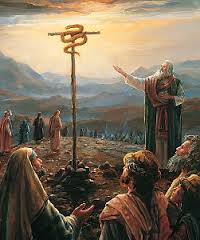
serpentFew books in the Bible hide their riches better than the book of Numbers. Concealed by an accountant’s title (‘Numbers’) and begun with a lengthy census (ch. 1), the casual reader of Numbers may come to the honest, but mistaken, notion that this is a boring, impractical book.

However, Paul has the exact opposite feeling. In 1 Corinthians 10, he says that the events of Numbers (along with everything in the five books of Moses) “were written down for our instruction, on whom the end of the ages has come” (v. 11). Specifically, Paul lists Israel’s sexual immorality at Baal-Peor in Numbers 25 (vv. 7–8), the incursion of serpents in Numbers 21 (v. 9), and the grumbling of Israel which occurred throughout the exodus journey (v. 10).

In truth, Paul reminds us that these ancient words are ever true and that in God’s wisdom they were written down for me and you. To put it more generally, the book of Numbers is not simply a book of Jewish history, a record of priestly duties, and medicinal wound care for scabs and leprosy victims. Oh no. It is more. It is a book of Christian Scripture that points us to Christ. Continue reading

The 2014 Southern Baptist Convention

sbc14logoartFor two days in Baltimore this past week (June 10–11), 5,294 Southern Baptists (plus guests and children) met to spur one another on in the Lord and discuss business pertaining to the Southern Baptist Convention. (See this earlier post for more information on the SBC).

Representing our church, Wendy and I had the joy of hearing what God is doing all over the world among Southern Baptists. Let me share a few of these things with you.

The Resolutions

In total, messengers adopted nine resolutions ranging from payday lending to church revitalization to the celebrating the 50th anniversary of the 1964 Civil Rights Act. Resolutions are statements adopted by the convention that speak with biblical conviction about beliefs that Southern Baptists share in common.

The most important resolution, and the one you are likely to hear misrepresented in the media concerns transgender identity. Denny Burk, along with Andrew Walker, made a proposal that Southern Baptists should treat with compassion those who adopted transgender identity, but that in no way should we permit or condone such behavior. Since transgender acceptance has reached a tipping point in our culture, according to Time magazine’s recent cover story, it is worth your time to read the resolution. Although, this resolution has received secular condemnation, it is a vital statement about the gospel and God’s good design for humanity as male and female.  Continue reading

The SBC: Part Business Meeting, Part Revival, Part Circus

sbcA week from today Southern Baptists from all over the world will convene in Baltimore, Maryland to stir one another up to love and good deeds, discuss business, and eat lots of food—probably seafood, this year. My family I will be some of them—unless an earlier-than-expected delivery arrives.

On Sunday, I shared, through our church newsletter, what the Southern Baptist is and why they should try to go to it at some point in the future. I share the same brief history with you and why (if you are a Southern Baptist) you should go to the SBC.

What is the Southern Baptist Convention?

A few years ago, when still in seminary, and before I’d been to a Southern Baptist Convention (SBC), I asked a friend, whose father was at one time a seminary president: What is the Southern Baptist Convention like? Here’s what he said, “It is part business meeting, part revival, part circus.” Hmmm. Really? Continue reading

Spotting Counterfeit Gospels

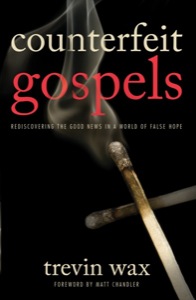
gospelThis week, I discussed “counterfeit gospels” with a couple guys I am meeting with for discipleship. After unpacking the horizontal gospel and vertical gospel for the last three months (those are my terms for what Matt Chandler has called the “gospel in the air” and the “gospel on the ground”), things began to crystalize as we considered ways in which evangelicals misunderstand the gospel.

To that end—understanding and recognizing our deviations from the gospel—Trevin Wax’s book Counterfeit Gospels is a great aid. In three sections, he outlines the gospel in terms of story (creation, fall, redemption, and new creation), announcement (God sent his son to die in the place of sinners; he raised him to life on the third day for the justification of sinners; and any and all who trust on Christ for the forgiveness of their sins will be saved), and community (the people of God are formed by the gospel and are called to announce the gospel).

In each section, Trevin explains in detail what the gospel is, but then he devotes two chapters in each section to tackle what the gospel isn’t. And better than any book I’ve read on the gospel, his book exposes the false gospels of our day. What Counterfeit Gospels does so well is, borrowing the language of J. I. Packer, to show how half-truths masquerading as whole truths become damnable untruths—okay, so  I might have added the anathema. But the point remains.

A Modern Evangelical Problem

As is too often the case, Christians who (I think) believe in the gospel fail to communicate the gospel. Instead of articulating the gospel in Scriptural terms, they dress it up in psychological language, reduce the weight of God’s judgment, and replace evangelistic witnessing with social action as the mission of the church. And these deviations does not include the false teachers who outright reject the true gospel or intentionally declare a false gospel.

Concerning the unintentional misrepresentation of the gospel, I heard a pastor recently preach a gospel-less Good Friday message. Yet, when I spoke with him about it later and asked him what the gospel was, he clearly articulated it’s meaning. What is going on? Continue reading

Without Holiness . . .

bushSunday I will begin a series of sermons on the holiness of God, namely his kindness and severity evinced in the stories of Old Testament Israel. Since the history and example of Israel has been given to Christ’s church, it is vital that we labor to know those men and women who walked with God in the Wilderness, and more, we must know the Holy One of Israel, whose holy love impelled the Father to send the Son to die for sinners.

In truth, we in the modern church are not comfortable lingering with God and meditating on the fact that he is a consuming fire (Heb 12:29). We are much more accustomed to bite-size theology, ten minute devotionals, and casual worship. And yet, what the church needs most today is a fresh encounter with the holiness of God.

Or maybe I just speak for me. I continue to be struck by how much my faith is influenced by the weightlessness of modern evangelicalism. I am not surprised at how my ambient culture has impacted me; I am surprised by how little the God of the Bible has impacted modern Christians. This is why I will be preaching on the kindness and severity of God found throughout the Bible (cf. Rom 11:22).

Without Holiness . . .

Most recently, this thought about our need to ponder the holiness of God was stirred afresh by David Wells in his book God in the WastelandHis soul-searching, heart-pulverizing disclosure of God’s holiness indicates what happens to grace, sin, God, and the gospel when churches overlook the holiness of God. In his survey of Scripture and church culture, he explains what has happened to the modern church who by and large operates without a sense of holiness.

Consider his words, which I’ve bullet-pointed to draw attention to the idea of holiness’s absence (pp. 144–45). Continue reading

Six Keys to Detecting the Prosperity Gospel

apjA few months ago Nine Marks ministries released an e-journal on the subject of the “prosperity gospel.” In that journal, I wrote about something that I have seen in ministry, what Kate Bowler has labeled the “soft prosperity gospel.” In my article, I listed five ways of detecting this form of the prosperity gospel. They are

  1. Soft prosperity elevates “blessings” over the blessed God.
  2. Soft prosperity detaches verses from the redemptive framework of the Bible.
  3. Soft prosperity diminishes the curse that Christ bore and the blessing of the Holy Spirit.
  4. Soft prosperity relies on pastor-prescribed therapeutic techniques.
  5. Soft prosperity largely addresses first-world, middle-class problems.

Today, on his daily Q & A program, Ask Pastor JohnJohn Piper lists six more ways to detect the softer prosperity gospel. In order they are, in question form:

  1. Does the preacher deal honestly with the biblical doctrine of suffering?
  2. Does the preacher speak about the need for self-denial?
  3. Does the preacher preach expository sermons, where the shape and content of the Bible forms the shape and content of the sermon?
  4. Does the preacher wrestle with tensions in the biblical text?
  5. Does the preacher live a lavish lifestyle that elevates him over most of the people in his church?
  6. Does the preacher elevate self and minimize the greatness of the glory of God?

If the answer to any or many of these questions is “yes,” then there is or is beginning to emerge in that church a message of prosperity preaching.

Sadly, the softer form of the prosperity gospel is rife within evangelical churches. We need to be aware of it, repent of it, and pray that God would give us grace to combat it in our churches and in the corridors of our own hearts. Knowing the signs of the soft prosperity gospel is a beginning place to address the problem.

To hear John Piper’s answer in full, check out his podcast “Six Keys to Detecting the ‘Prosperity Gospel.'” You can also read his thoughts about developing a philosophy of ministry that does not move towards the prosperity gospel: “Prosperity Gospel: Deceitful and Deadly.” For the whole 9Marks journal, visit here.

Soli Deo Gloria, dss