(How to) Let Love Increase: A Meditation on 1 Thessalonians 3:11–13

waterNow may our God and Father himself, and our Lord Jesus, direct our way to you, and may the Lord make you increase and abound in love for one another and for all, as we do for you, so that he may establish your hearts blameless in holiness before our God and Father, at the coming of our Lord Jesus with all his saints.
 – 1 Thessalonians 3:11–13 –

In his letters, Paul often inserts a prayer for the sake of his brethren. And what he typically prays for is twofold—that the church of God would increase in knowledge of God and love for one another.[1] First Thessalonians is typical in this regard. After recounting Timothy’s report of the Thessalonians faith, hope, and love, he proceeds to pray for these people whom he loves with deep affection.

In his prayer, he petitions God to increase their love for one another and for all people. In these three verses (3:11–13), we can learn four things about love for one another. Continue reading


Lawful Love: How the Law Preserves and Propels Our Love

law loveFor the one who loves another has fulfilled the law.
 – Romans 13:8 –

What is love?

Often it is defined as some sentimental feeling. Some emotional experience. Some pitter-patter in your chest. Rarely, is love associated with law-keeping, rules, or righteousness.

In our “if it feels right, do it” sort of society, love does not shack up with legal requirements. But in the Bible where love is defined by God (1 John 4:8) and demonstrated on the cross (1 John 3:16), love is regularly related to the law. In fact, Romans 13 says, “Love is the keeping of the law” (v. 8) and “Love is the fulfilling of the law.” Likewise, Galatians 5:14 reads, “For the whole law is fulfilled in one word: “You shall love your neighbor as yourself.”

Following the teaching of Jesus, Paul reiterates his Lord’s view of the law. In the Sermon on the Mount Jesus said, “Do not think that I have come to abolish the Law or the Prophets; I have not come to abolish them but to fulfill them” (Matt 5:17). And later in the same Gospel (22:36–40), Jesus explained that the Law and the Prophets hang on these two commandments: to love God (Deut 6:4) and to love neighbor (Lev 19:18). Indeed, against popular opinion, the Law was not given to merely enforce rules. It was given so that the people of Israel might love one another with absolute righteousness. To say it differently, God’s love is defined and delimited by covenantal laws. Continue reading

A Debt of Love: How God’s Grace Makes Us Debtors with an Infinite Bank Account

love1Owe no one anything, except to love each other, . . .
 – Romans 13:8a –

Proverbs repeatedly instructs us to reject financial commitments that make us slave to the lender (Prov 22:7). It is good stewardship to buy what we can pay for and not to spend more than we have. But what would happen if you received an infinite inheritance? What kind of moral obligation would you have “spread the wealth”?

Imagine that the unbeknownst to you an oil baron died and left you all of his fortune. Though never communicated to you, your father had saved this man’s life by sacrificing his own. Indebted to your father, this tycoon had promised to one day repay his kindness. With no children of his own, he decided on his death bed to give his “saviors” children his entire estate.

What would you think? Surely, this windfall would provide you an endless supply—more than you could ever exhaust. If such a boon came your way, how would you employ this vast treasure? Would you live a life of unfettered hedonism? Or would you strive to follow in the footsteps of your father and improve the lives of others? Continue reading

Brotherly Affection Must Endure

hebrews 13Brotherly affection protects one another’s purity and provides for those in need. But for it to make lasting impact, it must also endure.

Endurance

In the same context where Paul speaks of doing good to everyone (Gal 6:10), especially to those in the church, Paul says, “And let us not grow weary of doing good, for in due season we will reap, if we do not give up” (Gal 6:9).

To exercise brotherly affection is exhausting, and the authors of Scripture know it. To crucify the flesh and resist the pull towards impurity is hard. To give one self for the spiritual and physical needs of another is even more grueling.

For that reason Scripture commands us to “let brotherly love continue” (Heb 13:1). Continue reading

Brotherly Affection Provides For Others

brotherly love

Love one another with brotherly affection.
— Romans 12:10a —

Provision

Brotherly affection not only relates to purity, but also to provision.

When I moved to seminary, the Lord impressed on me the importance of working harder and longer. Impelled by Ephesians 4:28, I realized that I needed to work more hours so I could eat, pay for school, give to others, and not be a “mooch.”

I would suggest that this attitude of laboring for the sake of others is part of what it means to love one another with brotherly affection. In the context of Romans 12:10, brotherly affection is followed by the command to “Outdo one another in showing honor.” This doesn’t directly apply to money or giving, but certainly we honor one another with our wealth—with the ability to give to others.

With brotherly affection, we are to look out for ways to meet the needs of our family. Continue reading

Brotherly Affection Protects the Purity of One Another

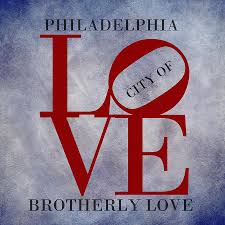
fine artPhiladelphia is well-known as the city of  “brotherly love.” But before early Colonialists planted that city, the apostles Paul, Peter, and the author of Hebrews used the word philadelphia to speak of the way fellow Christians should love one another.

What does brotherly love mean? Romans 12:10 speaks plainly, “Love one another with brotherly affection” (philadelphias).  But how do we do that? By looking at the six uses of the word in the New Testament, we learn that brotherly love protects one anothers purity, provides for one another’s needs, and endures in both of these ennobling graces.

Today we’ll consider the purity of brotherly affection. Tomorrow we’ll turn to protection.  Continue reading

Shepherds After God’s Own Heart

sheep‘And I will give you shepherds after my own heart,
who will feed you with knowledge and understanding.
– Jeremiah 3:15 –

In a chapter lamenting the spiritual adultery of Israel, Yahweh promises to give his people shepherds who will feed them with knowledge and understanding. He calls these “pastors” “shepherds after his own heart.” In the context of the prophets (and in Jeremiah especially), the arrival of these God-centered pastors marks the coming of the new covenant. While there were  faithful shepherds in the Old Testament, there were few. It would take the arrival of the Spirit to fulfill this verse and to supply God’s people with shepherds after God’s own heart.

Today, firmly situated in the era of the new covenant, this verse prompts pastors and churches alike to consider the gift, calling, and responsibility pastors have to shepherd the flock of God among them. And from this verse we can see at least four truths worthy of remembrance and application. Continue reading

Life Together: A Short Review

lifeThe local church was always at the center of Dietrich Bonhoeffer’s heart and theology. In his studies he wrote his first dissertation on life in the church (“The Communion of Saints: A Dogmatic Inquiry into the Sociology of the Church”).  As a theological professor he labored to train pastors for the church. And in his later writings, he often returned to muse on life together in the local church.

It’s this subject that entitles one of his most famous works, Life Together, posthumously subtitled, “The Classic Exploration of Christian Community.” Coming in at 122 pages, Life Together is not a long book. But it is one that invites you to think deeply about God’s design for his people. Overflowing with wisdom, you will run your highlighter dry if you are given to marking up books.

As we consider the One Anothers in our weekly sermons, I would encourage you to pick up a copy. A small investment in reading Life Together will pay big dividends on doing life together. Continue reading

How the Lord’s Supper Fuels Us to Love One Another

washing feet[This article originally appeared on our church website as a Lord’s Supper meditation].

THE LORD’S SUPPER

In Luke 22 Jesus serves the Passover and calls it his new covenant meal: “This cup that is poured out for you is the new covenant in my blood” (v. 20). Fulfilling the words of Jeremiah 31, Jesus as God’s priestly mediator brought an end to the old covenant and inaugurated the new when he went to the cross (see Hebrews 9:15–17). Anticipating his crucifixion on the next day, Jesus transformed the Passover from an old covenant shadow to a new covenant reality.

When we take the Lord’s Supper, we look back to the legal transaction that resulted in our pardon, and looking forward we see what Christ’s death accomplished— an international multitude gathered around God’s throne. In the immediate, this future reality is lived out in our local fellowship. As members of Christ’s body, we are unified to Christ and to one another.

For this reason, the Lord’s Supper can never be taken alone. It is the church’s meal. Regardless of what the modern elements look like, the symbolism of Jesus is unmistakable. The one loaf represents the unity of the messianic community, while the broken pieces portray the need for every member to receive Christ’s life (Luke 22:19). Likewise, the cup was “divided” such that the Upper Room communicants enjoyed the same wine (Luke 22:17).

For us, the Lord’s Supper reminds us of our partnership together in Christ. As such it marks out those who are his and those who are not. It is a regular reminder of our Savior’s atoning death and of our Savior’s decided accomplishment—the community created by his shed blood. As 1 Corinthians 11:25 says, it proclaims the death of Christ until he comes. But because it is taken by the saints made alive by his cross, it also proclaims the life given to us—a life lived one with another. Continue reading

All the One Anothers: Streams of Light from the Prism of Christ’s Love

lightOn Sunday I preached on Psalm 133, emphasizing how the local church is one body in Christ and individually members one of another (cf. Rom 12:5). While not using the words “one another,” Psalm 133 speaks of the family of God dwelling together in Christian unity. This is the foundation of all the one another commands.

We can’t begin to obey the Lord’s commands towards one another until we begin to see ourselves as united in Christ. But neither can we manage to love one another until we see what that love looks like. This Sunday we will consider John 13:34–35 and Jesus’ new commandment to love another.

To help you consider the content of the one anothers, I would suggest that “Love One Another” is the main command and that all others explicate this first and great command. While the New Testament lists three dozen one another commands, these are not 36 disparate injunctions. Rather, they are various but united manifestations of the love God pours out into our heart. They are the colorful streams of light that shine from the one prism of Christ’s love.

While each command deserves its own consideration, it is worth observing that the multitude of commands can be generally classified under five headings. In what follows I have listed each passage under one of these five headings. In the weeks ahead I hope to look at each passage individually.

  1. Love One Another
  2. Be at Peace with One Another
  3. Show Hospitality to One Another
  4. Do Good and Not Evil to One Another
  5. Edify One Another

Continue reading