 Among recent studies on the Psalms, one of the most linguistically rigorous is that of Robert Cole, (former?) professor of Old Testament at Southeastern Theological Seminary. His monograph The Shape of the Message of Book III (Psalms 73–89) shows just how carefully the editor(s) of the Psalms arranged the collection of the Psalms. And any student of the Psalms would benefit from his exhaustive study.
Devoting a chapter to each Psalm (17 in all), he shows how every psalm can and must be read in light of its surrounding context. His trench work shows that a canonical approach the Psalms is not just the product of an over-eager imagination that sees connection from a high altitude. Rather, he demonstrates how the grammar of the Psalms is intentionally ‘shaped’ to fit one Psalm into another.
For instance, he shows how Psalm 73, which begins Book III, develops verbal connections with Psalm 72 in the first strophe (vv. 1–12) and how the second (vv. 13–17) and third (vv. 18-29) strophes of the same Psalm anticipate words and events in Psalm 74 (pp. 15–28). In order, he follows this methodology through Book III, showing why a canonical reading of the Psalms is more than permissible. For those who care deeply about literary context, it is necessary.
For any pastor preaching through the Psalms or any student of Hebrew poetics or biblical hermeneutics, Cole’s book is an excellent technical study on how the Scriptures are knit together. At the same time, his opening section provides a number of quotations on recent research on the Psalms. Following Gerald Wilson and others, he provides more than half dozen block quotes arguing for the necessity of reading the Psalms as a whole. Continue reading
 Now this was written allegorically: these women are two covenants.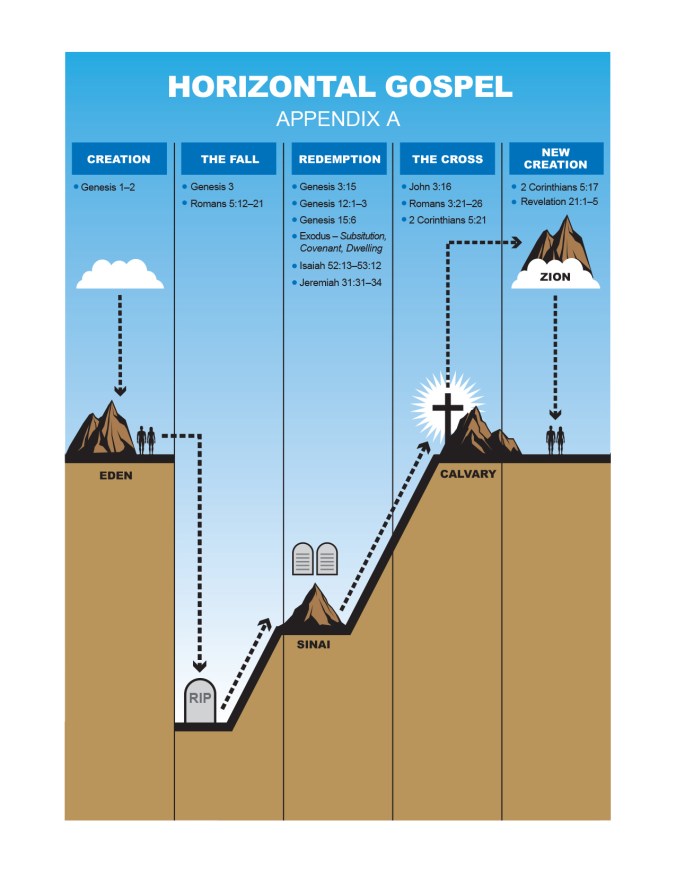


 How did we get the Psalms? And how do we get into the Psalms? Meaning, how do we apply the Psalms of ancient Israel to ourselves today? And in applying them, how do we avoid undisciplined allegory and mere historicism devoid of Christ?
 Last month the Southern Baptist Journal of Theology (SBJT) published an article I wrote. In “
 The Bible begins with a marriage, and it ends with a marriage. In fact, the goal of all humanity is a spiritual union between Christ and his bride the Church. In between, we must decide if we will abide by God’s design for marriage or design our own.
 Via Emmaus