 When you think of “salvation” is it a past, present, or future reality?
If we let Scripture shape our thinking and the answer we give, it is surely all three. The elect of God have been saved (past tense) when they received and believed the gospel of Jesus Christ (see Ephesians 2:8). At the same time, those who have been saved are also being saved (see 2 Corinthians 2:15) and one day will be saved (Romans 13:11).
This way of thinking is not uncommon in biblical Christianity. As it is often framed, Christians are saved from the penalty of sin (past), the power of sin (presence), and will be saved from presence of sin (future). Each temporal aspect is true and cannot be divided from the other, but are they of equal stress in the Bible? Does Scripture place greater prominence on one aspect of salvation above the others? I believe so.
In seminary I read the book The Race Set Before Us: A Biblical Theology of Perseverance and Assurance by Thomas Schreiner and Ardel Caneday. In their book, they show how the New Testament emphasizes a future orientation for salvation. That is to say, while salvation is a past, present, and future reality, it is the future aspect that is most often described and discussed.
This revelation surprised me, and I bet I’m not alone. Protestants are people who like to hear testimonies of someone “got saved.” We say things like: “At youth camp, 15 teens were saved.” And we like to ask questions like: “When you were saved?” All in all, while we may know that salvation has a future orientation, that is not the emphasis most evangelistic Christians seem to put on it. And that, I believe, is a problem. Continue reading
 This year I am reading through the works of Princeton theologian B.B. Warfield. As I find various important points or quotes, I’ll try to put them up here. Today I offer this first quotation that pertains to the task of systematic theology and its relation to exegesis and biblical theology.
 In the last three years, I’ve seen three movies in the theater. I share that to say, I’m not an avid moviegoer. But for reasons of cultural interest and paternal pressure, my sons and I have gone to see the last three Star Wars in the theater. And thus, I offer a belated reflection on the movie.
 Among biblical theologians, Graeme Goldsworthy is a well-respected scholar with great passion for Christ and his church. His works on the
 Few places in Scripture are more important, more debated, or more theologically-rich than Genesis 1–11. As to their importance, they introduce the Bible to God and his purposes in the world; as to debate, they were polemical from the start, as Moses wrote these chapters to combat other creation stories in the ancient Near East; and as to theology, these eleven chapters introduce nearly every doctrine found in the rest of Scripture.
 8 For by grace you have been saved through faith. And this is not your own doing; it is the gift of God, 9 not a result of works, so that no one may boast. 10 For we are his workmanship, created in Christ Jesus for good works, which God prepared beforehand, that we should walk in them.
 As 2017 finishes and we look ahead to 2018, let us not fall into the trap of only looking at ourselves. How easily and yet how discouraging (or self-exalting) it can be to only look at our achievements in 2017 or our plans in 2018, and to do so while missing Christ, his work, and his plans.
 In his excellent book on the Trinity, Fred Sanders makes a number of key observations related to seeing (and not seeing) the Trinity in the Old Testament. (This subject takes up the whole of chapter 8 in
 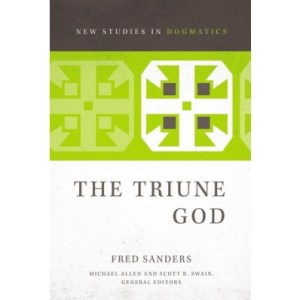 should not begin with the Old Testament. Because the doctrine is revealed in the historical events of the Incarnation and Pentecost, not the propositions of the text, we must begin with the events recorded in the New Testament, not the hints contained in the Old. Sanders rightly corrects strictly chronological approaches to the Trinity: “The root idea of revelation is not verbal announcement but the unveiling or disclosing of something that has been present, though concealed. . . . The triunity of God was revealed when the persons of the Trinity became present among us in a new way, showing up in person and becoming the object of our human observation” (40).
 And God blessed them. And God said to them, “Be fruitful and multiply and fill the earth and subdue it, and have dominion over the fish of the sea and over the birds of the heavens and over every living thing that moves on the earth.
 Via Emmaus