 Hunger. It’s one of the most basic of human desires. And in the Bible it is one of the most important concepts related to salvation, faith, and one’s experience with God.
Physically, hunger and our attempts to fill our stomaches are experiences that unite all mankind. While experienced differently in famine-afflicted Africa or affluency-afflicted America, an “empty stomach” is something that speaks to everyone. We cannot go without food, and thus we search for something to fill us up and give us life.
Spiritually, the language of food, famine, eating, nourishment, and emptiness fills the Bible. From the plethora of fruit trees given to Adam and Eve in the Garden, to the Manna in the wilderness, to the loaves and fishes that Jesus provided for his followers, God has provided physical sustenance. At the same time, food has been a source of destruction—sin entered the world through eating the forbidden fruit; Esau lost his inheritance when he chose stew over his birthright, and Paul says that men ate and drank destruction on themselves when they wrongly ate the Lord’s Supper.
So clearly, food plays a key role in our physical and spiritual pursuit of God. At the same time, Scripture often speaks of eating metaphorically. Psalm 34:8 reads, “Taste and see that the Lord is God.” And Psalm 36:8 says that the children of man “feast on the abundance of your house, and you give them drink from the river of your delights.” Apparently, our experience with food—physical bread, meat, and drink—is meant by God to teach us what it means to feed on the Lord and drink from his streams of life.
Still, I suspect that for all we know about food, we may struggle to understand what it means to feed on the Lord. If God is Spirit (John 4:24), then how do we feed on him? And if he is invisible, where do we go to find fullness in him?
Just this last week, I preached a message on feeding on the Lord. My repeated command: Feed on the goodness and grace of God. But how? I can imagine someone saying, “That’s sounds great, but what does that mean?” So here is my answer to that question: What does it mean to feed on the God who is invisible? Continue reading



 “Disciples make disciples”
 In Matthew 5:21–26 Jesus outlines his interpretation and application of the sixth command, “Thou shall not murder” (Exod 20:13; Deut 5:17). And though Jesus words are only six verses in length, we can learn at least eleven truths about anger from Christ’s wise words.
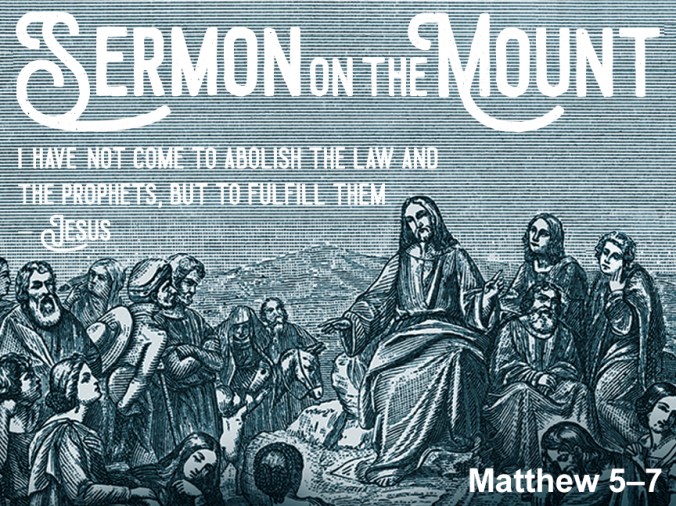
 What is the Sermon on the Mount about? And more basically, what is the Sermon on the Mount? Is it a newer, more stringent law for Christ’s disciples? Is it an ideal which drives disciples to seek mercy? How should we understand it?
 When reading Matthew 5:21–26, the first of six illustrations from Jesus on how to read and apply the Law of Moses, there are a number of interpretive factors to consider. In fact, we need to consider the meaning of the “anger,” the relationship of the Law-covenant to the Jesus’s fulfillment, and the way Jesus employs imagery from the first recorded murder.
 Via Emmaus