
“After this the Lord appointed seventy-two others and sent them on ahead of him, two by two, into every town and place where he himself was about to go.”
– Luke 10:1 –
And they devoted themselves to the apostles’ teaching . . .
– Acts 2:42a –
For those who serve well as deacons gain a good standing for themselves and also great confidence in the faith that is in Christ Jesus.
– 1 Timothy 3:13 –
Few things are more encouraging to a preacher than the audible “Amen!” Such a positive response to God’s Word has an electric effect on the pulpit and the pew. Rightly timed, the “Amen!” affirms the Word preached and the preacher of the Word. It says, “Pastor, I am with you and I agree with this truth!” It also says, “Congregation, listen up; for this word is good news!”
There is no mandate in Scripture for the congregational “Amen,” but there is something more profound—maybe even theological—about this twofold witness to God’s Word. Throughout the New Testament, wherever the Word is preached, it is brought by multiple witnesses. For instance, when Jesus sent out his disciples to proclaim the gospel of the kingdom, he sent them out “two by two” (Luke 10:1). Jesus’s own ministry included the witness of John the Baptist (John 5:30–46), and when Jesus described the church he established it on the basis of two or three gathered together (Matthew 18:19–20).
In all, there is a pattern in the New Testament that the proclamation of the Gospel is carried by two or more witnesses. Perhaps this is a pragmatic decision to increase the psychological confidence of God’s witnesses, but I suspect it is more a function of legal testimony. Just as the Spirit vindicated Jesus through his resurrection (1 Timothy 3:16), those who bear witness to the justification that comes through faith in the resurrected Christ bear legal testimony to God’s work. Continue reading
 From the beginning of the church, there were designated leaders. And though given various names (e.g.,
 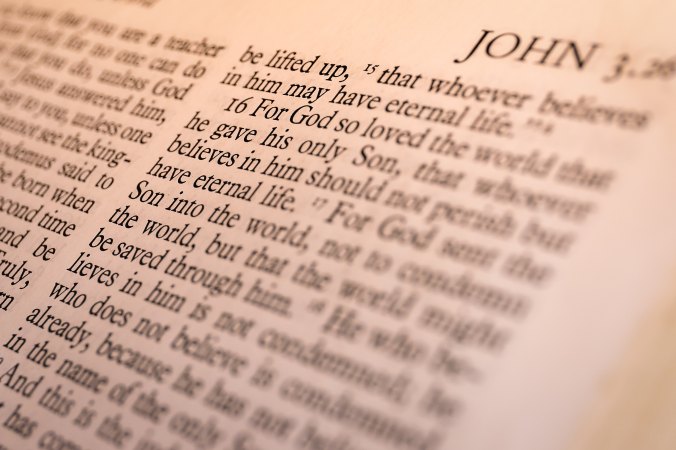 Few books in the Bible give us more “raw material” about the Trinity than John’s Gospel. While the word “Trinity” is not found in the Bible, testimony to God as Father, Son, and Holy Spirit is. And in the Fourth Gospel, the works of the Trinity are displayed in their greatest fullness.

 8 I desire then that in every place the men should pray, lifting holy hands without anger or quarreling; 9 likewise also that women should adorn themselves in respectable apparel, with modesty and self-control, not with braided hair and gold or pearls or costly attire, 10 but with what is proper for women who profess godliness—with good works. 11 Let a woman learn quietly with all submissiveness. 12 I do not permit a woman to teach or to exercise authority over a man; rather, she is to remain quiet. 13 For Adam was formed first, then Eve; 14 and Adam was not deceived, but the woman was deceived and became a transgressor. 15 Yet she will be saved through childbearing—if they continue in faith and love and holiness, with self-control.
 In his chapter “Cohesion and Structure in the Pastoral Epistles,” Ray Van Neste argues for literary cohesion in 1 Timothy (in
  Via Emmaus