 Now we know that the law is good, if one uses it lawfully, 9 understanding this, that the law is not laid down for the just but for the lawless and disobedient, for the ungodly and sinners, for the unholy and profane, for those who strike their fathers and mothers, for murderers, 10 the sexually immoral, men who practice homosexuality, enslavers, liars, perjurers, and whatever else is contrary to sound doctrine, 11 in accordance with the gospel of the glory of the blessed God with which I have been entrusted.
— 1 Timothy 1:8–11 —
In a world where the laws continue to be questioned and rewritten, one thing remains: We are a people inextricably committed to rules, laws, and legislation.
There are rule books for leadership, rulebooks for diets, rulebooks for childrearing, and rulebooks for just about anything else you might want to tackle. The trouble is that the “21 Irrefutable Laws of Leader” and the 600+ laws of the Pentateuch aim at different things. The former address the physical man and his ability to learn, grow, and improve as a (fallen) leader. The latter, God’s law, addresses the moral man and his inability to be holy and righteous before God.
This difference is too often missed. And it is often missed by Bible-believing, gospel-believing preachers. Those who “ought to know better” are the ones who preach a message of “ruled living” for 45 minutes (or less) and then tack on a gospel invitation at the end. This confuses the whole matter, even as it explains why the church is so devoid of gospel power.
Conversely, there are other “gospel-centered” preachers so committed to grace (as pardon) that they miss the place of the law in the life of Christian. Such antinomianism (lawlessness) does not rightly understand grace nor express the fruit of the gospel. Rather, it presents a half-truth (God justifies the ungodly) as the whole truth, without understanding how the law and gospel relate.
In the fulness of truth, the gospel is not opposed to the law. The good news of Christ is rooted in the way Christ fulfilled the law on our behalf, died under the law, and now writes the law on our hearts. Thus, if we are going to understanding the gospel, we must see how it relates to the law. And that’s what I want to consider here. Continue reading


 Over the last few weeks, our church has been thinking about justice from the Psalms. In Psalm 97, we saw that God himself is the source and standard of justice. In Psalm 98, we discovered how God “does” justice in justifying the ungodly by providing a legal substitute. And in Psalm 99, we saw how priestly mediators served to bring justice from God’s temple to God’s people, and from Zion to the ends of the earth.
 In his modern classic, The Cross of Christ, John Stott begins his consideration of Christ’s crucifixion by outlining all the times Jesus speaks of his impending death. For Christ, his earthly mission focused not on his teaching, his healing, nor his ruling; his singular focus was on his sacrifice and his atonement for sin. He knew this and as we remember Christ’s death and resurrection this week, it is good for us to know the same.
 And God gave Solomon wisdom and understanding beyond measure, and breadth of mind like the sand on the seashore, 30 so that Solomon’s wisdom surpassed the wisdom of all the people of the east and all the wisdom of Egypt. 31 For he was wiser than all other men, wiser than Ethan the Ezrahite, and Heman, Calcol, and Darda, the sons of Mahol, and his fame was in all the surrounding nations. 32 He also spoke 3,000 proverbs, and his songs were 1,005. 33 He spoke of trees, from the cedar that is in Lebanon to the hyssop that grows out of the wall. He spoke also of beasts, and of birds, and of reptiles, and of fish. 34 And people of all nations came to hear the wisdom of Solomon, and from all the kings of the earth, who had heard of his wisdom.
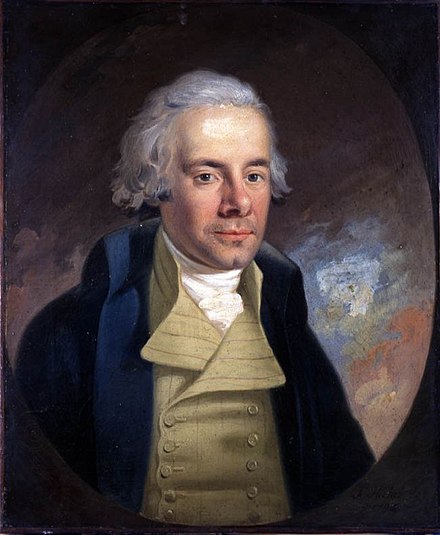 At 4:00am on February 24, 1807, the British Parliament voted to end the British slave trade. With a count of 267 to 16, the House of Commons voted with loud cheers for the abolition of this abominable institution.
 “Autonomy becomes a principle that undermines every authority and all law.”
 Via Emmaus