How do you recognize a biblical type?  

seekfindIf we agree that typology unites the Bible, identifies who Jesus is, and reveals God’s progressive revelation (which I argued here), then it is vital to know how to recognize a type. Indeed, one of the of the reasons people doubt the validity of a given type (e.g., Joseph as type of Christ, or Noah’s ark as a type of salvation) is that they fear reading too much into the Old Testament. Perhaps, they have seen typology gone wild and have concluded that such interpretations are fanciful and forced. Indeed, while there are many poor examples of misinterpretation, typology remains a vital reality in the Bible. And it behooves us to ask again: “How do you recognize a true biblical type?”

In what follows, I’ve given 5 ways to help you do that. This list isn’t exhaustive and it (over)simplifies some very technical discussions, but for those just beginning to consider or reconsider typology, may it serve as a starting point for recognizing types in Scripture. (For a more comprehensive approach to detecting types, allusions, and patterns in Scripture, see G. K. Beale’s Handbook on the New Testament Use of the Old Testament: Exegesis and Interpretationesp. chapters 3 and 4). Continue reading

Typology: What It Is and Why We Need It


typologyWhat is typology?  

In yesterday’s sermon on Numbers 20, we ran into something known as typology. As it has been variously defined in church history, typology occurs in the Bible when an historical person, event, or institution—in this case a water-giving rock—foreshadows the coming Son of God. As with Exodus 17, this life-giving, water-streaming rock is a type of Christ, at least according to the apostle Paul.

Writing in 1 Corinthians 10, Paul recounts a number of events in Israel’s history (see vv. 1–13), including this rock. He writes, “All were baptized into Moses in the cloud and in the sea, and all ate the same spiritual food, and all drank the same spiritual drink. For they drank from the spiritual Rock that followed them, and the Rock was Christ” (vv. 3–4). In these words, Paul makes the stunning claim that the Rock was to be identified with the Lord, and since Christ is the Lord (cf. 1 Cor 8:6), the Rock is to be identified with Christ.

Two verses later, he adds, “Now these things took place as examples (typoi) for us, that we might not desire evil as they did” (v. 6). Most versions rightly translate typoi as “examples” but you can see from the Greek word that the examples Paul has in mind were types, a word he uses elsewhere to relate Adam and Christ (Rom 5:14), a word Peter uses to speak of Noah’s baptism (1 Pet 3:21), and a word used in Hebrews to relate the tabernacle on earth with the one in heaven (Heb 8:5).

On the basis of passages like these, Christians going back to the early church have rightly seen (and looked for) ‘types’ of Christ in the Old Testament. But at the same time, questions have arisen to ask: What is a type?

That is the question I want to answer today in broad and simple strokes. I recognize that large tomes and complex articles have been written on the subject, but for those just getting acquainted with the idea, I want to introduce typology as simply as I can.

Continue reading

Twelve ‘Old Books’ Every Christian Should Read

Now there are also many other things that Jesus did.
Were every one of them to be written,
I suppose that the world itself could not contain
the books that would be written.

— John 21:25 —

Growing up my summers were consumed by sports. Until college, the only books I read on my own were biographies of professional athletes. In short, Books had little appeal.

When I became a Christian, however, that changed. Very quickly I discovered that I needed spiritual guidance. What I found was that good books were one of the best ways to grow in grace and knowledge of our Lord Jesus Christ.old

What is a ‘Good Book’?

Yet, I didn’t know what a “good book” was. As a freshman in college, I found myself reading a book by T.D. Jakes who distorts the Trinity and preaches a prosperity gospel. Later I gravitated towards recent releases that mixed biblical truths with the latest psychological fads.

Like so many evangelicals, I missed the classic works of the faith because the Christian bookstores I visited only promoted current authors. Yet, such attention to the new and novel only gives us what C.S. Lewis has called ‘chronological snobbery.’ Simultaneously, it keeps us blind to our contemporary errors and robs us of a rich heritage. Again Lewis corrects us:

It is a good rule, after reading a new book, never to allow yourself another new one till you have read an old one in between. If that is too much for you, you should at least read one old book to every three new ones. . . . We all . . . need the books that will correct the characteristic mistakes of our own period.

With that in mind, I have compiled is a list of twelve “classics” that every Christian should venture to read over the course of their lives. These books come from different eras, and are written in a variety of styles. Some are long, some short, but for any Christian who wants to walk with the cloud of witnesses who have gone before them, these are volumes you should take up and read. Continue reading

Preaching Larger Sections of Scripture

bibleIn creation, God put beauty and design into the largest galaxy and the tiniest cell. Accordingly, we have, for centuries, used different instruments to behold the glory of God in creation: the microscope enables us to see God’s miniscule  handiwork; the telescope opens our eyes to heavenly vistas. From both ends of the spectrum, we benefit from considering God’s micro-creation and macro-creation.

Something similar takes place in the Bible. When we read Scripture, we can find gospel truth in a word (propitiation), a phrase (‘it is finished’), a verse (John 3:16), a story (Job’s suffering and restoration), or a series of songs (the Psalter). Indeed, from every angle, we behold God’s wisdom and goodness in his word. Yet, unless we are intentional, it is easy to focus on the smaller parts of the Bible and to miss the larger ones.

There are many reasons for that—lack of time, lack of understanding (what is Revelation about?), lack of interest (why do I need to read the minor prophets?). In our fast-paced world, it is easy to overlook the Bible’s big picture, and often pastors have not helped their people “put the Bible together.” Still, I am convinced that if we are to have minds renewed by the Scriptures, we must not simply have a collection of unrelated memory verses free-floating in our heads; we must also understand the larger framework(s) of the Bible. For that reason, I want to suggest five reasons why I preach larger sections of Scripture. Continue reading

What Good is the Book of Numbers?

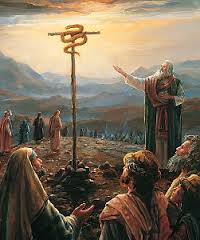
serpentFew books in the Bible hide their riches better than the book of Numbers. Concealed by an accountant’s title (‘Numbers’) and begun with a lengthy census (ch. 1), the casual reader of Numbers may come to the honest, but mistaken, notion that this is a boring, impractical book.

However, Paul has the exact opposite feeling. In 1 Corinthians 10, he says that the events of Numbers (along with everything in the five books of Moses) “were written down for our instruction, on whom the end of the ages has come” (v. 11). Specifically, Paul lists Israel’s sexual immorality at Baal-Peor in Numbers 25 (vv. 7–8), the incursion of serpents in Numbers 21 (v. 9), and the grumbling of Israel which occurred throughout the exodus journey (v. 10).

In truth, Paul reminds us that these ancient words are ever true and that in God’s wisdom they were written down for me and you. To put it more generally, the book of Numbers is not simply a book of Jewish history, a record of priestly duties, and medicinal wound care for scabs and leprosy victims. Oh no. It is more. It is a book of Christian Scripture that points us to Christ. Continue reading

The Centrifugal Mission of the Church

outreachHow should the church live, move, and have its mission?

In him we live and move and have our being
— Acts 17:28 —

 Just before this verse, Paul makes an important point about God’s relationship with the nations. He writes, “He made . . . every nation . . . to live on all the face of the earth, having determined allotted periods and the boundaries of their dwelling place, that they should seek God, and perhaps feel their way toward him and find him.”

The theological truth Paul posits is that God upholds the universe and directs the ways of history, and he establishes the boundaries of nations. Even with the back-and-forth of disputed territories, God is the determiner of the “allotted periods and boundaries.” Set in the context of redemptive history, this means that God dealt only with Israel for two millennia. Paul calls this “the times of ignorance” (v. 30). It was a time when the nations were without God’s law (Ps 147:19–20) and had to feel their way towards him, if they could.

Such was the wreckage after the fall. Adam’s sin led the human race into disobedience (Rom 5:18–19) and death (Eph 2:1–3). With no natural power to seek God (Rom 3:10–23), the nations were utterly lost, without hope and without God in the world (Eph 2:11–13). Yet, in his love, God initiated a course of action that would bring salvation to the world.

In Genesis 12, God chose Abraham to be the source of blessing for the world. Through God’s promise to him, God would bring an offspring to bless the world (Gal 3:16). Yet, in sending his Son there was and has continued to be confusion about how the nations would come to receive the blessing of God.

Here’s what I mean: In Israel, the confusion was a theological problem—how can an uncircumcised Gentile be saved? Today, it is a methodological problem—should we focus our mission on bringing people to church? Or should we go to them? Continue reading

Does God Require (Increased) Productivity?

[This meditation summarizes a number of principles from Matt Perman’s excellent book, What’s Best Next: How the Gospel Transforms the Way You Get Things Done.]

Does God Require (Increased) Productivity?

Made in the image of a Creator, God designed humanity to bear good fruit. In Genesis 1:28, he told Adam and Eve to “be fruitful and multiply.” When he put the man in the Garden, he called him to cultivate and keep Eden so that in time the beauty, order, and presence of God’s garden would cover the earth.

Although sin marred mankind’s ability to produce good fruit, there remains a human desire to create, to organize, and to produce. In contrast to the cynicism of Dilbert, work is not a curse; it was and is part of God’s good creation. The trouble is that God’s curse makes work tedious and subject to futility.

Ecclesiastes is a case in point. In that book Solomon teaches us not to put our hope in work. He says that work is a “striving after the wind,” because all laborers will eventually relinquish the produce of their hands. Therefore, the wise man fears the Lord and puts their ultimate hope in God (Eccl 12:13–14).

(Some of) What Scripture Says about Productivity

Still, is that all Scripture says about work? Is it all negative? No, there’s more. Continue reading

Food for Thought: The Fear of the Lord

fearShould we still fear the Lord?

First John 4:18 is a beautiful passage. Speaking of the Day of the Lord, John writes: ‘There is no fear in love, but perfect love casts out fear. For fear has to do with punishment, and whoever fears has not been perfected in love.’ By themselves, John’s words capture an important truth: for those who have trusted Christ, there is confidence to approach God with boldness (Heb 4:14-16); we are no longer mean servants, we are cherished friends (John 15:15) and beloved children (Gal 4:4-6).

However, like with every verse in the Bible, when 1 John 4:18 is taken as the singular and definitive word on fear, it necessarily misrepresents the whole counsel of God. God has far more to say to us about fear, love, and worship than that God’s love merely casts out fear. Let me suggest four truths about the fear of the Lord. Continue reading

Food for Thought: Competing Visions of Heaven

heaven2What would a trip to heaven look like?

In 2004, Baker Books decided to test-run a book about one man’s trip to heaven. The book was Don Piper’s Ninety Minutes in Heaven. In ten years, his book has sold over 6 million copies, been translated 46 times, and prompted a whole new genre of “Christian “ book—heavenly tourism.

I put “Christian” in quotes because even as visions of heaven are known in Scripture, the descriptions are nothing like the visions described in newfangled spiritual journeys. In fact, it is worth asking: What should we think about  Heaven is for Real, Ninety Minutes in Heaven, Twenty-three minutes in Hell, etc.? Let me offer five thoughts.

First, descriptions of heaven are superfluous to and compete with the Bible.

There are a number of times in Scripture when God’s word speaks of prophets and apostles entering God’s heavenly court. However, in the case of Isaiah (Isa 6), Paul (2 Cor 12), and John (Revelation), their vision became recorded Scripture. This is categorically different from the accounts offered by Piper, Burpo, and others. In a world of competing sound bytes, these books add to Scripture’s testimony of what to know and believe about God, heaven, and how we get there.

Likewise, for those raised back to life, Scripture has no record of their experience. Apparently, God’s sufficient word did not (and does not) need such testimony. In fact, in Jesus’ parable with the rich man and Lazarus (Luke 16:19–31), Jesus makes it clear that if earth-dwellers “do not hear Moses and the Prophets, neither will they be convinced if someone should rise from the dead.” In context, this has direct application to Jesus death and resurrection, but it also relates to near death experiences today. If Heaven is for Real is considered a way to engender faith in those who won’t read the Bible, such thinking is a vain invention of man, not the ways of God. The Spirit (who inspired the Word) will do nothing to undermine the authority of the Scripture.

Second, in Scripture heavenly visions were accompanied by great afflictions.

John was not brought into heaven until his tortured exile on Patmos; when Isaiah left God’s throne room, he was tasked with proclaiming the ‘gospel’ to a nation who wouldn’t believe (Isa 6:9–11). And in Paul’s case, the apostle declared that a messenger from Satan accompanied his visions, so as to keep him from becoming conceited (2 Cor 12:7). By contrast, the recent heavenly accounts have brought acclaim, book contracts, and movie deals. There might be some slight discomforts that followed, but thorns sent from Satan himself? I’m doubtful. When we reconsider the places in Scripture where Paul, John, and Isaiah encounter God, it is apparent that the comparison is apples and oranges.

Third, God’s revelation always exalts Scripture and Jesus Christ.

In 2 Peter 1, Peter speaks of the origin of Scripture as arising from the Spirit and not man (vv. 19–21). Strikingly, he contrasts his own vision of glory with that of the OT. He says that the inspired word is more reliable than his own experience with the divine. Such apostolic humility gives us pause when we hear others speaking (and getting paid to speak) of their experience, especially when their message is more about heaven than Jesus. While Scripture is a radically, Christ-centered book (Luke 24:27; John 5:39), these new bestsellers focus more on heaven, than Jesus. And yet, what would heaven be like without Jesus? In a word, it would be hell! Indeed, for Christians, Christ is our heavenly hope. Or more put more starkly: Heaven is Christ.

Fourth, why are we convinced that uninspired heavenly visions are from God?

Since we know Satan masquerades as an angel of light (2 Cor 10:4), why would be surprised that in these days, the father of lies would seek to lead astray the elect of God, as Jesus says in Matthew 24:22, 24, 31? Would it not be a stratagem of Satan to concoct a series of visions that feign heaven, but without mentioning the gospel? Satan is very happy for people to believe in heaven and the afterlife, especially if takes them away from God’s Word or it increases the likelihood that they would begin looking for the sensational in life, instead of life in Scripture (cf. Deut 32:47). In other words, if Satan’s goal is to distance Christians from the truth God’s Word, why wouldn’t he use heavenly tourism as a way creating a taste for something less than Christ himself?

Fifth, and most importantly, heavenly visitations are superfluous for the believer who worships every Sunday.

Though we don’t often speak this way, when Christians assemble for worship, they visit heaven every Lord’s Day. Or better, heaven visits them. According to Hebrews 12, when believers gather in the name of Jesus, they are Spiritually and literally (if not bodily), gathering around the throne of Christ. Read Hebrews 12:22–24.

But you have come to Mount Zion and to the city of the living God, the heavenly Jerusalem, and to innumerable angels in festal gathering, and to the assembly of the firstborn who are enrolled in heaven, and to God, the judge of all, and to the spirits of the righteous made perfect, and to Jesus, the mediator of a new covenant, and to the sprinkled blood that speaks a better word than the blood of Abel. 

It doesn’t say, “And you will come to Mount Zion” in the future; it speaks in the present tense: “You have come . . .”

When believers gather to worship, the Spirit of Jesus is present. When the Scriptures are read and preached rightly, Jesus, who sits in heaven, speaks on the earth. When the congregation sings a new song (i.e., a song of salvation), they are joining with the angels. And when we lift our hears in prayer, we are entering the very throne room of God. Sadly, too many Christians forget that they “travel” to heaven every week. As a result, they are vulnerable to the exotic testimonies of others.

In the end, heavenly tourism, as sold at the local Wal-Mart, is deficient, dangerous, and possibly even demonic. It competes with the way in which God has spoken, and it leads believers and unbelievers alike to put confidence in the words of men and experiences that stand outside of Scripture. All in all, it is a kind of literature that is not needed and should be avoided. God has given us everything we need for life and godliness in God’s word (2 Pet 1:3). The question for each of us is, “Do we have an appetite for the things of God, or are we content to settle for visions of heaven that speak little of the gospel?”

For more on visits to heaven, read David Jones four-page outline on ‘Near Death Experiences.’ It will give you more than a few things to think about and help you formulate a better understanding of what Scripture says about heaven, seeing God, and near death experiences.

Soli Deo Gloria, dss

 

Is Capital Punishment Biblical?

deathIs Capital Punishment Biblical?

By now, you’ve probably heard the news about the ‘botched’ execution of an Oklahoma inmate. On Tuesday of this week, two days after I referenced Genesis 9:6 as a proof-text for capital punishment, Clayton Lockett, a man convicted of rape and murder died 43 minutes after his lethal injection failed to produce the effect of a sedated death. This kind of gruesome execution leads ethicists, politicians, humanitarians, indeed all of us to question the use of capital punishment.

As Christians, such incidents should grieve us, but as always we must turn to Scripture to find God’s perspective. And on this issue, like so many, God is not silent.

What Does the Bible Say?

Throughout the Bible, God is presented as sovereign over life: “See now that I, even I, am he, and there is no god besides me; I kill and make alive; I wound and I heal; and there is none who can deliver out of my hand” (Deut 32:39). “The LORD kills and brings to life; he brings down to Sheol and raises up” (1 Sam 2:6).

As the Sovereign Creator and Just Potter, he has the right to give life and take it away. In Adam, we deserve death, not life (Rom 5:18-19), but such a sentence of death does not permit man to take the life of another. Just the reverse, only God has that right.

Still while God alone has authority over life, there are two primary texts that describe God giving humanity a right to execute a murderer: Genesis 9:6 and Romans 13:4. In other words, while men in and of themselves have no right to take life, God has ordered a world that endows states the right to take the life of renegade life-takers. Continue reading