
Getting to Know the Son of God: Ten Truths from Graeme Goldsworthy

photo-1416958672086-951aa7064010 2Among biblical theologians, Graeme Goldsworthy is a well-respected scholar with great passion for Christ and his church. His works on the Bible, the kingdom of God, hermeneutics, and preaching are treasures that help us see Christ in all Scripture.

sons of god

More recently, he has put together a short book on the theme son of God.  It’s called The Son of God and the New CreationIn what follows, I will try to encapsulate some of his observations and arguments in ten points. Continue reading

Somewhere Between History and Fantasy: Read(ing) Genesis 1–11 Theologically

greg-rakozy-38802Few places in Scripture are more important, more debated, or more theologically-rich than Genesis 1–11. As to their importance, they introduce the Bible to God and his purposes in the world; as to debate, they were polemical from the start, as Moses wrote these chapters to combat other creation stories in the ancient Near East; and as to theology, these eleven chapters introduce nearly every doctrine found in the rest of Scripture.

It is to this last point, the theological message of Genesis 1–11, that I want to address. Affirming the historicity of God’s direct creation of mankind on the sixth day, it seems the best way to read these chapters is as a poetical—dare I say, fantastical—introduction of Israel to the God of Creation, who happens to be their covenant Lord.

Thus, as Craig Bartholomew and Michael Goheen rightly assess, citing the earlier observation of Gerhard von Rad (Genesis: A Commentary, 46): “The creation story is so rich in meaning that ‘it cannot be easily over-interpreted theologically'” (The Drama of Scripture28). Indeed, from the creation of the world to its subsequent recreation after the Flood, the first eleven chapters of Genesis are seminal ground for all that will grow up in the rest of Scripture. For the careful biblical theologian, these chapters are worth a life-long study, and what follows are simply seed-thoughts that can and should be traced back to the beginning.  Continue reading

How Justification by Faith Alone Works: Remembering the Reformation as We Enter 2018

samuel-zeller-432101.jpg8 For by grace you have been saved through faith. And this is not your own doing; it is the gift of God, 9 not a result of works, so that no one may boast. 10 For we are his workmanship, created in Christ Jesus for good works, which God prepared beforehand, that we should walk in them.
— Ephesians 2:8–10 —

Few things are more important than getting the doctrine of justification right. Because we are made by God, for God’s glory, and yet find ourselves as objects of his wrath by our very nature, there is no more important question than this: “What must I do to be saved?” How one answers that question will do more to determine the course of a person’s life, not to mention eternity, than anything else.

Indeed, one’s standing before God is what the Protestant Reformation was all about. And though 2018 leaves behind the 500th Anniversary of Martin Luther’s 95 Theses, the Reformation’s recovery of the gospel is as important today as at any time in history. Mass confusion remains about how one is reconciled to God—both inside the church and out. And thus it remains wise and good to learn from the Reformers about justification by faith alone and to learn how justification by faith alone is the engine to a life of good, God-pleasing works. Continue reading

Ten Looks at Christ: A New Year’s Meditation on Isaiah 61:1–3

Ten Looks at Christ: A New Year’s Meditation on Isaiah 61:1–3

Robert Murray McCheyne said famously and wisely: “For every look at yourself, take ten looks at Jesus.” On this last day of 2017, we spent our Sunday considering the person and work of Christ from Isaiah 61:1–3.

This sermon wraps up a three-part series on Isaiah 59–61 and encourages us to look to Christ as we enter the new year. Indeed, whether we are coming off a great 2017 or a horrible 2017, we need to remember the gospel as we enter 2018. And today’s sermon aimed to help us do that.

You can listen to the sermon here or read the sermon notes. Discussion questions and additional resources can be found below. May Christ grow large in your eyes and your hear in 2018. Continue reading

Ten Looks at Christ

heidi-sandstrom-311667As 2017 finishes and we look ahead to 2018, let us not fall into the trap of only looking at ourselves. How easily and yet how discouraging (or self-exalting) it can be to only look at our achievements in 2017 or our plans in 2018, and to do so while missing Christ, his work, and his plans.

Instead, as we finish one year and go into the next, let us look to Christ first and most. Let us give thanks for all he has given us and pray for grace to walk in the plans he has for us. And from this settled place of rest in him, let us evaluate 2017 and plan for 2018.

On this note, Robert Murray McCheyne’s wise counsel stands, some 177 years after it was written.

Learn much of your own heart; and when you have learned all you can, remember you have seen but a few yards into a pit that is unfathomable. “The heart is deceitful above all things, and desperately wicked: who can know it? (Jer. 17:9). Learn much of the Lord Jesus. For every look at yourself, take ten looks at Christ. He is altogether lovely. Such infinite majesty, and yet such meekness and grace, and all for sinners, even the chief! Live much in the smiles of God. Bask in his beams. Feel his all-seeing eye settled on you in love, and repose in his almighty arms. Cry after divine knowledge, and lift up your voice for understanding. Seek her as silver, and search for her as for hid treasure, according to the word in Prov. 2:4. See that verse 10 be fulfilled in you. “Let wisdom enter into your hearts, and knowledge be pleasant to your soul; so you will be delivered from the snares mentioned in the following verses. Let your soul be filled with a heart-ravishing sense of the sweetness and excellency of Christ and all that is in Him. Let the Holy Spirit fill every chamber of your heart; and so there will be no room for folly, or the world, or Satan, or the flesh. (Letter to Mr. George Shaw, Belfast, 16 Sept 1840).

In 2018 let us look to Christ. And from a steady gaze upon him, may we consider ourselves.

Soli Deo Gloria, ds

Seeing the Trinity by Re-Reading Isaiah 61

dawid-sobolewski-271380In his excellent book on the Trinity, Fred Sanders makes a number of key observations related to seeing (and not seeing) the Trinity in the Old Testament. (This subject takes up the whole of chapter 8 in The Triune God).
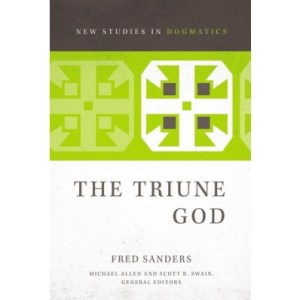
  1. A biblical formulation of the Trinity triuneshould not begin with the Old Testament. Because the doctrine is revealed in the historical events of the Incarnation and Pentecost, not the propositions of the text, we must begin with the events recorded in the New Testament, not the hints contained in the Old. Sanders rightly corrects strictly chronological approaches to the Trinity: “The root idea of revelation is not verbal announcement but the unveiling or disclosing of something that has been present, though concealed. . . . The triunity of God was revealed when the persons of the Trinity became present among us in a new way, showing up in person and becoming the object of our human observation” (40).
  2. With the full revelation of God as Father, Son, and Holy Spirit, we can look backwards to see “adumbrations” of the Trinity in the Old Testament. As Sanders notes, “The doctrine of the Trinity did not arise and cannot stand without the Old Testament, but the Old Testament’s usefulness for Trinitarianism is retrospective and dependent on the light provided by the fullness of revelation” (212).
  3. In this way, the doctrine of the Trinity is a ‘mystery’ in the biblical sense. In the New Testament, mysterion speaks of those realities that were once hidden, but are now revealed. The Trinity fits well into this biblical category: “God did not yet reveal his triunity until the fullness of time had come. The Trinity is a mystery in the biblical sense: always true, once concealed, now revealed” (210).
  4. More specifically, trinitarian exegesis in the Old Testament is prosoponic (from the Greek word for person). Prosoponic or “prosopological exegesis is a technical expression, but an important one for discussions about the Trinity. It simply means reading the Old Testament in light of the New, where the persons (prosopon) are distinguished in the Old Testament text. “Having met Christ and the Spirit [in the Incarnation and Pentecost], we can look for them in the Old Testament in a way we could not have without having met them in person” (227).
  5. Prosoponic exegesis requires rereading. “What is required for doctrinal interpretation of the Old Testament is a hermeneutical framework that acknowledge the complex structures of the revelation, and an approach to reading the documents that precede and follow the revelation. The key hermeneutical category for this kind of interpretation is rereading” (215, emphasis mine). In rereading, we gain new understanding, insight not available on a first reading. In this way, readers do not add meaning to the text, but instead see the text in the fullness of later revelation. A good example of this is reading Genesis 1 in light of John 1, Colossians 1, and Hebrews 1.

From hermeneutical commitments like these, Sanders helps us get our bearings on reading the Old Testament. In fact, his chapter on reading the Old Testament retrospectively is one of the best I’ve read on grasping the theological unity and eschatological development of the Bible. For these reasons, I would highly recommend his book, especially if you struggle to see how grammatical-historical exegesis relates to the whole Bible. Continue reading

Be Fruitful and Multiply: A Canonical Reading

bill-williams-3302And God blessed them. And God said to them, “Be fruitful and multiply and fill the earth and subdue it, and have dominion over the fish of the sea and over the birds of the heavens and over every living thing that moves on the earth.
— Genesis 1:28 —

Few commands in Scripture are more important than the first one: “Be fruitful and multiply and fill the earth and subdue it.”

In Genesis 1 we learn God made mankind in his image and after his likeness. The purpose of this “imaging” is disputed and multi-faceted (as I’ve described here). However, it is clear that the first command is to be fruitful and multiply, a pregnant command if there ever was one.

In fact, from the placement of this command—the first chapter of the first book in the Bible—we see how programmatic this command is. It is fundamental to being human, and therefore it applies to every one of us. At the same time, from a canonical reading of Scripture we learn how this phrase repeats and develops, so that it bears significance for more than just having babies. In other words, though it never loses this meaning (child-bearing is an implicit part of humanity), the progress of revelation also shows how fruitfulness relates to the Word of God, regeneration, and the Great Commission.

So, in what follows, I will list out many places where this language (“be fruitful and multiply”) occurs, with a few comments along the way.  Then, I will list four ways that reading Genesis 1:28 canonically helps us understand this verse and the whole structure of the Bible. Continue reading

12 Quotes from Peter Gentry’s Book on the Biblical Prophets

prophets

Peter Gentry, Donald L. Williams Professor of Old Testament Interpretation at The Southern Baptist Theological Seminary, has written an incredibly helpful and accessible book in How to Read and Understand the Biblical Prophets. In this 140-page book, there is much general wisdom about reading Scripture and many specific applications for reading the Prophets, especially Isaiah.

In his plain-spoken and even humorous way, Gentry helps deepen our understanding how different the prophetic literature is. But even more, he gives tools to read these ancient words better.

In preaching Isaiah this month, I’ve found much help in How to Read and Understand the Biblical Prophets. I share a dozen of the best quotes from his book below. These give a taste of what you’ll find in this book. But let me encouragement you, if you take seriously the study of Scripture, pick up this book and spend time thinking about how to read the Prophets.  Continue reading

Love Came Down: A Christmas Meditation on John 3:16

rawpixel-com-445786Christmas is a time filled many wild and wonderful traditions.
 

For instance, the Japanese celebrate Christmas with their favorite holiday meal—Kentucky Fried Chicken. Since 1974 KFC has been the Japanese’ Christmas meal. If you traveled to the Philippines in this season, you’d come across a festival of giant lanterns, where 11 different village compete to build the largest and most elaborate lantern.

If you go to Europe, you will find the Austrians pair Saint Nicholas with a demonic figure named Krampus. St. Nick rewards the good boys and girls; Krampus punishes the bad ones. And if you go up to Iceland, you will hear of 13 Yule Lads—13 tricksy trolls who break into homes and lick spoons, slam doors, and steal yogurt.

Here in America too, Christmas is filled with tradition. From gifts under the tree to long lines at the mall, from Santa Baby to the Trans-Siberian orchestra, our country celebrates the season with all sorts traditions that make us feel the Christmas spirit. Continue reading

Come and Worship the King (Isaiah 60)

Torah

Come and Worship the King (Isaiah 60)

At Christmas we celebrate God’s light come into the world. And on Christmas Eve this year we looked at how Isaiah 60 both predicts and expands our understanding of God’s glorious light. In the fullness of time, we see how the Magi in Matthew 2 fulfill Isaiah’s promise of the nations coming to worship the Lord. This teaches us that coming to Zion is not simply a future reality; it is something we also experience through Jesus Christ.

As Hebrews 12:22 tells us, when we worship the Lord we have come to Mount Zion and join in the worship that is ever present in glory. Truly, this way of thinking stretches our imagination, but it is the way Scripture leads us to think—which a firm grasp of finding our position in Christ in the heavenly places (cf. Eph 2:5).

At Christmas, we ponder both the coming of God from heaven to earth. But we should also consider what that means, and how Christ’s Incarnation leads us to heaven—just as Isaiah 60 envisions.

With that in mind, you may find the following discussion questions and additional resources helpful. You can also listen to the sermon online. I pray these resources are an encouragement to you as you celebrate the birth of our Lord. Continue reading