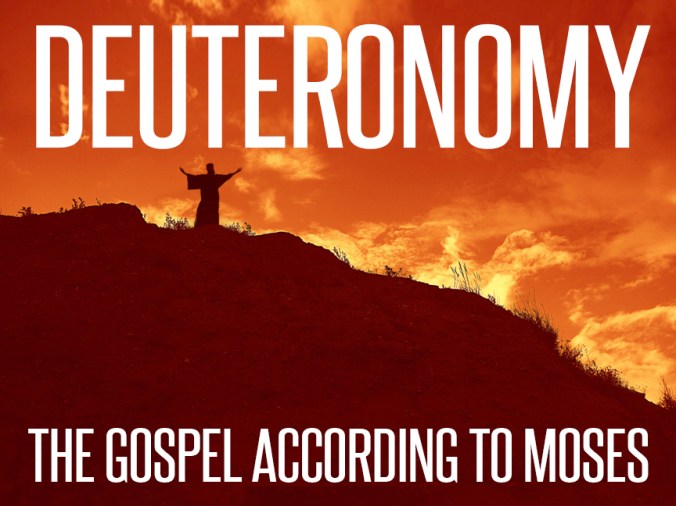
 If you could only take one book of the Bible with you on a deserted island, what would it be? Psalms? The Gospel of John? Hebrews? What about Deuteronomy?
Amazingly, when we put that question to the life Jesus, we discover it was the book of Deuteronomy and the Psalms, which Jesus took with him when the Spirit led him into the wilderness. In Matthew 4:1–11 we find the account of Jesus temptation in the wilderness, and notice what words Jesus quotes.
Then Jesus was led up by the Spirit into the wilderness to be tempted by the devil. 2 And after fasting forty days and forty nights, he was hungry. 3 And the tempter came and said to him, “If you are the Son of God, command these stones to become loaves of bread.” 4 But he answered, “It is written,
“ ‘Man shall not live by bread alone,
but by every word that comes from the mouth of God.’ ” [Deut. 8:3]5 Then the devil took him to the holy city and set him on the pinnacle of the temple 6 and said to him, “If you are the Son of God, throw yourself down, for it is written,
“ ‘He will command his angels concerning you,’
and
“ ‘On their hands they will bear you up,
lest you strike your foot against a stone.’ ” [Psalm 91:11–12]7 Jesus said to him, “Again it is written, ‘You shall not put the Lord your God to the test.’ ” 8 Again, the devil took him to a very high mountain and showed him all the kingdoms of the world and their glory. 9 And he said to him, “All these I will give you, if you will fall down and worship me.” 10 Then Jesus said to him, “Be gone, Satan! For it is written,
“ ‘You shall worship the Lord your God
and him only shall you serve.’ ” [Deut. 6:16]11 Then the devil left him, and behold, angels came and were ministering to him.
In this temptation narrative, we learn something about Jesus and the way Jesus read the Old Testament, as well as the importance of the book of Deuteronomy. Continue reading
 In the Bible we learn that preaching is not the only way God’s Word is communicated. In the Old Testament, the Levites are seen explaining the Law to the people of Israel (Nehemiah 8:7–8). And in the New Testament, Paul says of his ministry, “I did not shrink from declaring to you anything that was profitable, and teaching you in public and from house to house” (Acts 20:20).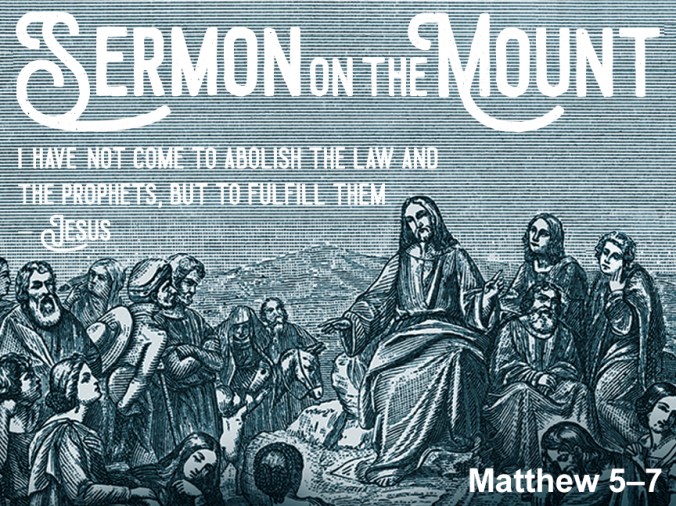
 Over the summer, our church considered many of the things Jesus said about money. In a
 In the middle of the Sermon on the Mount, Jesus gives instructions about giving (vv. 2–4), praying (vv. 5–15), and fasting (vv. 16–18). In our church we have taken one sermon per “spiritual discipline,” but really in the structure of Matthew’s Gospel, we should read these three disciplines together. And in fact, when we do there are some observations we discover that we might not find on our own.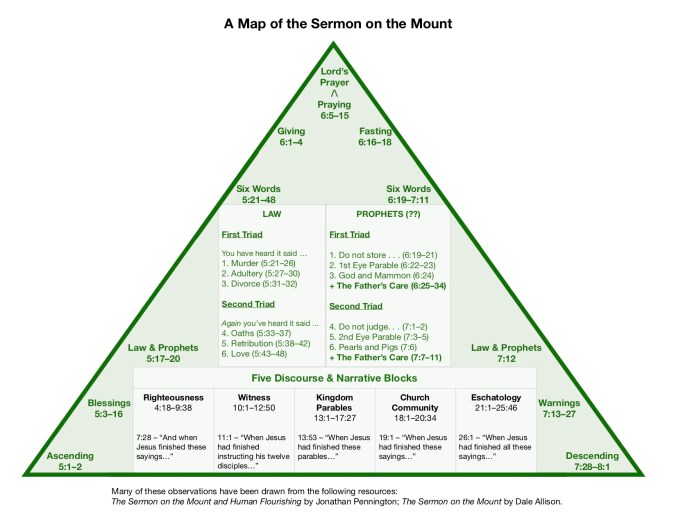
 Imprecatory psalms (e.g., Pss 5, 10, 17, 35, 58, 59, 69, 70, 79, 83, 109, 129, 137, 140) are those psalms which call upon God to destroy the enemies of God. They come from the anguished hearts of persecuted Israelites, and they include some of the most shocking words in the Bible. Take just a few examples.
 God’s covenant with Noah is often described as the covenant of common grace, and rightly so. In the wake of God’s judgment on the earth, the heart of humanity remains unchanged (cp. Gen. 6:5 and 8:21), yet for God to bring redemption to the world, some measure of preservation must be granted. Therefore, with strong covenantal language—berith occurs 7 times (vv. 9, 11, 12, 13, 15, 16, 17) in Genesis 9—God promises to uphold creation: “While the earth remains, seedtime and harvest, cold and heat, summer and winter, day and night, shall not cease” (8:22).
 Via Emmaus