A Dangerous Calling (pt. 2): Five Steps to Self-Promotion

gray and white concrete staircase

Throughout the Bible we find a divide between wisdom and folly, righteousness and sin, givers and takers, children of God and children of the devil. As Jesus said, he did not come to bring peace, but a sword (Matt. 10:34–35). And that sword not only divides humanity, which provides the context of his words in Matthew’s Gospel, it is also a sword that judges the thoughts and intentions of men. Indeed, God’s Word does more than declare behavior right and wrong; it does surgery on the heart, exposing why we do what we do.

In the Bible, and in the church, few things are more difficult to discern than motivations for ministry. For truly, as many good motivations as there are, there are also bad motivations. There is ambition that is godly and ambition that is anything but godly. And in every child of God who serves faithfully, there will be both impulses.

Just consider the Apostle Peter, who could confess Jesus as the Christ at the same time that he would deny him his cross (see Matt. 16:13–23). Indeed, at one time or another, all the disciples had a mixture of true and false ambitions, which is why Jesus had to correct their views on greatness (Mark 10:42–45). Truly, we are fickle creatures. And the best of men is both taught by God and tempted by the devil. Again, read Matthew 16.

So, knowing that, we should always be open to examining our motivations for ministries, and that is what this series is about. It aims to address false ambitions and to set a course towards true ambitions for ministry.

In Part 1, I offered two lessons from the life of Adonijah.

  1. We should not seek positions in ministry; we should seek the righteousness to receive such a place of service.
  2. We should abide by the word, and wait for an invitation to serve.

And now, in Part 2, I will suggest a third lesson from Adonijah’s life:

  1. When kingdom-seekers exalt themselves, their ambition follows a discernible pattern.

This pattern consists of five actions that Adonijah pursued in his attempt to be king in Israel. And, as the story goes, he nearly succeeded. What ultimately prevented him from claiming the throne illicitly is that genuine servants of God stood to oppose him. His false ambitions were thwarted because the ambitions of others were rooted in God’s Word.

Sadly, this sort of conflict continues today.

In truth, only when righteous men and women stand against falsehood will truth prevail. Yet, this is exactly why it is vital to learn the pattern of those who exalt themselves. For in ministry, when good works are pursued with bad motives, it can be very difficult to discern. Often, the falsehood of good works takes years, even decades, to discern. Yet, Scripture does give us light, if we are willing to look. And that is what we find in Adonijah’s play for David’s throne. Continue reading
How Fellowship Works: Cain, the Cross, and the Command to Love One Another

UnknownHow Fellowship Works: Cain, the Cross, and the Command to Love One Another (A Sermon on 1 John 3:11–18)

Love. One. Another. If you type those three words into your search engine, you’ll find a dozen references.

The first two are found in John 13:34–35, when Jesus tells his disciples to love one another, just as he has loved them.  Next, “love one another” repeats in John 15:12 and 17, as Jesus connects the love of God with the love of God’s children.

Paul uses these same three words, when he says in Romans 12:10, “Love one another with brotherly affection.” And Peter echoes Paul’s brotherly instruction in 1 Peter 1:22, when he says, “Having purified your souls by your obedience to the truth for a sincere brotherly love, love one another earnestly from a pure heart.”

Those are the first six uses of “love one another.” Then the last six are found in John’s Epistles. One is found in 2 John 5 and five in 1 John 3–4 (1 John 3:11, 23; 4:7, 8, 12).

From this basic survey, then, we can conclude two things. First, the command to love one another is always a command to members of one body (Rom. 12:5) to love one another with brotherly affection. This command is not an abstract instruction for individuals to do loving things. It is a mutual command for the body of Christ to love those in Christ.

That’s the first thing. The second thing is that the passage that most fully details how to love one another is 1 John 3–4. And yesterday, as I preached again on the theme of fellowship, I looked at three things.

  1. The Command to Love One Another is a command fulfilled in the body of Christ.
  2. The Command to Love One Another is a command that rejects the violent competition of Cain.
  3. The Command to Love One Another is a command that finds life in the cross of Christ.

In short, to love another as God commands we must reject the spirit of Cain’s violent competition and embrace Christ and his willingness to put others ahead of himself. This is the key to abiding fellowship with God and one another. And yesterday, this is what I tried to show from 1 John 3:11–18. You can find that sermon here.

Check back later this week too, as I share parts 2 and 3 of “A Dangerous Calling: Two Ways to Seek Ministry.”

Soli Deo Gloria, ds

A Dangerous Calling: Two Ways to Seek Ministry

boy wearing crown statue

Adonijah the son of Haggith exalted himself, saying, ‘I will be king.”
– 1 Kings 1:5 – 

But seek first the kingdom of God and his righteousness,
and all these things will be added to you.
– Matthew 6:33 –

There is nothing wrong with seeking the kingdom of God, or in seeking a place in that kingdom. In fact, it is absolutely right. Yet, with every good intention, there is the possibility to go astray, to take something good and to seek it badly. And for this reason, it is not sufficient to seek the kingdom. We must seek the kingdom and his righteousness.

In other words, seeking God’s kingdom is not the whole command. We must seek God’s kingdom righteously, which is to say, we must seek to be righteous in God’s kingdom. And this is the point that I want to pursue here and in the next two blogposts.

Unfortunately, too many followers of Christ have seen ministers who have sought the kingdom without righteousness. Likewise, too many who are now serving the Lord can reflect on the ways (multiple ways?) we have pursued ministry for vain reasons or with wrong motivations.

For instance, I learned of pastor last fall whose church had served as a money laundering front for his financial dealings. Clearly, he was seeking a kingdom, but not the Lord’s. Yet, as he stood in the pulpit each week, his vain pursuits were not seen. It took years for his self-interest to come to light. As Paul writes to Timothy, “The sins of some people are conspicuous, going before them to judgment, but the sins of others appear later” (1 Tim. 5:24).

So too, the fruit of ministry takes time to discover. Sometimes what looks like good fruit is not genuine. Similarly, for every ministry aspiration that is good, there are other aspirations that are corroded by pride, selfish ambition, and vain glory. As Paul David Tripp declared, ministry is A Dangerous Calling. How dangerous? So dangerous that three of the men who endorsed his book are no longer in ministry.

Accordingly, we should both be slow in seeking ministry (James 3:1). And we should be slow to affirm the ministries of others (1 Tim. 5:22). At the same time, we should be quick to learn from Scripture, what God says about seeking the ministry and a place of service in his kingdom. And to help us, I want to return to the book of 1 Kings and the story of Adonijah, the self-promoting son of David. For in him, and in comparison to Solomon, we can learn much about ministry. Continue reading

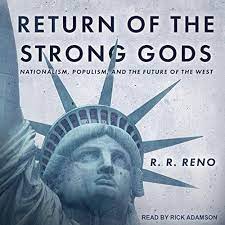
Tolle Lege: The Return of the Strong Gods by R. R. Reno

an aerial shot of the apple park in california

Apple Park in Cupertino, California

From Brexit to the rise and fall of Donald Trump, we have heard a lot about the dangers of globalism and return of populism. Many charged Trump with a kind of nationalism that led to all kinds of racism, fascism, and other political maladies. But many others, would share a concern for commercial giants like Apple, Amazon, and Alphabet Inc. (that’s Google’s parent company) who are assuming powers that transcend geopolitical nations.

In short, debates range today over what is most dangerous: Is it the tyrannical rise of globalism which calls for diversity, antiracism, and economic justice? Or is the greater concern a view of the world that affirms boundaries, borders, and limited budgets?

Those are big questions which touch on every area inch of public life, but connecting them all is a shared history of how to make sure that the fascism of Nazi Germany and the race-based slavery of America don’t happen again. Indeed, the push towards diversity and the denial of strong authorities is strongly associated with a push against the world events that ran from 1917 to 1945. Throw in the boom of technology and the ideologies of the 1960s (chronicled in Carl Trueman’s The Rise and Triumph of the Modern Self ) and you have a starting place for understanding our age.

The Return of the Strong Gods

renoAdding to this understanding in R. R. Reno’s book The Return of the Strong Gods: Nationalism, Populism, and the Future of the West. In this work of history and cultural commentary, Reno begins with the idea of the Open Society put forward by Karl Popper. He argues that Popper, along with many others, pushed hard against the militant authorities of the two world wars and called for a society that had no such “strong gods.” Reno explains how this worked out in the liberal policies of the 1960s and following, and how our world today is suffering under the weight of a world without any strong ideas. In other words, by evacuating strong leaders, strong ideas, strong gods from the world, it created a nice, safe, open space for individuals to express themselves without destroying others. Continue reading

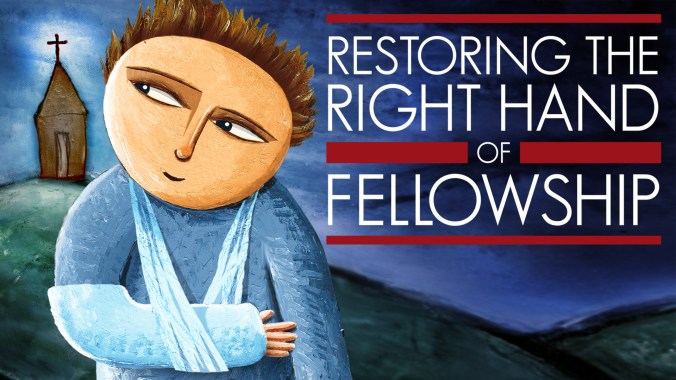
Restoring the Right Hand of Fellowship: A New Sermon Miniseries

jack-sharp-ShCVvQbQBDk-unsplashFour Truths About Fellowship: A Sermon on 1 John 1:1–2:6

As we know all too well, sin always separates. And thus, when fellowship breaks, there is, lurking somewhere, sin unconfessed. In those times, it is tempting to fix the problem(s) with our own wisdom and to work overtime to recreate the fellowship that was had before. Yet, in times when fellowship is lost, we must remember that God alone can “fix” it. And accordingly we should seek him first and all his righteousness.

To put it seasonally, before the Lord gives his church spring rains, he often makes us feel the bitterness of winter’s cold. This coldness may have known sources, or its chilling drafts may strike us without ever revealing the source of their cold. Yet, whatever the source of winter, we should remember that God is working, and that spring is coming. As Hosea 6:1–3 tells us, we must remember that the Lord is the one who breaks us, so that he can bind us; he hurts us (or permits us to feel pain), so that he can heal us (see Psalm 105). Then, from this place of weakened condition, we are invited to return to know the Lord.

This is the promise: God will sanctify his people, and he will bring them to confess their sins. And until sin is confessed, joy will be withheld. Yet, when we seek his light and see our darkness, it will prompt true confession, repentance, forgiveness, and grace. And this grace will bring a new season of fellowship, all provided by the Lord. Continue reading

Fellowship 101: Five Truths To Move Beyond Bubba’s Shrimp Scampi

erika-giraud-7KhbREQPFD4-unsplashWhat does fellowship mean?

In Christian circles the word fellowship, and its Greek equivalent (koinōnia), is used for all kinds of things. There are fellowship meals, fellowship events, fellowship coordinators, fellowship halls, and even internship experiences called fellowships. Additionally, you have a ministry called Bible Study Fellowship, which labors to distinguish themselves from being a church, even as some individuals treat that ministry as their church. At the same time, there are churches who go by the name Bedrock Baptist Fellowship, or something like that. And you can find all sorts of resources aimed to improve fellowship.

With all its various uses, “fellowship” is the equivalent to Bubba’s endless array of Shrimp Dishes. Indeed, like shrimp kabobs, shrimp creole, shrimp gumbo, etc., fellowship goes with everything. Yet, by going with everything, its utility has permitted Christians to do many things with fellowship that go beyond the bounds of the Bible.

Again, what does fellowship mean?

If we open our concordances, we find the word koinōnia (fellowship, partnership) 19 times in the New Testament: Acts 2:42; Romans 15:26; 1 Corinthians 1:9; 10:16 [2x]; 2 Corinthians 6:14; 8:4; 9:13; 13:14; Galatians 2:9; Philippians 1:5; 2:1; 3:10; Philemon 6; Hebrews 13:16; and 1 John 1:3, 6, 7. From these uses, we might begin to see what God says about fellowship.

Clearly, any time we restrict ourselves to a word to form a doctrine or a practice we miss related concepts, metaphors, stories, and more. Yet, because this word is used so often to justify so many types of Christian activities, we would do well to examine the word. Do we have a faithful understanding of the word? And do we abide by it? Continue reading

Hang On and Hold Fast: A New Year’s Resolution for 2024

chjpdmf0zs9sci9pbwfnzxmvd2vic2l0zs8ymdiylteyl2xyl2rpz2l0ywxjd2nvbw1vbndlywx0agz0odq4djm1nc1pbwfnzs5qcgc. . . Let us run with endurance the race that is set before us,
looking to Jesus, the founder and perfecter of our faith . . .
Hebrews 12:1–2

Let us hold fast the confession of our hope without wavering,
for he who promised is faithful.
Hebrews 10:23

As we step into 2024, I want to offer two words pictures that frame the way we might think about the upcoming year. If this election year is anything like the last election year (2020), it will, in the infamous words of Ned Ryerson, be a “doozy.”

Doozy or not, however, the year of the Lord 2024 was planned by God before the foundation of the world and it will proceed according to his plan, whether than plan involves regime changes, military operations, economic failures, societal revolution, or just mundane progress. In all that could occur this year, there is nothing that will separate us, the children of God, from the love of God in Jesus Christ. And so, as we step into this year, we should do so with faith in God’s son, hope in God’s future, and love for God’s people.

To do that I want to offer two images from Hebrews. Both call Christians to refuse to shrink back and to endure the trials of life with steadfastness. With these biblical images, may the Spirit of God give us grace to endure as we think rightly about this upcoming year. Continue reading

Applying Progressive Covenantalism to the Errant Demands for Corporate Confession: My 2023 ETS Paper

Dividing-the-Faithful-cover

ETS Paper Link:

Waking Up to Corporate Confession:
What Scripture Does and Does Not Say
About Corporate Guilt and Repentance

It has been some time since I have posted here. Actually, it has longer than I remembered (May 2023). But that does not mean writing has slowed. You can find regular content that I am writing and/or editing at Christ Over All, where for the last six months we have looked at a number of pertinent issues, including

At the same time, my new book Dividing the Faithful: How a Little Book on Race Fractured a Movement Founded on Grace released in September. This book responds to Michael Emerson and Christian Smith’s book Divided by Faith. I believe their sociological study surveying black and white relations in the American church is poison pill. Undergirded by progressive views of culture and liberal theology, it leeched Critical Race Theory into the evangelical water supply. And churches, pastors, and scholars have been trying to catch up since.

At the same time that I wrote Divided by Faith, I also wrote an article on the demand for white churches and their pastors to publicly confess their white supremacy and complicity in racism. These demands reached fever pitch in 2020, and to help our church think about these matters I wrote up the attached paper. It just so happens that my paper followed very closely to the progressive covenantalism advocated by Stephen Wellum and Peter Gentry. And so today, at the Evangelical Theological Society, I am reading this paper—or at least, a portion of it.

You can find the whole thing here. And if you read it, let me know what you think. For a teaser, here’s the opening page:

In 2020, the death of George Floyd touched off a series of questions about racism and corporate guilt, not to mention justice and the justice system. In churches across the country, decisions split as to the right public response. Similarly, academics took up the issue, albeit often in more popular platforms. For instance, Michael Rhodes asked online, “Should We Repent of Our Grandparents’ Racism?” And Kyle Dillon wrote for The Gospel Coalition, “Are We Held Accountable for the Sins of Our Forefathers?” In both articles, biblical theology was used to affirm the need for modern individuals to identify with the sins of their fathers.

What can be appreciated in these articles was the way these men applied Scripture, especially the Old Testament, to contemporary questions. What was problematic, however, was the way they made applications that did not address the covenantal differences between Israel and today. As Stephen Wellum has demonstrated in his chapter on doing ethics from the perspectives of Progressive Covenantalism, the Old Testament remains needful for instruction, correction, reproof, and training in righteousness (2 Tim. 3:16–17), but biblical ethicists must recognize covenantal differences when they apply God’s Word.

In this paper, I will pick up where Wellum left off and apply progressive covenantal categories to questions about corporate guilt and repentance. In particular, I will seek to answer some of the following questions:

    • Are new covenant believers responsible for the sins of their ancestors?
    • How should we apply Leviticus 26:40–44, which calls for the need to confess the sins of our fathers?
    • Do the corporate confessions of Daniel, Ezra, and Nehemiah call us to do the same?
    • How does the New Testament understand confession in the corporate sense?
    • And most specifically, if we were to turn the clock back to 2020, what might we say from Scripture about the practice of corporate confessions.

In what follows, I will answer these questions and show how progressive covenantalism provides a more robust biblical answer to ethical questions concerning corporate guilt, generational sin, and corporate repentance.

Again, you can keep going here.

For now, I will keep working on writing and editing at Christ Over All. But Lord willing, in the near future, I will be back on this site to add more biblical and theological reflections. Until then . . .

Soli Deo Gloria, ds

Ontology 101: What is Humanity?

ontology1920x1080-1Since 2013, I have taught the doctrine of humanity a half a dozen times. And in each class, I have put this question on the final exam: What is the most important doctrine for the twenty-first century?

I ask the question because in every era of the church there are unique theological challenges. For instance,

  • In the second and third centuries, the church had to grapple with the relationship between the Old and New Testaments, as well as the errors of Gnosticism.
  • In the fourth and fifth centuries, the church had to defend the deity and humanity of Christ, the proper understanding of the Trinity, and the divinity of Holy Spirit.
  • During the Reformation, the church recovered the doctrine of justification by grace alone through faith alone in the person and work of Christ alone.
  • And nineteenth and twentieth centuries, the doctrine of Scripture had to be clarified, because scientific claims and critical methods of interpretation sought to make the Bible a book like any other.

These are but a few doctrinal disputes that have arisen in church history. By identifying doctrines with decades (or centuries), I am not denying the perpetual need to declare and defend all doctrines, but there are certain pressures in culture that cause the church to reassert or reinforce biblical doctrines. And when it comes to the twenty-first century, there is no more important doctrine than the doctrine of humanity.

That’s why I ask that question on my theology exam, and here is the reason. Continue reading

Ontology 101: What is the Cosmos?

ontology1920x1080-1

Ontology 101: What is the Cosmos?

Where are we? This is an important question, especially if you have been dropped off in a place you don’t know. Or, you are visiting somewhere for the first time.

In truth, lostness is a part of life. When God created the world, he made it big, with large stretches of land and sea. Then, when he brought Noah and his family through the flood, he added mountains and valleys, languages and cultures. As a result, all humans have experienced the paralyzing effects of not knowing where they are and not knowing (for a short time or a long time) how to find our bearings.

Thinking about this, we realize that “finding ourselves” in this world requires more than a good GPS. While we may know our coordinates on the planet, we may be equally confused about how to think about the planet itself. That is to say, while we may have a map on our phones, if we are interpreting the world around us by the tools given to us by a secular and secularizing world, we may not have any idea that God dwells in heaven and we are on earth, in the place that we are (Acts 17:26), because he put us here and defined our boundaries. Moreover, without the right tools for interpretation, we may try to find ourselves in ways entirely at odds with our Creator. Such is the condition of postmodern humanity.

For all the technological know-how that we have acquired, we have lost something valuable in our world—namely, a right understanding of the cosmos. After all, what is the world? Is it something that we must accept as we find it? Or do we have permission to re-engineer the world around our own concepts of justice, goodness, and flourishing? And who decides?

Even for those who have grown up in church, the stories of God’s creation and flood must contend with Darwin and his disciples. The miracles of Jesus must overcome our modern commitment to natural causation. And our belief in Jesus’s virgin birth and third day resurrection must fight off attempts to make these historical events mere allegory or spiritual fictions. And those are a just a few of the ideas that contend for space in our secular.

Taking another step forward in our series, Ontology 101: The Business of Is-ness, this weeks sermon addressed the nature of cosmos. And from Psalm 104, I offered seven pillars for a biblical cosmology. These pillars are

  1. God Created the World to Reveal Himself
  2. God Built the World as a Three Story Temple
  3. God Preserves the World for Man to Enjoy
  4. God Tests Mankind by the World He Has Made
  5. God Permits Good and Evil to Grow in His World
  6. God Will Bring This World to an End
  7. God Will Bring His People Into a New World of Eternal Rest

Those seven pillars not everything that can be said about God’s cosmos, but they offer a good start. And they certainly counterbalance the godless materialism offered in public schools across our nation. Indeed, too many Christians are double-minded when it comes to understand the world. While they know the stories of Genesis, these historical events are often held hostage by the scientism that masquerades as legitimate science today.

In truth, we need to know what astronomy, biology, and chemistry reveal about God’s world. But just as important, we need to know how these studies in general revelation relate to the special revelation of Scripture. Wonderfully, God has made the world and everything in it, and we need to learn from Scripture what the meaning, purpose, and nature of the world is. Indeed, as we inhabit this space, we need to answer the question: Where are we? And the best place to begin is not found on a map, but in the pages of the Bible. To that end, I offer this sermon.

Soli Deo Gloria, ds