In Christian circles the word fellowship, and its Greek equivalent (koinōnia), is used for all kinds of things. There are fellowship meals, fellowship events, fellowship coordinators, fellowship halls, and even internship experiences called fellowships. Additionally, you have a ministry called Bible Study Fellowship, which labors to distinguish themselves from being a church, even as some individuals treat that ministry as their church. At the same time, there are churches who go by the name Bedrock Baptist Fellowship, or something like that. And you can find all sorts of resources aimed to improve fellowship.
With all its various uses, “fellowship” is the equivalent to Bubba’s endless array of Shrimp Dishes. Indeed, like shrimp kabobs, shrimp creole, shrimp gumbo, etc., fellowship goes with everything. Yet, by going with everything, its utility has permitted Christians to do many things with fellowship that go beyond the bounds of the Bible.
Again, what does fellowship mean?
If we open our concordances, we find the word koinōnia(fellowship, partnership) 19 times in the New Testament: Acts 2:42; Romans 15:26; 1 Corinthians 1:9; 10:16 [2x]; 2 Corinthians 6:14; 8:4; 9:13; 13:14; Galatians 2:9; Philippians 1:5; 2:1; 3:10; Philemon 6; Hebrews 13:16; and 1 John 1:3, 6, 7. From these uses, we might begin to see what God says about fellowship.
Clearly, any time we restrict ourselves to a word to form a doctrine or a practice we miss related concepts, metaphors, stories, and more. Yet, because this word is used so often to justify so many types of Christian activities, we would do well to examine the word. Do we have a faithful understanding of the word? And do we abide by it? Continue reading →
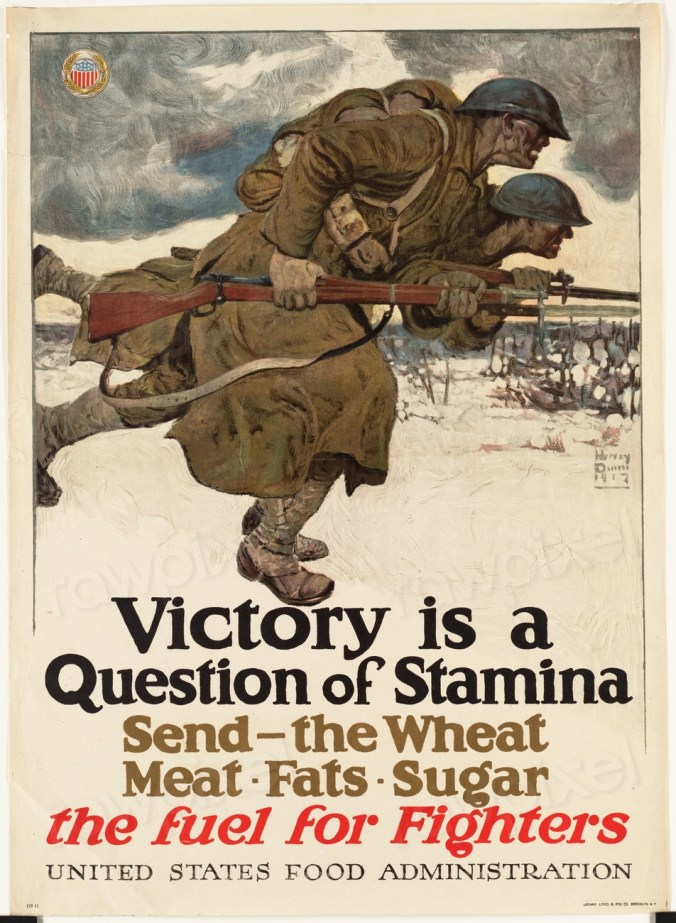
. . . Let us run with endurance the race that is set before us,
looking to Jesus, the founder and perfecter of our faith . . . Hebrews 12:1–2
Let us hold fast the confession of our hope without wavering,
for he who promised is faithful. Hebrews 10:23
As we step into 2024, I want to offer two words pictures that frame the way we might think about the upcoming year. If this election year is anything like the last election year (2020), it will, in the infamous words of Ned Ryerson, be a “doozy.”
Doozy or not, however, the year of the Lord 2024 was planned by God before the foundation of the world and it will proceed according to his plan, whether than plan involves regime changes, military operations, economic failures, societal revolution, or just mundane progress. In all that could occur this year, there is nothing that will separate us, the children of God, from the love of God in Jesus Christ. And so, as we step into this year, we should do so with faith in God’s son, hope in God’s future, and love for God’s people.
To do that I want to offer two images from Hebrews. Both call Christians to refuse to shrink back and to endure the trials of life with steadfastness. With these biblical images, may the Spirit of God give us grace to endure as we think rightly about this upcoming year. Continue reading →
It has been some time since I have posted here. Actually, it has longer than I remembered (May 2023). But that does not mean writing has slowed. You can find regular content that I am writing and/or editing at Christ Over All, where for the last six months we have looked at a number of pertinent issues, including
At the same time, my new book Dividing the Faithful: How a Little Book on Race Fractured a Movement Founded on Gracereleased in September. This book responds to Michael Emerson and Christian Smith’s book Divided by Faith. I believe their sociological study surveying black and white relations in the American church is poison pill. Undergirded by progressive views of culture and liberal theology, it leeched Critical Race Theory into the evangelical water supply. And churches, pastors, and scholars have been trying to catch up since.
At the same time that I wrote Divided by Faith, I also wrote an article on the demand for white churches and their pastors to publicly confess their white supremacy and complicity in racism. These demands reached fever pitch in 2020, and to help our church think about these matters I wrote up the attached paper. It just so happens that my paper followed very closely to the progressive covenantalism advocated by Stephen Wellum and Peter Gentry. And so today, at the Evangelical Theological Society, I am reading this paper—or at least, a portion of it.
You can find the whole thing here. And if you read it, let me know what you think. For a teaser, here’s the opening page:
In 2020, the death of George Floyd touched off a series of questions about racism and corporate guilt, not to mention justice and the justice system. In churches across the country, decisions split as to the right public response. Similarly, academics took up the issue, albeit often in more popular platforms. For instance, Michael Rhodes asked online, “Should We Repent of Our Grandparents’ Racism?” And Kyle Dillon wrote for The Gospel Coalition, “Are We Held Accountable for the Sins of Our Forefathers?” In both articles, biblical theology was used to affirm the need for modern individuals to identify with the sins of their fathers.
What can be appreciated in these articles was the way these men applied Scripture, especially the Old Testament, to contemporary questions. What was problematic, however, was the way they made applications that did not address the covenantal differences between Israel and today. As Stephen Wellum has demonstrated in his chapter on doing ethics from the perspectives of Progressive Covenantalism, the Old Testament remains needful for instruction, correction, reproof, and training in righteousness (2 Tim. 3:16–17), but biblical ethicists must recognize covenantal differences when they apply God’s Word.
In this paper, I will pick up where Wellum left off and apply progressive covenantal categories to questions about corporate guilt and repentance. In particular, I will seek to answer some of the following questions:
Are new covenant believers responsible for the sins of their ancestors?
How should we apply Leviticus 26:40–44, which calls for the need to confess the sins of our fathers?
Do the corporate confessions of Daniel, Ezra, and Nehemiah call us to do the same?
How does the New Testament understand confession in the corporate sense?
And most specifically, if we were to turn the clock back to 2020, what might we say from Scripture about the practice of corporate confessions.
In what follows, I will answer these questions and show how progressive covenantalism provides a more robust biblical answer to ethical questions concerning corporate guilt, generational sin, and corporate repentance.
For now, I will keep working on writing and editing at Christ Over All. But Lord willing, in the near future, I will be back on this site to add more biblical and theological reflections. Until then . . .
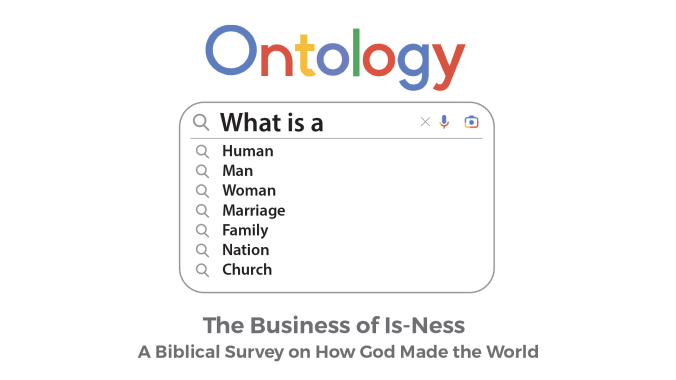
Since 2013, I have taught the doctrine of humanity a half a dozen times. And in each class, I have put this question on the final exam: What is the most important doctrine for the twenty-first century?
I ask the question because in every era of the church there are unique theological challenges. For instance,
In the second and third centuries, the church had to grapple with the relationship between the Old and New Testaments, as well as the errors of Gnosticism.
In the fourth and fifth centuries, the church had to defend the deity and humanity of Christ, the proper understanding of the Trinity, and the divinity of Holy Spirit.
During the Reformation, the church recovered the doctrine of justification by grace alone through faith alone in the person and work of Christ alone.
And nineteenth and twentieth centuries, the doctrine of Scripture had to be clarified, because scientific claims and critical methods of interpretation sought to make the Bible a book like any other.
These are but a few doctrinal disputes that have arisen in church history. By identifying doctrines with decades (or centuries), I am not denying the perpetual need to declare and defend all doctrines, but there are certain pressures in culture that cause the church to reassert or reinforce biblical doctrines. And when it comes to the twenty-first century, there is no more important doctrine than the doctrine of humanity.
That’s why I ask that question on my theology exam, and here is the reason. Continue reading →
Where are we? This is an important question, especially if you have been dropped off in a place you don’t know. Or, you are visiting somewhere for the first time.
In truth, lostness is a part of life. When God created the world, he made it big, with large stretches of land and sea. Then, when he brought Noah and his family through the flood, he added mountains and valleys, languages and cultures. As a result, all humans have experienced the paralyzing effects of not knowing where they are and not knowing (for a short time or a long time) how to find our bearings.
Thinking about this, we realize that “finding ourselves” in this world requires more than a good GPS. While we may know our coordinates on the planet, we may be equally confused about how to think about the planet itself. That is to say, while we may have a map on our phones, if we are interpreting the world around us by the tools given to us by a secular and secularizing world, we may not have any idea that God dwells in heaven and we are on earth, in the place that we are (Acts 17:26), because he put us here and defined our boundaries. Moreover, without the right tools for interpretation, we may try to find ourselves in ways entirely at odds with our Creator. Such is the condition of postmodern humanity.
For all the technological know-how that we have acquired, we have lost something valuable in our world—namely, a right understanding of the cosmos. After all, what is the world? Is it something that we must accept as we find it? Or do we have permission to re-engineer the world around our own concepts of justice, goodness, and flourishing? And who decides?
Even for those who have grown up in church, the stories of God’s creation and flood must contend with Darwin and his disciples. The miracles of Jesus must overcome our modern commitment to natural causation. And our belief in Jesus’s virgin birth and third day resurrection must fight off attempts to make these historical events mere allegory or spiritual fictions. And those are a just a few of the ideas that contend for space in our secular.
Taking another step forward in our series, Ontology 101: The Business of Is-ness, this weeks sermon addressed the nature of cosmos. And from Psalm 104, I offered seven pillars for a biblical cosmology. These pillars are
God Created the World to Reveal Himself
God Built the World as a Three Story Temple
God Preserves the World for Man to Enjoy
God Tests Mankind by the World He Has Made
God Permits Good and Evil to Grow in His World
God Will Bring This World to an End
God Will Bring His People Into a New World of Eternal Rest
Those seven pillars not everything that can be said about God’s cosmos, but they offer a good start. And they certainly counterbalance the godless materialism offered in public schools across our nation. Indeed, too many Christians are double-minded when it comes to understand the world. While they know the stories of Genesis, these historical events are often held hostage by the scientism that masquerades as legitimate science today.
In truth, we need to know what astronomy, biology, and chemistry reveal about God’s world. But just as important, we need to know how these studies in general revelation relate to the special revelation of Scripture. Wonderfully, God has made the world and everything in it, and we need to learn from Scripture what the meaning, purpose, and nature of the world is. Indeed, as we inhabit this space, we need to answer the question: Where are we? And the best place to begin is not found on a map, but in the pages of the Bible. To that end, I offer this sermon.
“It depends on what the meaning of ‘is’ is.” Those infamous words, uttered by Bill Clinton under oath in 1998, should have told us that the world and everything in it was already succumbing to the deconstructive forces of postmodernism. Postmodernism claims that meaning is no longer found in what a human author intends or what the Author of life declares. Rather, meaning is decided by individuals or groups interpreting, or in most cases reinterpreting, the words others.
In college after college, postmodern ideas have sprung to life since the 1960s, and by 1998 such epistemic redefinitions and verbal deconstructions were emerging in the public square. Bill Clinton’s elusive response to a question about his relations with Monica Lewinsky was not abnormal for a culture celebrating transgression (think: the Hippies of the 1960s), raised on MTV (think: the teens of the 1980s), or enslaved to self-expression instead of submission to the truth (every generation since WWII).
Fast forward 25 years, add two decades of social media, a handful of contested elections, one global pandemic, and endless woke crusades in public schools and city streets, and it is not just language that has come under assault, it is everything that God upholds by the word of his power. To be certain, Christ the Lord reigns in heaven. But on earth, all is not well. And in our day, our cultural elites can’t even figure out what a man is, why women’s sports should only include women, or why children should not be exposed to drag queens at the public library.
In a word, the world has gone mad. And its insanity began when words could mean anything, or nothing, or something at one time and not another. Continue reading →
If you have ever fished, or known someone who has, then you know the temptation to embellish. What began as a small catch, becomes a medium catch, becomes a large catch. Maybe this is a stereotype, but fishermen are notorious for letting their stories grow over time.
The same can be true with Scripture, especially in books like Revelation, Daniel, or John. When a biblical author uses symbolism to portray his message, the true words of God can be enlarged, exaggerated, or embellished over time.
This method of embellishment often is often associated with something called allegory, as interpreters of Scripture take something in text of Scripture and interpret it by something outside of Scripture. This extra-biblical ‘thing,’ might be a philosophy, a moral imperative, or a doctrinal truth. But what it is not is something that immediately comes from the text of Scripture.
Historically, this allegorical method of interpretation has taken a number like 153—the number of fish in Peter’s catch (John 21:11)—and turned the fish into a symbol for something else. For instance, Augustine, who is at times helpful and at other times allegorical, derived from this number a proof text for the Trinity (See Klink, John, 902). How so?
Well if you add 1 + 2 + 3 + 4 all the way up to 17, you arrive at the total of 153. One hundred fifty-three is a perfect triangle number for 17. Even more, when you add the 10 Commandments to 7 gifts of the Holy Spirit, you get 17, which gives you a triangular number of 153 that symbolizes the Trinity.
It’s as simple as that. Can’t you see it? No? Neither can I. Continue reading →
Last year, I joined Nicholas Piotrowski, Charles Ware, and Gus Pritchard for an event in Indianapolis called “Gospel, Race, and the Church.” Through six short messages and six panel discussions, plus a Q & A we worked through many subjects related to contemporary discussions on race and justice in the church. While this subject is fraught with landmines, the overall tenor of the event was positive, biblical, and prayerfully helpful.
To encourage candidness in the moment, the audios were not made public, so I can’t link to those. But what follows is an updated version of my second message. You can find the manuscript of the first message (Is Racial Justice a Gospel Issue?) here.
***********
Here is the thesis that I want to argue: Your race is more important than your ethnicity.
When defined biblically and not sociologically, one’s race is more important for identity formation than one’s ethnicity. And by extension, the mission of the church is to help you make that statement true. Which raises the question. What is race? And do you know what your race is?
As insulting as that question may sound at first, I am going to suggest it is an easy question to mistake—especially if we have fused biblical ideas with worldly ideologies. At the same time, if we can answer this question from the Bible and the Bible alone, then we have hope for knowing and growing the mission of the church. This is the point that I will argue here, and here is how I will proceed.
I will show why the concept of racialization in America is popular and pervasive, but ultimately unhelpful—if not harmful.
I will attempt to draw the lines of race and ethnicity according to the Bible.
With those lines in place, I will demonstrate that the mission of the church helps men and women, who hold PhD’s in ethnic Partiality, ethnic Hostility, ethnic Discrimination, grow up into Christ, who is the head of a new chosen race, redeemed from nation (ethnē).
Last year I wrote a book on the priesthood, and tonight I will teach a lesson on the priesthood of believers in Romans 15. And so in preparation for that lesson, I am dusting off a piece of my dissertation (edited) and posting it here. It’s on the priesthood of believers.
*********
When we think of the priesthood of believers, we often think of 1 Peter 2:5, 9–10, and rightly so. In addition to defiling the high priest’s servant when he cut off his ear (N.B. Jesus does not heal Malchus in John’s Gospel), Peter also picked up the sword of the Spirit to positively articulate a vision of the church as a royal priesthood. And in what follows, I will reflect on his thoughts from his first epistle.
At the same time, Paul too had a vision for the priesthood–a vision for priesthood that is often under-appreciated. And so, in the second portion below, I will highlight the one place where he uses the word “priest,” actually “priestly” (hierourgounta). From his usage, and Peter’s, we learn a key lesson, that the priestly ministry of the church means evangelism for all. Let’s consider. Continue reading →
Truly, truly, I say to you, you will weep and lament, but the world will rejoice. You will be sorrowful, but your sorrow will turn into joy. When a woman is giving birth, she has sorrow because her hour has come, but when she has delivered the baby, she no longer remembers the anguish, for joy that a human being has been born into the world. So also you have sorrow now, but I will see you again, and your hearts will rejoice, and no one will take your joy from you. — John 16:21–23 —
Few things in life are more terrifying or exhilarating than the final moments before a baby is born. When a wife turns to her husband and says, “It’s time,” that husband knows—or he better know—that everything he’s doing needs to stop. Now!
A few weeks ago, this scenario played itself out on national television, as Robert Griffin took a phone call and immediately ran from the field during the middle of the Fiesta Bowl. While at first his co-hosts questioned him for taking a call during the live broadcast, as soon as the reason was given, everyone understood and everyone cheered. Such is the celebration that comes when the long-awaited child is here and about to enter the world. (I share the clip with great pain for my Michigan Wolverines.)
Indeed, there is something wonderful about birth, even as it comes through immense pain for the mother and an immense sense of helplessness (not to mention adoration) for the father. Even more, childbirth is meant to picture something of God’s plans for salvation.
Like marriage, childbirth is a picture of the gospel, or at least the new birth, which comes when God grants life to his children. Explaining regeneration in John 3, Jesus indicates that this new birth—a birth from above—is much more than a metaphor. It is the very means by which God is going to save the world.
Likewise, as Jesus nears the cross, he returns to the imagery of childbirth, when in John 16:21–23, he says that the birth of pangs of salvation are here. As the bridegroom, Jesus says that “It’s time!” And importantly, he is not only saying that it is time for his cross, but he is also saying it is time for the bride (the church) to experience the pain of receiving her children.
In the Old Testament, especially in Isaiah, we discover that Mount Zion is a mother who will receive the children of God (cf. Psalm 87). And now that Jesus is going to be lifted up (on Calvary but also in glory), it is time for Mother Zion to receive her offspring. This is a key point in John 16 and one that we need to understand, if we are going to rightly relate childbirth to salvation and salvation to rearing children in the Lord.
On Sunday, I preached on this point and you can find the sermon here. Along the way, this sermon touched on appropriate and inappropriate ways to relate home and heaven, child birth and salvation—subjects that are on the forefront of Christian’s minds today.
As the moral fiber of our country continues to crumble, in large part because the family has been eviscerated, Christian Nationalism seems to offer a suitable solution. Yet, advocates of Christian Nationalism, especially those who are Baptist, should know that the foundations offered by the likes of Stephen Wolfe—see p. 217 in his The Case for Christian Nationalism—depend upon a view of the covenant that Baptists cannot affirm. For this reason and others, Baptists should be cautious of trying to reform America with his brand of postmillennialism. Instead, we should go back to Scripture to see how the new covenant informs the mission of the church, the way Christians can impact culture, and the way the law applies to the state today.
Long story short, more needs to be said on how child birth relates to salvation and how churches should foster Christian homes and influence nations with Christian truth. In the months ahead, Christ Over All will be addressing just this in two issues on the Christian Home (May) and Christian Nationalism (October). In our day, all of us need to think more carefully about how God is bringing light into the world and how the church plays a part in influencing the state. Stay tuned. Until then, however, I offer this sermon as entrée to the subject.
 What does fellowship mean?
 . . . Let us run with endurance the race that is set before us,
 Since 2013, I have taught the doctrine of humanity a half a dozen times. And in each class, I have put this question on the final exam: What is the most important doctrine for the twenty-first century?
 Last year, I joined Nicholas Piotrowski, Charles Ware, and Gus Pritchard for an event in Indianapolis called “
 Last year I wrote a
 Via Emmaus