Being and Building a Better Church: Temple Language in Paul

buildingIn Jesus the Temple Wheaton professor and New Testament scholar, Nicholas Perrin, makes an important correction on the way we read “temple language” in the letters of Paul. He writes, “When we come to the apostle Paul, we find a corpus of literature permeated with temple imagery” (65). What Perrin observes is the way Paul’s Second Temple Judaism forms a vital backdrop for Paul’s choice of words. Instead of being an incidental metaphor, Perrin argues Paul is leaning heavily on his Jewish background and its temple theology.

Whereas modern Christians might use temple language in more abstract or metaphorical ways, Paul uses it in specific, concrete ways. After all, he writes in a day when Jews continued to worship in a physical building. Therefore, when he speaks of the church as a “temple” (1 Corinthians 3:16–17; Ephesians 2:21), “building” (1 Corinthians 3:9), or “household” (1 Timothy 3:15), when he speaks of the apostles as “pillars” (Galatians 2:9), or when he speaks of the body as a temple of God (1 Corinthians 6:19), his life as a sacrifice (Philippians 2:17; 2 Timothy 4:6), and ethical living as ritual purity (2 Corinthians 6:14–7:1), he is not using an accessible metaphor. He is speaking concretely about the fact that the church of God, erected from the cornerstone of Christ, is the new and living temple of God.

Perrin makes his point emphatically as he comments on 1 Corinthians 3:9–10.

Although some readers suppose that Paul’s analogy between the Corinthian community and ‘God’s building’ was more or less arbitrary, as if ‘God’s building’ could just as easily have been exchanged with, say, ‘God’s pyramid,’ with limited difference in meaning, I find this approach unconvincing. After all, had any building served Paul’s analogy, he could have quite easily omitted the qualifier ‘of God,’ but obviously chose not to do so. Second, the effortless slide from ‘God’s field’ to ‘God’s building’ in v.9 is not an abrupt mixing of metaphors, but an appeal to two lines of imagery (architectural and horticultural) that in the Jewish literature finds their convergence in the temple. Third, the very fact that vv. 16–17 of the same chapter explicitly compare the Christian believers to a divinely inhabited temple — and from the Jewish point of view there was only one of these — should further disincline us to think that Paul has anything but the temple in mind here. God’s building is not any old house belonging to God; it is God’s unique temple. (67)

In truth, a brief survey of Paul’s letters shows that “temple language” shows up in a variety of places and a variety of ways. Sometimes the language speaks directly of a temple, a building, or “parts” of the edifice (e.g., foundation, pillar, etc.). Other times the temple language is more veiled, as in the metaphorical “building up.” Such language can be read without any recognition of the temple, but that’s the problem. Such a reading misses the fuller picture.

To correct our vision, let’s consider a number of these references. (Feel free to suggest others in the comments). Continue reading

Made Alive By the Spirit: The Pneumatology of Galatians (pt. 1)

windIn Galatians Paul spends a great amount of time explaining justification. That is to say, he argues that people are declared “right with God” as they place their faith in the finished work of Jesus Christ. In this way, Paul lays the ground work for the Reformation doctrine of Sola Fide: By Faith Alone are we saved.

In Galatians 2:16, he writes,

A person is not justified by works of the law but through faith in Jesus Christ, so we also have believed in Christ Jesus, in order to be justified by faith in Christ and no by works of the law, because by works of the law no one will be justified.

And again in Galatians 3:10–14,

For all who rely on the works of the law are under a curse…but the law is not of faith, rather…’Cursed is everyone who is hanged on a tree’–so that in Christ Jesus the blessing of Abraham might come to the Gentiles, so that we might receive the promised Spirit through faith.

However, this leads to the question, for those justified by faith, what does Paul say about sanctification? If salvation (in this case, righteousness) has nothing to do with personal holiness or obedience, how does Paul’s gospel restrain anyone from gross immorality or ethical indifference? His answer is the Holy Spirit. And in systematic fashion he unfolds in Galatians a powerful description of what the Spirit does in the life of the believer. While Paul does not undertake the task of providing a comprehensive pneumatology, he does provide a rough outline of the Spirit’s work from conversion to consummation, with the absence of the gifts of the Spirit.

In what follows, I will outline a brief pneumatology from the book of Galatians. Here is the outline. I will tackle three of these today and three in the next week or so.

  1. Born of the Spirit (4:29)
  2. Received the Spirit (3:2–3, 14)
  3. Alive in the Spirit (5:5, 25)
  4. Walk in the Spirit (5:16)
  5. Desires of… Led by… Fruit of the Spirit (5:17, 18, 22–23)
  6. Walk in the Spirit (5:25)

Continue reading

Preaching a Definite Atonement

Sometimes people ask “Why did you write your dissertation on limited atonement?” To which I have two answers.

The academic answer is “because I wanted to apply a biblical theological approach to a contentious doctrine.” I believe that only by approaching the extent of the atonement with the whole canon of Scripture in view is it possible to rightly hold its absolute efficacy for the elect with its cosmic scope for all creation. That’s the academic answer.

The other answer is evangelistic: “I wrote my dissertation on the extent of the atonement to stress the fact that what God designed, he accomplished.” What Jesus did on the cross was not to pay for some of it. Jesus paid it all, by divine design and sovereign grace. For me this has tremendous practical, missional, and homiletical effect. Every sermon I (have) ever preach(ed), stands on the glorious reality of Christ’s definite atonement and calls sinners to believe in him.

This week while at Together for the Gospel (more on that soon), we saw the above video, which perfectly expresses this same conviction. The preacher is E.J. Ward, a powerful herald of God’s gospel whose Lexington Pastor’s Conference encouraged primarily African-American brothers and sisters the doctrines of grace. His short message takes its language from the old hymn, “Jesus Paid It All,” and shows why definite atonement is necessary for preaching the gospel as good news. (For more on this point, see my chapter in Whomever He Wills).

Listen to Elder Ward’s message and marvel at this fact: Jesus death did not pay some of it. Jesus paid it all. Then, ponder this question: How can we proclaim the power of the cross if we must call our hearers to add faith? Far better, Christ’s death pays the penalty for sin and establishes a new covenant which gives to the elect all that God requires—chiefly saving faith.

Brothers, preach the definite atonement of Jesus Christ. Universally call men and women to repent and believe. And trust that all God designed in eternity and accomplished in time, he will bring to effect by means of Christ’s death and the Spirit’s life.

Soli Deo Gloria, ds


Indianapolis Theological Seminary at Together for the Gospel

its

FREE BREAKFAST FOR INDIANA PASTORS Wednesday, April 13 at 7:00am in the Aloft Hotel – downtown Louisville

This week thousands gospel-minded ministry leaders will gather in Louisville, Kentucky at an event called Together for the Gospel. Accomplishing many things, the conference reminds us of the importance of the gospel, its place in ministry, and its power to bring hope to a lost and dying world. At the same time, this gathering of gospel-minded brothers and sisters provides countless opportunities to fellowship together. In truth, after the worship in song and Scripture, my favorite part of T4G is reuniting with seminary friends who minister all over the globe and to scheme with many of them for upcoming gospel projects.

It’s this latter goal—what I like to call gospel scheming—that prompts this post.

Indianapolis Theological Seminary at Together for the Gospel

The one gospel venture I’m most excited about this week is gathering with pastors from Indiana to meet for breakfast on Wednesday morning to talk about Indianapolis Theological Seminary.

For more than 7 years (as a youth pastor and senior pastor) I ministered in the Hoosier State. And though rejoicing in the place God has moved us to serve (Occoquan Bible Church in Woodbridge, Virginia), I still love the state of Indiana and pray for the people and the pastors there.

More specifically, over the last year I’ve joined a group of pastors to pray and plan, to dream and develop a local seminary in Indianapolis. The name of the school is Indianapolis Theological Seminary, a school that “exists to collaborate with local churches for biblical and theological training unto the glory of God.”

While at first, this “school” was little more than a dream and a desire for a local seminary to equip pastors and teachers, it has in the last eighteen months become a growing reality. ITS had its first class last fall. It has begun to make partnerships with other seminaries to offer classes for credit. And it is looking to begin a Master of Arts in Biblical and Theological Ministry this fall .

If this sounds at all interesting, please get in touch with me or the leaders at ITS—Nicholas Piotrowski and Eric Bancroft in particular. You can also . . .

  • Check out the website to learn more.
  • Join us for breakfast on Wednesday at 7:00am in the Aloft Hotel. (Please RSVP) if you are an Indiana pastor and at Together for the Gospel.
  • Consider taking a class, if you are within driving distance of Indianapolis. This fall, a Greek class will be offered. And Steven Wellum and myself will co-teach Systematic Theology I.
  • And most importantly, PRAY—pray that the founding directors would have wisdom in laying the foundation of this school and that God would grant growth as he desires.

May God be pleased to raise up leaders and laborers to advance the gospel in Indiana and around the world.

Soli Deo Gloria, ds


Enlarging Our Missions Footprint

feet

How beautiful upon the mountains are the feet of him who brings good news,who publishes peace, who brings good news of happiness, who publishes salvation,who says to Zion, “Your God reigns.”
– Isaiah 52:7 –

 How then will they call on him in whom they have not believed? And how are they to believe in him of whom they have never heard? And how are they to hear without someone preaching? 15 And how are they to preach unless they are sent? As it is written, “How beautiful are the feet of those who preach the good news!” 16 But they have not all obeyed the gospel.
For Isaiah says, “Lord, who has believed what he has heard from us?”
17 So faith comes from hearing, and hearing through the word of Christ.
– Romans 10:14–17–

Imagine a child who is growing into adulthood. Each year she grows taller, stronger, wiser. Only with this child, her feet never grow any larger. While her arms and legs gain length and strength, the foundation of her body, the feet, disables her from running, jumping, playing as she’d like. Because she doesn’t have adequate support for her growing body, her feet become misshapen and debilitating for a healthy life.

Speaking metaphorically, Isaiah 52:7 extols the beautiful feet of those who bring good news. In context, Isaiah 52 is a prophecy that recalls the enslavement of Israel (“You were sold for nothing,” v. 3) and the greater salvation that God is going to bring. Isaiah tells the people of Israel to rejoice in the happy news of their salvation (v. 8), for the Lord has revealed “his holy arm” and promises to lead Israel on a new exodus (vv. 10–12). In context, Isaiah 52 sets up the announcement of the Suffering Servant (Isaiah 53), who will deliver all God’s sheep—the elect from Israel and the nations—from the very sins that led them into exile. It’s in this context that the good news is brought.

In the New Testament, Paul picks up the same imagery. When speaking of the gospel going from the Jews to all the nations (Romans 10), he quotes Isaiah 52:7, explaining that the beautiful feet “preach the good news,” i.e., the gospel of Jesus Christ. In context, Paul inquires how the nations will hear the good news of salvation, unless men and women proclaim the gospel. “And how are they to preach unless they are sent?”

Romans 10 is one of the most forceful passages in the Bible for the call of Christians and especially churches to engage in missions. From Acts 13 on, the pattern of missionary activity is for churches to recognize gifted servants whom they can send out to deliver the good news to those who have not heard it. In Acts 13, Paul and Barnabas are called by the Spirit and commissioned by the church to take the gospel throughout the Mediterranean. Ever since, “New Testament churches” have followed their pattern—raising up, sending out, and supporting missionaries.

In other words, “beautiful feet” do not come by accident. They are cultivated in and sent out by local churches. Continue reading

What Demonstrates the Power of God? Miraculous Signs or Spiritual Resurrection

powerAnd I was with you in weakness and in fear and much trembling, and my speech and my message were not in plausible words of wisdom, but in demonstration of the Spirit and of power, so that your faith might not rest in the wisdom of men but in the power of God.
— 1 Corinthians 2:3–5 —

A number of years ago I visited a church where the pastor proclaimed that God would build the church “on signs and wonders.” From his statement, the pastor revealed his theology—the miraculous gifts of the early church (e.g., tongues, healings, prophecies, etc.) are still normative and should be pursued, even promoted, as the normative means by which God builds his church.

More recently, Bill Johnson, a popular-but-false teaching ‘pastor’ from Redding, California, has argued that “working miracles is closer to the normal Christian life than what the Church normally experiences.”[1] In his bestselling[2] When Heaven Invades Earth, Johnson makes apology for the place of the miraculous today. He argues that denial of miracles has to be taught to Christians, stating, “The doctrine stating signs and wonders are no longer needed because we have the Bible was created by people who hadn’t seen God’s power and needed an explanation to justify their own powerless church” (105–06).

That’s a strong claim, and one that bears examination. Is it true the church—for most of the nineteen centuries leading up to the birth of the Charismatic movement (1906)—hadn’t seen God’s power because they failed to pursue the miraculous gifts? Is it true that God’s power is, as Johnson defines it, in “working miracles”? Or might it be the case that power as emphasized by Paul in 1 Corinthians 2:3–5; 4:14–20, for instance, is something different than what these Charismatic pastors mean? Continue reading

The Making of a ‘Theologian’: Twelve Ways to Grow in Grace and Knowledge of the Lord

lutherA few weeks ago I wrote a blogpost, “Theology is not Just for Theologians.” This week Edmond Sanganyado ran a post (“Becoming a Better Theologian“) on the same subject, where he queried more than twenty theologians on how to grow in knowing and loving God (i.e., theology). He received responses from Jonathan Leeman, Kevin Vanhoozer,  Tim Challies, to name a few. He also included a few thoughts I shared.

I’ve developed those reflections further below, and laid out twelve aspects to growing as a ‘theologian’ (i.e., one who thinks about God). These are addressed to individuals in the church but could easily be adapted by pastors to encourage his congregation to grow in grace and knowledge of the Lord Jesus Christ (2 Peter 3:18), which is the aim of spiritually-enriching theology.

Twelve Ways to Grow in the Grace and Knowledge of the Lord

1. Delight Yourself in the Lord. 

Good theology begins with a soul satisfaction in the Lord. This includes conversion, but goes further. Because understanding is enhanced or hindered by our loves, the first thing a good theologian must do is love God in and through the gospel of Jesus Christ. “Delight yourself in the Lord, and he will give you the desires of your heart” (Psalm 37:4) is not just a command for decision-making, it is also necessary for doctrine-making.

Often heresy and errant theology (which are not exactly the same) are produced by men who are embittered towards God or trying to win the approval of others. In other words, because biography shapes theology (as in the case of Friedrich Schleiermacher), it is possible for bad theology to crop up from some misunderstood crisis in life. At the same time, good theology is sweetened by the grace given in times of suffering. Martin Luther said suffering was essential for making a theologian. A good theologian, by implication, must think rightly about God in trying times. And thus he or she must begin with delighting in the Lord. Continue reading

Looking at the Old Testament on Good Friday


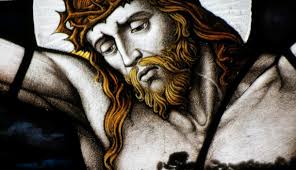
isaacAlthough the centerpiece of the Bible—Christ’s cross—is revealed in the New Testament, we cannot understand its meaning without the Old Testament. Indeed, Paul says Christ’s death and resurrection happened “according to the Scriptures” (1 Corinthians 15:3, 4), which means according to the Old Testament Scriptures. Similarly, Peter says the prophets were led by the Spirit of Christ to “predict the sufferings of Christ and the subsequent glories.” He writes more fully,

Concerning this salvation, the prophets who prophesied about the grace that was to be yours searched and inquired carefully, inquiring what person or time the Spirit of Christ in them was indicating when he predicted the sufferings of Christ and the subsequent glories.  It was revealed to them that they were serving not themselves but you, in the things that have now been announced to you through those who preached the good news to you by the Holy Spirit sent from heaven, things into which angels long to look. (1 Peter 1:10–12)

Peter says something even more radical about the cross of Christ a few verses later:

With the precious blood of Christ, like that of a lamb without blemish or spot. He was foreknown before the foundation of the world but was made manifest in the last times for the sake of you. (v. 20)

The cross wasn’t the tragic conclusion of a series of unexpected events. It was God’s predestined plan to put Jesus to death. Continue reading

Approaching Good Friday and Resurrection Sunday: A Few Video Resources

But when the fullness of time had come, God sent forth his Son, born of woman, born under the law, to redeem those who were under the law, so that we might receive adoption as sons. And because you are sons, God has sent the Spirit of his Son into our hearts, crying, “Abba! Father!” So you are no longer a slave, but a son, and if a son, then an heir through God.
— Galatians 4:4–7 —

Looking for ways to prepare for Good Friday and Resurrection Sunday?

A few years ago Justin Taylor and Andreas Köstenberger teamed up to write a book called The Final Days of JesusIn it they produced a harmony of the Gospels, a “play-by-play” of everything that happened from the day Jesus entered Jerusalem on Palm Sunday to the day of his crucifixion (Good Friday) to the day of his vindication (Resurrection Sunday). This is a great resource, but maybe one to schedule for next year.

In the meantime, consider a shorter series of videos based on the book. In what follows Justin Taylor has teamed up with Köstenberger and a number of other biblical scholars (e.g., Douglas Moo, Grant Osbourne, Nicholas Perrin, and Paul Maier) to lay out the historical background and theological significance of Christ’s final week in eight 4-minute videos. And explanation for the dates and the content of these videos can be found in their book.

As you prepare this Holy Weekend, these videos would be a great encouragement. To watch them all would take less than an hour (approx. 40 min.). In that time you would be greatly encouraged and instructed with how and why Jesus did what he did as he approached his cross, the reason for which he came to earth.

Psalm Sunday, March 29, AD 33.

Monday, March 30, AD 33.

Tuesday, March 31, AD 33.

Wednesday, April 1, AD 33.

Maundy Thursday, April 2, AD 33.

Good Friday, April 3, AD 33.

Saturday, April 4, AD 33.

Resurrection Sunday, April 5, AD 33.

For those in the Woodbridge, Virginia area looking for a Good Friday service, please join us at Occoquan Bible Church at 7:00pm. And if you are looking for a church home, we’d love to have you join us on Sunday (at 9:30am or 11:00am).

Soli Deo Gloria, ds

On Biblical Theology and Interpretation

Christ in OT“Jesus became the direct and primary source of the
church’s understanding of the Old Testament”
— David Dockery, “Typological Exegesis”
in Reclaiming the Prophetic Mantle, 174 —

If reading the Bible well is a passion for you, you will appreciate the reflections of these interpreters of Scripture.


The Text, the Whole Text, and Nothing But the Text. Willem VanGemeren is right when he argues that the historical-grammatical interpretation is the way to read the Bible on its own terms.

Hermeneutics refers to the manner in which we listen to the text, relate it to other texts, and apply it. Hermeneutics calls for a discipline of mind and heart, by which the student of Scripture may patiently study the biblical text in its various contexts, including historical, grammatical, literary, and cultural.  This approach is best known as historical-grammatical analysis. (Van Gemeren, The Progress of Redemption, 27)

The Textual Horizon is not Enough. And VanGemeren is also correct to caution against exegesis which fails to consider the larger framework of the Bible.

The problem with the historical-grammatical method, however, is that students of the Word may be tempted to think that they have control over the text when all they have done is examine its constituent parts—but what grasp do they really have of its message?  Only after seeing how the parts fit together and how they relate to the rest of the book and to the rest of Scripture can the student master the clear message of the text.  Proper exegetical theology, therefore, requires synthesis. . . .

Interpretation also involves equal concern for the Old and New Testaments.  When the two parts of the Bible are held in careful balance, the continual tension between law and gospel, token and reality, promise and fulfillment, present age and future restoration, Israel and the church, and earthly and spiritual only enhances a christological and eschatological focus. (Van Gemeren, The Progress of Redemption, 29, 38) Continue reading