Household ‘Stewards’: A Rich Metaphor for Pastors and Churches

shepherdThis is how one should regard us, as servants of Christ
and stewards of the mysteries of God.
Moreover, it is required of stewards
that they be found faithful.
– 1 Corinthians 4:1–2 –

In creation, there is nothing more valuable than human life. And this is doubly true for those who have been purchased with the infinite blood of Christ (Acts 20:28; 1 Corinthians 6:19; 1 Peter 1:18–19). God sent his Son to Calvary to redeem a people for his own possession, and so great is his love for his people that the Good Shepherd has raised up shepherds who would tend his flock. Sometimes these spiritual leaders are called pastors, or overseers, or elders—synonymous terms for the same office. At the same time, while each of these labels stress different aspects of local church ministry, there is another title that needs consideration—steward.

In Paul’s letters especially, “steward” (oikonomos) describes the kind of ministry pastors are to have. As Christ gives pastors to his people (Ephesians 4:11), he gives them to particular, groups of people—i.e., local churches. In Acts 2, when the church was “birthed,” new converts were “added to the number” of the church (v. 47; cf. 4:5, 32; etc.). Later Paul could speak of a “majority” in the church (2 Cor 2:6) or the “whole church” gathering, indicating an awareness of the number of the people. The importance of this observation is that God has not simply given pastors to be spiritual mentors or life coaches to Christians in general. He has called them to manage local gatherings of God’s household.

For good reason, most pastoral literature focuses attention on the multivalent duties of the pastor/overseer/elder. However, focus on these three labels without consideration of the fourth gives us an incomplete picture. There needs to be equal emphasis given to the idea of the pastor as God’s steward. In fact, such a notion focuses the high calling of a pastor within the parameters of a local church and clarifies the importance for Christians to be members of a local church. Without disregarding the vital importance of the universal church, the pastor as steward corrects amorphous understandings of spiritual leadership and church life.

What is a Steward?

In the New Testament, oikonomos and oikonomia are two words related to the oversight of a house. Continue reading

Not Hardening Our Hearts Against the Hard-Hearted: A Pastoral Meditation on Hebrews 3:12–14

heart12 Take care, brothers, lest there be in any of you an evil, unbelieving heart, leading you to fall away from the living God. 13 But exhort one another every day, as long as it is called “today,” that none of you may be hardened by the deceitfulness of sin. 14 For we have come to share in Christ, if indeed we hold our original confidence firm to the end.
— Hebrews 3:12–14 —

Until the day when Christ returns, churches will be faced with the mystery of iniquity. And more, we will be faced with the challenge of responding to erring church members with grace and truth.

Hebrews 3:12–14 gives us a number of things to consider when a Christian acts upon their hardness of heart. What follows is a five-fold meditation on how to address the hard-hearted without hardening our own hearts.

1. We must read Hebrews as speaking to Christians.

The threat of Christians being led astray by sin, the devil, and the world is very real. Verse 12 crushes any notion that salvation makes Christians impervious to sin. The author addresses “brothers,” meaning his words are for Christians, not some other spiritually-mixed community.

Accordingly, we learn the new birth doesn’t—in this age—make us sin-free, even as it frees us to fight sin. Even so, there are times when sin deceives us, ensnares us, and we need the help of the church to free us. Conversely, the church needs to patiently endure the words and actions of its members. It must preach the gospel to them and bear with them as God’s truth brings change. Continue reading

A Brief Meditation on the Minister’s Rest

farmerWhen I lived in Indiana I was surrounded by fields and farmers. From spring planting to fall harvesting, these men and women worked hard to bring fruit from the soil. As Paul indicates in 2 Timothy 2:6, “It is the hard-working farmer who ought to have the first share of the crops.” In Paul’s day, like ours, farmers are known for their hard work. The same is true for those who sow and water with the word of God. Like the farmer, early mornings, long nights, and constant concern for the Lord’s harvest are a heavy burden.

Fortunately, God gives seasons to farmers. In the winter months, hard-working farmers receive a time of rest and recovery. But at the same time, these hard-working farmers take time to plan for the next year, for the increase of the harvest. I remember talking to them in the winter months as they would be making their seed orders, learning more about new techniques, and equipping themselves with the latest machinery. Sure, there were trips to the beach, holiday celebrations, and the ability to take an afternoon nap. But far more, these men and women spent their time preparing for the upcoming harvest.

This imagery is helpful when we think about a sabbatical. In the Old Testament, Israel was commanded to take a sabbatical from the land every seven years (Exodus 23:10–11). Following in the footsteps of their heavenly father (Genesis 2:1–3), they were called to rest. Rest in the Bible is never a time of inactivity or lethargy. Rather it is a time when God and his people enjoy one another. Such is the background for ministers of the gospel who occasionally take a season of rest and refreshment. The goal is not to pull away from the church, the Lord, or his work. But rather, it is a time of reflection, rest, and refreshment for future ministry.

Indeed, Charles Spurgeon spoke of the necessity for “holy inaction and consecrated leisure.” In his Lectures to My Students, the London pastor said,

It is wisdom to take occasional furlough. In the long run, we shall do more by sometimes doing less. On, on, on for ever, without recreation may suit spirits emancipated from this ‘heavy clay’, but while we are in this tabernacle, we must every now and then cry halt, and serve the Lord by holy inaction and consecrated leisure. Let no tender conscience doubt the lawfulness of going out of harness for a while.” (161)

This principle of rest is true for all Christians, and especially those who labor to feed and tend the flock.

Personally, rest is a difficult practice for me. That being said I am growing to see my need to schedule “holy inaction” and “consecrated leisure.” Though my go-go-go mentality fights against it, taking time to periodically unstring the bow and sharpen the axe does not steal away from productivity. It actually does the opposite—it ensures that I trust in God to give the growth (1 Corinthians 3:7), even as I labor in the strength he provides (Colossians 1:28–29). Yes, he gives spiritual strength, but such grace is not divorced from our responsibility to care for our physical body’s.

While the work of the ministry is a spiritual endeavor, it is not immaterial. Lest we deny our own created-ness or become neo-Platonists who pit the spirit against the flesh, we must learn how to pace ourselves as we run God’s race. This includes scheduling physical rest, sometimes even a prolonged sabbatical like we recently gave to one of the pastors at our church. Because we are vessels of clay, we must establish a rhythm of work and rest, lest we invite physical exhaustion and spiritual/emotional collapse.

Therefore, as we strive to abide in his rest (Hebrews 4:11), may God grant us strength through the appointed means of holy inaction and the spiritual discipline of consecrated rest. May we find Sabbath rest in Christ (Hebrews 3–4) and take time to let our physical bodies recover for more fruitful service.

Soli Deo Gloria, ds

How the Doctrine of the Trinity Cultivates Church Unity (1 Corinthians 1–2)


paulHere is a long-form piece that came from our recent sermon series on 1 Corinthians. While many commentaries do not recognize the trinitarian nature of 1 Corinthians 1–2, Paul highlights doctrines related to each member of the trinity in order foster unity in the church at Corinth. May the Lord grant doctrinal unity to his church, as its members tether themselves to his triune gospel of grace.

******************

What do you do when a church begins to fight? What do you say when members of the church begin to take sides and misrepresent the other? Where do you turn? What truth(s) do you recall? How do you bring peace to a divided church?

Sadly, many faithful followers of Christ find themselves in churches divided by various doctrines and competing practices. In one church I served controversy broke out concerning the doctrines of election, regeneration and faith, and the extent of the atonement. Or at least, those “doctrines of grace” appeared to be the problem. From my vantage point, those problems were merely used to protect a deeper, darker problem—the baleful commitment for various groups in the church to maintain control over what their church.

Commitment to self-interest in the church is all too common. It appears in modern churches who fracture over various worship styles, and it appears in ancient churches who sought to identify themselves with certain charismatic leaders. It appears on the pages of church history and it is found in Scripture itself, especially in the book of 1 Corinthians. Continue reading

The God of Comfort Who Grants Tailor-Made Mercy

peterThe last two chapters of John’s Gospel are full of personal revelations and tailor-made mercy. John records Jesus’ revelation to Mary in the Garden (20:11–18), to the disciples in the Upper Room (20:19–23), to Thomas eight days later (20:24–31), and finally to seven disciples on the Sea of Tiberias (21:1–23). Each of these “revelations” bring faith in the risen Lord (see Thomas’ response, 20:28), because each of them reveal to doubting eyes the truth of Christ’s resurrection.

At the same time, each of these revelations are intensely personal—meaning, they cater to the weaknesses and experiences of each individual. For instance, with Thomas Jesus answers his need to see the wounds in Jesus flesh (20:24–25) with an invitation to “put your finger here, and see my hands; and put out your hand, and place it in my side” (20:27). Jesus command (“Do not disbelieve, but believe”)—an instance of the effectual call?—is undergirded by giving Thomas the personal revelation he needed to trust in Jesus.

The same is true with Peter. After Jesus had appeared, Peter went back to fishing—not knowing Jesus’ plans for him. John makes a clear connection between Jesus words around the “charcoal fire” (21:9) and Peter’s denial, which also took place around a “charcoal fire” (18:18). In this personal visitation, Jesus restores Peter with his three-fold question: “Do you love me more than these” (21:15–19)? If it is to the fish he is speaking, Jesus is very personally addressing Peter. He is bringing up his painful past and using it against him—rather for him! Continue reading

Calvinism in Context: Psalm 106:6–12

red seaThen they believed his words; they sang his praise.
— Psalm 106:12 —

Speaking of the law (Hebrews 10:1), the festivals and the Sabbath (Col 2:19), the New Testament regularly understands God’s redemption in Israel as a “shadow” or “type” of the redemption procured by Jesus Christ. In Luke 9:31, for instance, Jesus discusses his “departure” (read: “exodus,” exodon) with Moses and Elijah. Truly all the saving events of the Old Testament prefigure the saving events of the New.

Psalm 106 is no different. In that glorious Psalm, the author remembers the work of God to save Israel from Egypt. Running like a thread through the Psalm is the sin of Israel (e.g., vv. 6, 13, 21, 24-25, 28, 39, etc.), followed by the grace of God to save (vv. 10, 23, 30, 44-46).

More particularly, when the people sinned God sent a mediator. In Egypt, it was Moses; at Baal-Peor, it was Phineas. Even in Psalm 105, we discover God saved his people through the previous “sending” of Joseph to Egypt. In truth, God demonstrates his love for Israel, in that while they were still sinning God sent Joseph, Moses, and Phineas to “save” his people from destruction. In this way, Psalm 105 and 106 foreshadow the kind of salvation God would ultimately give in Jesus Christ.

In fact, situated as the final Psalm in the fourth book of the Psalter, Psalm 106 perfectly sets up the culminating redemption anticipated in Book V of the Psalter. The God who reigns (see Pss 90–99), will accomplish salvation once and for all, by sending his final mediator, his own son, to bring salvation to his people.

Psalm 106: A Pattern of Regeneration 

Narrowing our focus, Psalm 106 foreshadows Christ’s work of redemption and specifically the doctrine of effectual calling, with regeneration preceding faith. While not speaking of “regeneration”, the movement from depravity, to redemption, to faith in Psalm 106 is instructive.  Continue reading

Books on Biblical Theology: A Brief Annotated Bibliography

biblical theologyYesterday evening I taught on ‘Seeing Christ in All the Scripture‘ in our Sunday evening service. As we emphasize the discipline of biblical theology this summer at our church, I put together a handout showing how the New Testament teaches us to read the Old Testament and how the Old Testament demonstrates a series of pattern which culminate in Christ. You can see the front of that handout here. Below is the back side, which lists and introduces books on biblical theology for children, beginners, and beyond.

Children

  1. The Big Picture Story Bible by David Helm – Perfect for ages 3–103, David Helm traces the idea of God’s People in God’s Place under God’s Rule. He teaches young children how to read the Bible with Christ at the center.
  2. Jesus Story Book Bible by Sally Lloyd-Jones – Suitable for ages 5–105, Lloyd-Jones, who I’ve recently learned is *not* related to the famous Dr. Martyn Lloyd-Jones (thanks Gilbert!), goes into greater depths than Helm. She too shows how the types, shadows, and patterns in the Old Testament find their fulfillment in Christ. At points, her story Bible is quite funny as it considers the stories of Scripture.
  3. The Gospel Story Bible by Marty Machowski – Ideal for ages 7–107, Machowski’s book takes the story of Christ even further. It includes a couple questions about the story on each page, as well.

Together, each of these illustrated children’s Bibles contain slightly more content as they teach young ones (and older ones) how Christ is the pinnacle and linchpin of the whole Bible.

Beginner

  1. According to Plan: An Introduction to Biblical Theology by Graeme Goldsworthy – In my estimation, this is the introduction to biblical theology. It gives a short ‘how-to’ and a readable overview of the whole Bible through the gospel of the kingdom. He has also written a more comprehensive biblical thelogy: Christ-centered Biblical Theology that gives even more explanation of his method and approach.
  2. God’s Big Picture by Vaughn Roberts – A short, eight-fold explanation of redemptive history centered on the kingdom of God.
  3. Reading the Bible Through the Jesus Lens by Michael William – It gives a short, Christ-centered interpretation of every book in the Bible. Any teacher doing a BT overview should have this book.
  4. The Drama of Scripture: Finding Our Place in the Biblical Storyline by Craig Bartholomew and Michael Goheen – Speaks of the Bible as a five act drama, where the analogy of drama is effectively used to explain redemptive history.
  5. The Unfolding Mystery: Discovering Christ in the Old Testament by Edmund Clowney – Any student of Biblical Theology should know Clowney, and this worship-inducing book is the best introduction. Preachers should also commit to reading his short book Preaching and Biblical Theology.

Intermediate

  1. The Goldsworthy Trilogy by Graeme Goldsworthy – Three-Books-in-One: Goldsworthy applies his ‘gospel-centered’ approach to the whole Bible, Wisdom literature, and the book of Revelation. For those tired of reading Revelation in light of shifting current events, Goldsworthy shows how Revelation is a book about Jesus.
  2. Dominion and Dynasty: A Biblical Theology of the Hebrew Bible by Stephen Dempster – Picking up the royal themes of people and place, Dempster beautifully shows the unity of the Old Testament.
  3. Magnifying God in Christ: A Summary of New Testament Theology by Thomas Schreiner – This abbreviation of his outstanding New Testament Theology gives a rich overview of NT Theology. He also has a large, but very readable Biblical Theology, The King in his Beauty.
  4. From Eden to the New Jerusalem by T. D. Alexander – Tracing six crucial themes (e.g., temple, sacrifice, sovereignty, etc.), this book shows how to move from Genesis to Revelation.
  5. New Dictionary of Biblical Theology – Although large, this is the one-stop shop for biblical theology. In three sections, a bevy of evangelical scholars (1) give instruction on how to approach biblical theology, (2) introduce every book of the Bible, and (3) summarize many important Biblical Theological themes. Every serious Bible teacher should have this reference work.

Advanced

  1. Biblical Theology by Geerhardus Vos – The classic work on Biblical Theology. This book is hard-going at times, because it contains a great deal of interaction with higher-criticism (the academic viewpoint that takes the Bible as as compilation of man-made books, not a unified revelation, inspired by God). However, if you can wade through the chaff, you’ll benefit immensely from this Princeton Giant—not to mention, you will gain an appreciation for what it took for the modern genesis of evangelical biblical theology to emerge.
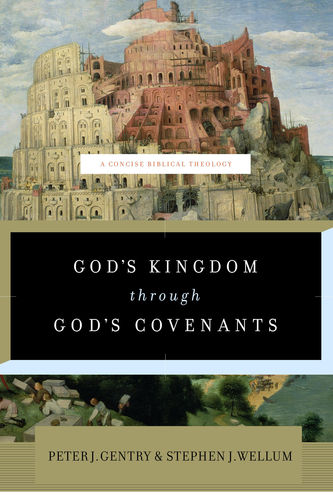
  2. God’s Kingdom Through God’s Covenants by Stephen Wellum and Peter Gentry – Contrasting Covenant Theology and Dispensationalism, these two Baptist scholars argue for a series of covenants (progressive covenantalism) as the “backbone” of the Bible. This book abbreviates and gives some response to objection to their earlier book, Kingdom through Covenant.
  3. Progressive Dispensationalism by Craig Blaising and Darrell Bock – A well-researched and irenic book which updates older models of Dispensationalism. Dispensationalist and non-dispensationalists alike would benefit from this well-argued book.
  4. The Temple and the Church’s Mission by G.K. Beale – Long, but worth the read. If you ever want to see how exegesis flows into Biblical Theology for the sake of the church, this is your book. At the same time, this book makes a whole-Bible argument for why Christians should not expect a future reconstruction of the temple.
  5. God’s Glory in Salvation through Judgment by Jim Hamilton – Hamilton shows how salvation and judgment redound the praise of God in every book of the Bible. Hamilton’s forte is showing the literary structure of each book and how each book contributes to theme of God’s glory.

There are countless other books that could be added to this list, and thankfully more continue to be published each year. If there are others that should be mentioned, feel free to suggest them in the comments. For now, I will commend these books to you, with one additional series: New Studies in Biblical Theology. Recognizable by its silver covers, this series edited by D.A. Carson holds nearly 40 individual studies on Biblical Theology from a wide array of evangelical scholars. These studies are fantastic for tracing themes throughout both testaments. (And to make these books even more accessible for pastors and teachers, Andy Naselli has served the church well by writing up a Scripture index for these volumes).

In sum, few areas of study have been more encouraging to my soul than biblical theology. Gaining an understanding of the Bible as a whole is something Jesus taught his disciples (Luke 24:27, 44–49) and it is something we should give great attention.

May the Spirit of truth illumine our eyes to behold Christ in all of Scripture, and may these resources serve in that study.

Soli Deo Gloria, ds

How the Spirit and the Word Prepare You for the Lord’s Supper

bibleWho can discern his errors? Declare me innocent from hidden faults.
Keep back your servant also from presumptuous sins;
let them not have dominion over me!
Then I shall be blameless, and innocent of great transgression.
Let the words of my mouth and the meditation of my heart
be acceptable in your sight, O Lord, my rock and my redeemer.
— Psalm 19:12–14 —

How do you approach the Lord’s table when your heart is uncertain of it’s spiritual condition? If you question the errors of our heart, as David did in Psalm 19 (“Who can discern his errors?”), what will compel you to confidently take the Lord’s Supper? Will you withdraw from the bread and the cup when sin plague’s your soul? Or might the Lord’s Supper be an appointed means of reconciliation via remembrance?

These are not hypothetical questions, but realities Christians face as we commune with a holy God. Paul warned that anyone who takes the Lord’s Supper in an unworthy manner “drinks judgment on himself” (1 Corinthians 11:29). Therefore, he calls us to “examine” ourselves and “then . . . eat of the bread and drink of the cup” (v. 28).

But how do we do that? If our hearts are deceitful (Jeremiah 17:9) and lead us to evil and idolatry (see Jeremiah 3:17; 13:10; 18:12) how shall we be able to examine ourselves? Thankfully, as with all aspects of salvation, God provides what he demands, and the answer comes in the working of God’s Word and God’s Spirit.

By means of God’s Word, the Holy Spirit enables God’s children to rightly examine themselves and to come to the Table with fresh faith and repentance. Indeed, consider three ways the Holy Spirit uses the Word of God to prepare you for the Lord’s Table. Or to put it the other way, here are three ways you should, by the Spirit, prepare your heart for communion with the Word of God. Continue reading

Introducing “How” To Do Biblical Theology: Fifteen Axioms from Graeme Goldsworthy

atpThis week our Sunday School classes begin a summer-long study of According to Plan: An Introduction to Biblical Theology.

It is not hyperbole to say Graeme Goldsworthy’s book was revolutionary in my understanding of Scripture, theology, hermeneutics, and preaching. Maybe you’ve had a similar experience with him; I know many friends and ministers of the gospel who have.

If you have not read him—or heard of him— let me whet your appetite. The first seven chapters of his book outline a basic methodology for biblical theology. Without including everything, I’ve laid out fifteen axioms about biblical theology from his introduction.

Certainly, these axioms do not exhaust the subject. They don’t even exhaust Goldsworthy’s contribution (see his Christ-centered Hermeneutics and Christ-centered Biblical Theology), but they do make a sizable dent in introducing “how” to do biblical theology.

So, take up and read. Tolle Lege. Then go back to Scripture with a greater hunger and skill in seeing Christ in all Scripture—the personal and spiritual aim of all good biblical theology.

  1. Biblical theology is more than being “biblical” in our theology — “Deciding to be biblical, and believing and acting upon what the Bible teaches, does not solve all our problems” (19).
  2. Biblical theology is Christ-centered, meaning “biblical theology shows the relationship of all parts of the Old Testament to the person and work of Jesus Christ and, therefore, to the Christian” (23). Likewise, “Biblical theology enables us to discover how any Bible text relates to ourselves. Because Christ is the fixed point of reference for theology, we are concerned with how the text relates to Christ and how we relate to Christ” (71).
  3. Biblical theology is a methodological approach to showing [how all parts of the Old Testament relate to Christ] so that the Old Testament can be understood as Christian Scripture” [cf. 2 Timothy 3:14–16]” (23).
  4. “Biblical theology needs to emphasize some theme or themes which provide basis for understanding the single, unified message of the Bible” (77). Any valid biblical theology will show from Scripture is unified message, and how it relates to the final and full revelation of God in Christ (Hebrews 1:1–2).
  5. Biblical theology is a verbal map of the overall message of the Bible,” and “Biblical theology enables us to map out the unity of the Bible by looking at its message as a whole.” (23–24)
  6. Biblical theology provides the basis for the interpretation of any part of the Bible as God’s word to us” (25). As William Dumbrell has said elsewhere, “Interpretation of the Bible demands a framework within which the details are set. . . . We need to know the big picture before we look at the details.” (William Dumbrell, The Search for Order: Biblical Eschatology in Focus, 9).
  7. Biblical theology, speaking generally, stands between systematic theology and exegetical theology. In practice, biblical theology is most like historical theology, as “it contains a history of God’s revelation to mankind” (32). At the same time, biblical theology is what insures systematic theology is biblical, as “systematic theology will constantly make use of biblical and historical theology” (32). That said, biblical theology is most closely related to exegetical theology; it is “the last stage of exegetical theology . . . which examines the process of progression of God’s revelation to mankind” (35).
  8. Not every “biblical theology” is equally biblical, for “many biblical theologies have been written in which the biblical presuppositions have been rejected in favor of humanistic ones” (48). Importantly, biblical theologians must the inspiration, authority, and unity of the Bible.
  9. Biblical theology must affirm a number of underlying presuppositions about the Word of God and the world we live. Goldsworthy enumerates five (45):
    1. God made every fact in the universe, and he alone can interpret all things and events.
    2. Because we are created in the image of God we know that we are dependent on God for the truth.
    3. As sinners we suppress this knowledge and reinterpret the universe on the assumption that we, not God, give things their meanings.
    4. Special revelation through God’s redemptive word, reaching its high point in Jesus Christ, is needed to deal with our suppression of the truth and hostility to God.
    5. A special work of the Holy Spirit brings repentance and faith so that sinners acknowledge the truth which is in Scripture.
  10. Biblical theology should learn how to read the Bible from the apostles — “Jesus claims . . . he himself is the subject of the Old Testament. His teachings constantly point to the Old Testament as that which he fulfills. Thus the Old Testament does not stand on its own, because it is incomplete without its conclusion and fulfillment in the person and work of Christ” (52).
  11. Biblical theology should be a Christian endeavor – “In doing biblical theology as Christians, we do not start at Genesis 1 and work our way forward . . . Rather we first come to Christ, and he directs us to study the Old Testament in the light of the gospel The gospel will interpret the Old Testament by showing us its goals and meaning. The Old Testament will increase our understanding of the gospel by showing us what Christ fulfills” (55).
  12. Biblical theology recognizes that God’s Word is a progressively revealed revelation” — The Old Testament “is revelation because in it God makes himself know. It is redemptive because God reveals himself in the act of redeeming us. It is progressive because God makes himself and his purposes known by stages until the full light is revealed in Jesus Christ” (57).
  13. Biblical theology avoids the mirrored extremes of literalism and allegory — “Literalism involves the very serious error of not listening to what the New Testament says about fulfillment. It assumes that the fulfillment must correspond exactly to the form of the promise.” Conversely, “allegory assumed that history is worthless as history. Allegory results when a supposed hidden meaning is read out of something that on the surface is historical but which in fact has no value as history” (67).
  14. Biblical theology pays attention to the typological structures of the Bible — “Typology . . . takes account of the fact that God used a particular part of human history to reveal himself and his purposes to mankind. But it was a process, so that the historical types are incomplete revelations and depend on their antitype for their real meaning [e.g., the substance of Christ interprets the shadows of the Old Testament]. Typology rejects the principle of literalism [the belief that “says the historical promises lead to exactly corresponding historical fulfillments”]  . . . It also rejects the principle of allegory. [the belief that “says the historical promises and events are of significance only for the hidden meanings which lie beneath them”]. (68)
  15. Biblical theology ought to ground its methods of interpretation in the principles of the Reformation — “The literal or natural meaning of the text was what the text intended to convey to its original readers. It was thus a rejection of the allegorical interpretation that regarded such [historical-grammatical] meaning as irrelevant. Most significantly, however, the reformers did not see the literal meaning as being exhausted until it found its fulfillment in Christ. Thus, they recognized that the literal meaning at the Old Testament level pointed to a future event with a fuller meaning. Unlike allegory, the connection between the two was a matter of revelation in the Bible itself.” (68–69)

Continue reading

Discipleship 101: What is a Disciple?

discipleWhat is a disciple? The answer may not be as easy as it might first appear.

First, there is a shift in the meaning of the term ‘disciple’ from the Gospels to the book of Acts. For instance, in John 6 many of Jesus’ ‘disciples’ leave him. These are the ones who followed him to hear his teaching and to eat his bread, but when he calls them to eat his flesh and drink his blood, they cannot stomach their teacher any longer.

In this situation, disciples are simply those who followed and learned from Jesus, but were not converted by him. You could use this label to describe Judas. He was a disciple in one sense, but not in another. He followed and learned from Jesus, but because he failed to follow Christ until the end he proved to be a false disciple. Thus, in the Scriptures themselves, there is some ambiguity in the term.

But it is not just in the Bible where our labels fail us. In popular Christianity, there are also various definitions of discipleship. And this difference comes before we begin to discuss discipleship programs and practices. So how do we decide what a disciple is?

Not All Definitions of “Disciple” are Equally Biblical

Two rich studies on discipleship can be found in Michael Wilkins, Following the Master: A Biblical Theology of Discipleship and Jonathan Lunde, Following Jesus The Servant King: A Biblical Theology of Covenantal Discipleship. Gleaning from their observations, I would summarize three different ways “disciple(s)” might be defined. Nota Bene: These definitions are not equally biblical.

1. Disciples are committed believers.

Salvation is one thing, discipleship is another. There are Christians and then there are disciples. This posits a two-tiered system in the Christian life—with the saved in the first category and the sanctified (i.e., disciples) in the next. The problem with this dichotomy is that it rips apart the unified work of salvation, and it does not fit with biblical language. In Acts 4:32, the church is described as a band of believers; but Acts 6:2 describes the church as “the full number of disciples.” Disciples, therefore, are believers; believers are disciple. No tiers!

2. Disciples are ministers.

Like the twelve, disciples are called to a special ministry of service. This results in a view where churches have clergy and laity, disciples and congregants. This separation is often found in special dress for the clergy, or unhealthy veneration of church leaders.

By contrast, the Great Commission calls all people to discipleship and to disciple others. Church work is for everyone. In this way, disciples are ministers, so long as we keep Ephesians 4:11–12 in mind: pastor-teachers are to equip the saints (disciples) for their work of service. Christianity is not a spectator sport. Jesus calls all his disciples to learn his trade and join him in the work.

3. Disciples are Christians. Christians are disciples.

While every follower of Christ is at a different phase in their spiritual pilgrimage, Christianity is not two-tiered. While wisdom cautions against young disciples leading, there is no two-stage approach. Rather, as in any family, there are babes, children, young adults, and mature adults. The same is true in the church. Every member of the church should be considered a disciple of Christ, and every disciple should be passionate about making disciples.

A Definition of Discipleship

In light of these previous observations, here is an provisional definition:

A disciple is a man or woman who is a new creation in Christ that no longer lives for self, but who has (1) believed on Christ for the forgiveness of sins, and (2) lives to learn, follow, and imitate Christ in all areas of life.

To say it another way, if we take our cues from the Great Commission (Matthew 28:19–20): disciples (a) identify themselves with Jesus Christ in baptism; (b) labor to learn and apply all the commands God has given; and (c) serve our Lord with their various gifts in the process of heralding the message of Christ and reproducing disciples. Put simply, this is Great Commission Christianity. And this is what the twelve did, what Paul did (Acts 14:21), and what Paul called his followers to do (2 Tim 2:2).

For followers of Christ, discipleship is not an optional extra for interested Christians. It is certainly not a program churches can add or subtract. It is at the heart of what Christ is doing in the world. And it is at the center of what it means to be a follower of Christ—to be a disciple who makes disciples.

In the weeks ahead, we will consider this topic more. For now, let us pray and ask God to give us a vision for seeing God raise up disciple-making disciples. This after all was God’s good command to his followers.

Soli Deo Gloria, ds