Prosopological Exegesis: Four Reasons Not to Buy This Modern Approach to Scripture

books on the table

Yesterday, I explained in four points what Prosopological Exegesis (PE) was and is. Today, I offer a point-by-point examination.

This excerpt comes from the following from “Reading the Psalms with the Church: A Critical Evaluation of Prosopological Exegesis in Light of Church History” SBJT 25.3 (2021): 87–91. The larger article engages various approaches to the Psalms, and compares older modern versions of Psalm studies to the new approach found in PE. Suffice it to say, I am concerned with what PE offers. And here are four reasons why:

  1. PE’s use of Greco-Roman literary tools and dramatic practices are anachronistic, and should not be used for interpreting Scripture.
  2. PE’s rejection of Enlightenment typology misses the way Scripture employs typology; we need to go back and evaluate what true biblical typology is and is not.
  3. PE’s defense of orthodox doctrine comes at the expense of biblical unity, an interpretive practice that will ultimately undercut orthodoxy.
  4. PE’s interpretation of Hebrews is mistaken; we need to evaluate how Scripture interprets Scripture.

Here is the full text, explaining each point in detail.

Continue reading

Unmasking Prosopological Exegesis: Defining a New (and Improved?) Way to Read Scripture

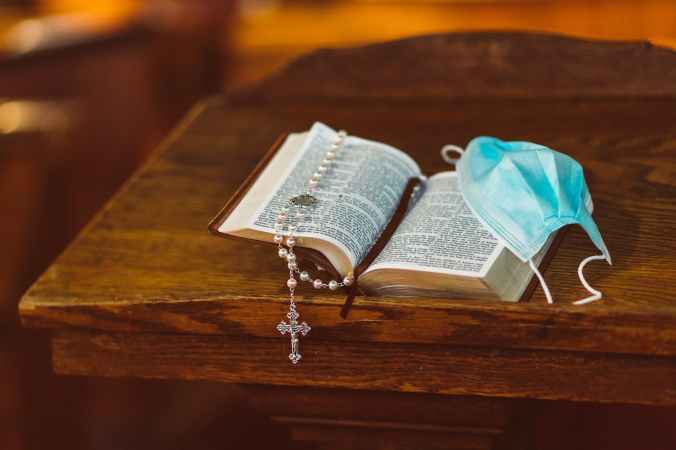
rosary and face mask on top of a bible

Prosopological exegesis.

Have you heard of it? If not, that’s alright, I suspect this technique for reading Scripture will run its course in the next decade and be replaced by another interpretive fad in the 2030s. In the mean time, however, this way of (mis)reading Scripture will find its way into articles, book, commentaries, and pulpits. And for that reason, students of the Word and especially teachers who rely on the scholarship of others (read: all of us), should be( a)ware of this approach to reading the Bible Christologically. 

To those who have been stuck in hermeneutical circles that deny typology and the need to read Scripture canonically, prosopological exegesis (PE) may sound like a great gain, as the voices of God are “unmasked” in certain parts of the Old Testament. But as Peter GentryJim Hamilton, and Jim Dernell have each argued, this ostensibly Christ-centered approach to the Old Testament misreads God’s Word. Instead of following OT texts and types until they come to their full revelation in the New Testament, as God the Father, Son, and Spirit are revealed as the one God in three persons, PE takes a shortcut to the persons of the Trinity. For this reason, it is a “naughty” way to read Scripture, as Michael Carlino argues in his new piece at Christ Over All:Give Diamonds, Not Coal: Why Prosopological Exegesis is Not the Gift You Are Looking For.”

Tomorrow, I will share my own concerns with prosopological exegesis. But today, I will offer an explanation of what PE is. What follows, then, is part of my Southern Baptist Journal of Theological article, “Reading the Psalms with the Church: A Critical Evaluation of Prosopological Exegesis in Light of Church History.” You can find this SBJT article here, along with another article that gives a constructive proposal for reading the Psalms. In both articles, I show why PE is not a reliable method to reading Scripture, and what follows is the start of that argument—namely, defining what prosopological exegesis is.

Continue reading

Reading for Scripture Saturation: (Re)Introducing the Via Emmaus Bible Reading Plan

rod-long-DRgrzQQsJDA-unsplash

How can a young man keep his way pure?
By guarding it according to your word.
10  With my whole heart I seek you;
let me not wander from your commandments!
11  I have stored up your word in my heart,
that I might not sin against you.
12  Blessed are you, O Lord;
teach me your statutes!
— Psalm 119:9–12 —

A few years ago, I introduced a reading plan focused on Scripture saturation more than Scripture box-checking. As a new year begins, I return to that reading plan for myself and for others who might be interested in focusing on one (or two or three) books in a month, instead a daily selection of Bible readings.

As we all know, or should know, the Word of God is not a trifle; it is our very life (Deut. 32:47). Man does not live on bread alone, but on the very word that proceeds from the mouth of God (Deut. 8:3; Matt. 4:4). So we should aim to read the Bible and to read it often!

Truly, the Bible is not a book to read once, or even once a year. It is meant to be imbibed and inhabited, adored and adorned, studied and savored. Mastery of the Bible does not mean comprehensive understanding of Scripture; it means an ever-increasing submission to the Master who speaks in Scripture. This is why in the closing days of the year, it’s good to consider how we can saturate ourselves with Scripture in the new year.

And today I offer a reflection on why a reading plan dedicated to saturating in Scripture may be a help for those who need to slow down and meditate on God’s Word. Or, for others, why a plan that encourages reading larger sections of Scripture might help Bible readers see more clearly the full message of the Bible.

Continue reading

Worshiping Christ at Christmas: Two Christmas Sermons (Isaiah 60 and Matthew 2)

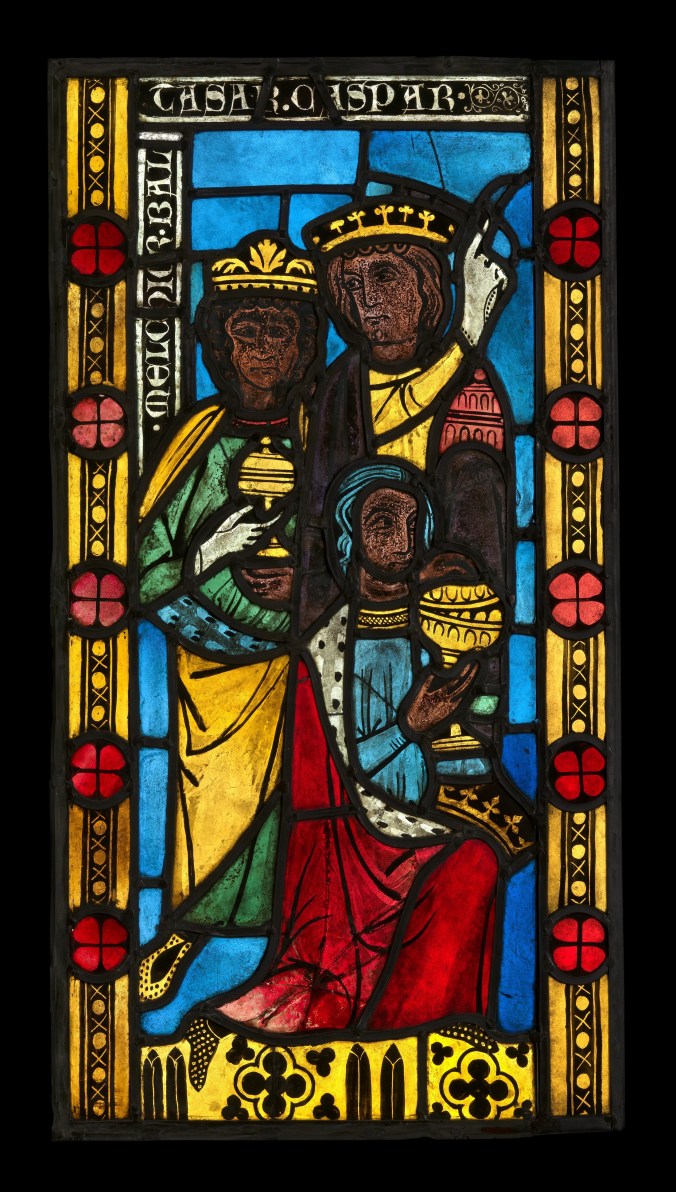
three kings figurines

This year, Christmas Day afforded the church a double blessing. Each Lord’s Day, the saints gather to celebrate the resurrection of Christ. And on that day, the first day of the week, the day of new creation, we (God’s new creations) bear testimony to the world that Jesus Christ is Lord.  This we do every Sunday, in order to worship God and bear witness to his gospel.

This year, however, with Christmas on the Lord’s Day, we also gathered to declare that Jesus Christ, the Lord, is born. Indeed, Christmas is the holiday that reminds us of the Lord come to earth, such that those of earth might come to heaven. Wonderfully, our church gathered twice in less than 24 hours to rejoice in all that Christ is and has done.

On Christmas Eve, we gathered to meditate on what it means that the Magi came to worship Christ, the king of the Jews (Matt. 2:1-12). Then, on Christmas morning, we gathered again to see how the Magi’s gifts of gold, frankincense, and myrrh fulfilled the prophecy of Isaiah 60. Indeed, Isaiah tells us that light has come into the world (vv. 1–3) and that light will one day engulf creation (vv. 19–22)—a prophecy that Revelation 21–22 picks up and applies to the new creation. In between the first coming of the light (in Christ’s birth) and its final establishment (in the new creation), we can continue to see how the light of God is coming into all the world, as the nations come to Zion and worship the Lord.

Those were the themes of our Christmas celebration. And I share the sermons below, so you might be able to dwell on these glorious truths. You can also find a pair of theological reflections on Isaiah 60 here and here. And if you need more Christological gold, take a look at what Christ Over All has published this month—Christology at Christmas. These essays are some of the best things I’ve read on the meaning of Christ and Christmas.

Come and Worship the True King (Matthew 2:1–12)

Let Us Come to Zion and Worship Christ (Isaiah 60)

Indeed, Christmas is one day behind us, or 364 days ahead us, if you are already counting. But the realities of Christ’s Incarnation, as well as his Lordship, abide year round. Therefore, may we continue to worship the Lord who was born in Bethlehem and the Lord who now reigns in Zion.

Soli Deo Gloria, ds

Photo by Jonathan Meyer on Pexels.com

Last Things First: Four More Ways Christ’s Birth Fulfills An End Times Prophecy

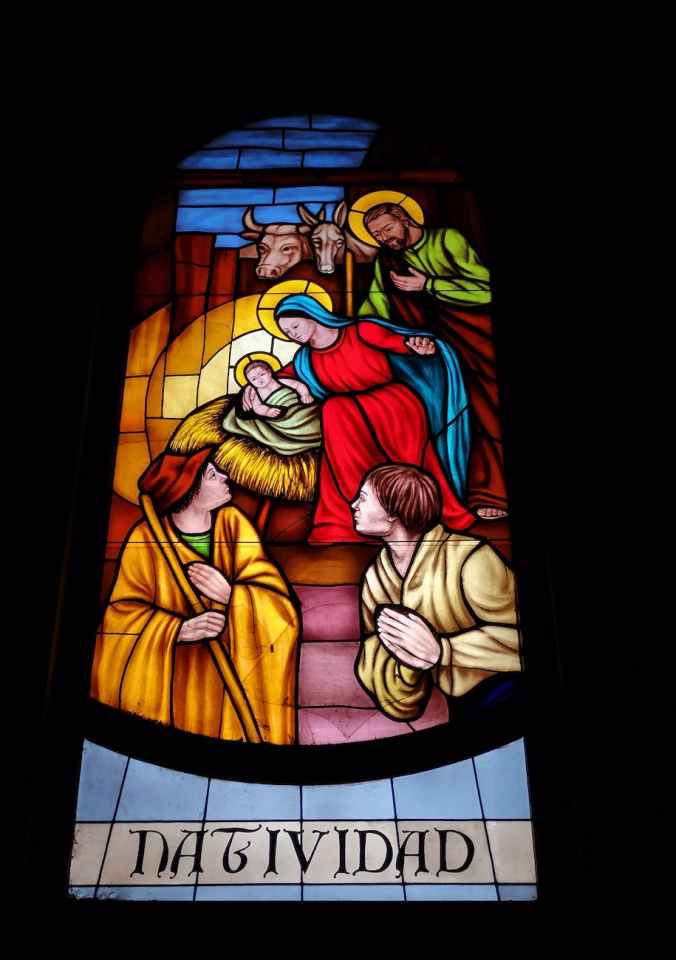
The Adoration of the MagiPicking up where I left off yesterday, I want to continue showing how the end-times prophecy of Isaiah 60 is fulfilled in the birth of Christ. From Isaiah 60:1–6, I highlighted three ways that Christ’s birth fulfilled the promises of (1) light, (2) joy, and (3) treasures brought to the temple. Today, I will pick up four more promises that are fulfilled in Christ’s birth.

4. Gentiles Have Been Received By Christ

In Isaiah 60:6 the LORD says kings will come to Zion bringing gifts. Now, in verse 7, we find the promise that those gifts “will beautify my beautiful house.” This “house” is a reference God’s holy temple, the place where God dwelt on earth. But incredibly, this house, its altar and inner sanctuary, were off limits–especially to Gentiles. And yet here, in Isaiah 60 we find the invitation for Gentile kings to “come up with acceptance on my altar.” The inclusion of “acceptance” is remarkable.

Under the old covenant, Gentiles were ritually and religiously unclean. In Ezekiel 44:6–9, Israel received the harshest condemnation because they permitted Gentiles to come near to God’s house. But now, Isaiah 60 says these foreign kings will be acceptable. How is this possible? The answer goes back to the international scope of the Servant’s work (Isa. 49:6–7).

While God chose Israel to be his covenant people in the Old Testament, the goal was always bigger. God would redeem a people from all nations, a theme that runs throughout Isaiah, and goes back to Abraham himself (see Gen. 12:1–3). In Isaiah 60, we now see the nations coming to Zion, bringing gifts (vv. 6–9), and building up the city of God. Listen to verse 10, “Foreigners shall build up your walls, and their kings shall minister to you; for in my wrath I struck you, but in my favor I have had mercy on you.”

Incredibly, when God exiled the people of Israel to Babylon and the nations, he in turn made a way for the nations to begin coming to Zion to find salvation in Israel’s king. In Zechariah 8:23, the post-exilic prophet puts it like this, “In those days ten men from the nations of every tongue shall take hold of the robe of a Jew, saying, ‘Let us go with you, for we have heard that God is with you.’” Indeed, in God’s unfathomable wisdom, he would turn Israel’s exile into a pathway of salvation for the nations. And in Isaiah 60:6–16 we find the nations coming to Israel bringing gifts and finding a place to reside near God.

In the New Testament, this emigration towards Zion is seen in the way the Magi come to Jerusalem to worship the king of the Jews. Most likely, these men of the East came to Jerusalem in response to the knowledge they received from exiled Jews. Daniel is a likely candidate for this kind of knowledge, but it could be others too. For our purposes, it is clear that Isaiah 60’s vision of the nations coming to Zion anticipates the arrival of the Magi. Or to turn it around, Matthew includes their pilgrimage to Zion (to Jesus, not just Jerusalem) to show how Isaiah 60 is being fulfilled.

On this point, we can go even further. These Gentile kings did not merely come to Bethlehem, they were welcomed into the Jewish living space Joseph, Mary, and Jesus. As Matthew 2:11 begins, “And going into the house, they saw the child with Mary his mother.” Let us not miss the significance of this moment. These unclean Gentiles are received into the presence of the Israel’s king because of their worshipful faith. This too reinforces the fact that Isaiah 60 is being fulfilled in the way Gentile kings are received the King of the Jews. Continue reading

Last Things First: Three Ways Christ’s Birth Fulfills An End Times Prophecy

close up shot of a stained glass

The sun shall be no more your light by day, nor for brightness shall the moon give you light;
but the LORD will be your everlasting light, and your God will be your glory. 
20Your sun shall no more go down, nor your moon withdraw itself;
for the Lord will be your everlasting light, and your days of mourning shall be ended.
— Isaiah 60:19–20 —

In Revelation, one of the most intriguing and incredible promises in the book is the day that will have no end, when the Lord becomes the light of the world, and night is no more. You can find this in Revelation 21:22–27, or more concisely in Revelation 22:5,

And night will be no more. They will need no light of lamp or sun, for the Lord God will be their light, and they will reign forever and ever.

This culminating vision of a full and final union between God and his people is the goal of history and the purpose for which God created the world. Indeed, many are the connections between Genesis 1–2 and Revelation 21–22. Yet, Revelation is also picking up the promises of the Prophets, showing how God will unite Christ and the Church in a glorious end-times, cosmic temple. In particular, Isaiah 60:19–20 (quoted above) is in view when John records the fact that “the city has no need of sun or moon to shine on it, for the glory of God gives it light, and its lamp is the Lamb” (Rev. 21:23).

This vision of the end times is speaking of the future and has no antecedent in history, right? Well, that’s what I want to consider. Clearly, every day still turns to night, there is much darkness in the world (both physical and moral), and the consummation of the kingdom has not come. At the same time, if we let Scripture interpret Scripture and we consider what Isaiah 60 means in its original and canonical contexts, we find that this enlightening chapter is not only fulfilled in Christ’s second coming. It is also fulfilled in his first.

Last Things First

In what follows, I want to show how Isaiah 60 is fulfilled in the birth of Christ. In other words, Isaiah 60 does not skip over the first coming of Christ in anticipation of his second, for in Isaiah’s day, there was only one coming of the messiah. Only after Christ came in humiliation to die for the sins of his people did it become apparent that there would be an inter-Advental period (i.e., a time between his first and second coming).

In theology, this “already-but-not-yet” structure to redemptive history is called “inaugurated eschatology.” It simply means that Christ has inaugurated his kingdom, but he has not consummated it. Revelation 21–22 speak of this consummation. Yet, we should not conclude that the application of Isaiah 60 to this end time event denies an earlier application or fulfillment.

In fact, as we read the birth stories of Christ, we discover at least seven ways that Isaiah 60 is fulfilled in the birth of Christ. And so, with hearts filled with joy in Christ’s birth, I want to show you how the last things promised in Isaiah 60 began when Christ first came to earth.

Three Ways the First Advent Fulfills Isaiah 60

To let the text lead, I will simply highlight a portion of Isaiah 60 and then show where it is fulfilled in the birth of Christ. Again, the goal is not to deny the later, greater fulfillment of Isaiah 60 in the new creation of Revelation 21–22, but it is to recognize the way that the new creation has already begun (cf. 2 Cor. 5:17). To that end, let’s consider three ways Isaiah 60 is fulfilled in the birth of Christ, and tomorrow I’ll add another four.

1. Light Has Come Into the World

In Isaiah 60:1–3, we find a testimony that God’s light has come into the world. Verse 1 announces, “Arise, shine, for your light has come, and the glory of the Lord has risen upon you.” This is quickly followed in verse 2 by a contrast between the darkness of the world and the in-breaking light. Even more, verse 3 declares that “nations shall come to your light, and kings to the brightness of your rising.”

These verses promise a day when God will fulfill his purposes for Israel. In the Old Testament, the light of God was placed in Israel and the nations were supposed to come to that light. By means of Israel’s law and wisdom (Deut. 4:6), the kings of the nations would come to Zion like the Queen of the South came to Solomon (1 Kings 10). And here in Isaiah, the prophet promises a new light, a new Solomon, and new flood of nations.

Indeed, this idea has already been proclaimed in Isaiah 2, as the law would go out and the nations would come into Zion. At the same time, Isaiah 9:1–2 speak of Zebulun and Naphtali as tribes positioned in darkness who have seen a great light. In that context, there is the promise of a child from David’s line who will establish a righteous a kingdom (vv. 6–7). In the fullness of time, Isaiah 9:1–7 is fulfilled in the birth of Christ, and so is Isaiah 60:1–3. Jesus is the light of the world (John 8:12), and when he was born, his star shone in the heavens and the nations came to him (Matt. 2:2; cf. Num. 24:17).

In this way, Isaiah 60 does speak of the future arrival of God, his light, and his kingdom. But importantly, this arrival came in the birth of Christ and now continues to shine in the darkness, until this same Christ comes again.

2. Joy Has Erupted in the Darkness

If light has entered the darkness, then joy follows. And this is what Isaiah 60:4–5 indicate. Speaking to Zion, the city of God, who was previously barren and empty (Isa. 49:14), Isaiah reports a flood children coming home in verse 4 just as God promised in Isaiah 49:15–23 and 54:1–8. This homecoming is the source of joy, which is described in verse 5.

Then you shall see and be radiant; your heart shall thrill and exult, because the abundance of the sea shall be turned to you, the wealth of the nations shall come to you. (Isa. 60:5)

The idea of the “wealth of the nations” will be further developed in vv. 6–9, but let us not miss the value of the people themselves. Those who were in darkness, enslaved to idols, in bondage to wicked rulers, and those who were wicked themselves, these are the ones who are now coming to city of God, the place of their new birth. Because of the Servant’s sacrifice and the Spirit’s power, these children of God are coming and with them joy has come to Zion.

Such joy is repeated when we consider the joy of Christ’s first advent. Unlike Israel, we cannot say that our joy is only future. Rather, as Romans 14:17 tells us about the kingdom today, “It is not a matter of eating and drinking, but of righteousness and jpeace and joy in the Holy Spirit.” Indeed, Paul can command the people of God to rejoice in the Lord (Phil. 4:4), because the Lord is here. And he has been here in the flesh and now by the Spirit since that great day when Jesus was born in Bethlehem. As Matthew 2:10 reports, “When [the wise men] saw the star, they rejoiced exceedingly with great joy.”

This exceeding joy is not a rhetorical flourish, it is a fulfillment of Isaiah 60. And we should not miss the connection. Jesus birth brought eschatological joy—a joy that death itself cannot steal, because the child born of Mary died and rose again to secure his people’s salvation and eternal joy.

3. Treasures Have Been Brought to the Temple

This truth is the one that launched this whole meditation—namely, the fact that wise men came bearing gifts of “gold and frankincense and myrrh” (Matt. 2:11). The first two elements are a direct connection to Isaiah 60:6. Listen to what it says.

A multitude of camels shall cover you, the young camels of Midian and Ephah; all those from Sheba shall come. They shall bring gold and frankincense, and shall bring good news, the praises of the Lord.

The third gift of myrrh is more enigmatic. Why is that included? As a perfume associated with burial, it could be a subtle indication that this king was born to die. Indeed, his work of salvation, which would include his sacrificial death, was already presented in Matthew 1:21. So that’s possible. But it’s also possible, and more fitting with the context of Isaiah 60, that the idea of frankincense is related to the temple.

As Craig Blomberg, following Davies and Allison, observes, there is in Matthew 2:11, “a possible Jesus/Solomon typology here . . . in part because gold and frankincense were firmly associated with the temple that Solomon built (1 Kings 10:2, 25; 1 Chron. 9:29; 2 Chron. 9:24; Neh. 13:5, 9)” (CNTUOT, 5). This seems to be going in the right direction, for not only does the temple theme reinforce a sacrificial reading of the gift, but it also fits Isaiah 60. As noted, the nations are flowing to a purified Zion, a place where God now dwells with his people. Even more, Isaiah 60 mentions the way their gifts will beautify the house of God and the sanctuary of the LORD (Isa. 60:7, 13).

In the New Testament, Jesus comes as the true temple (John 1:14), and he will replace the temple by bringing destruction on Jerusalem’s stone buildings (Matthew 24), and raising up a new temple in his body (John 2:19), in which he is the cornerstone (Eph. 2:19–22; cf. Matt. 16:18).

Restricting ourselves to Matthew 2, it is fitting to see the kings of the nations bypassing Herod and his temple (vv. 1–7), in order to bring gifts to Jesus (vv. 8–12). Indeed, if gold and myrrh were gifts given to Solomon and gold and frankincense were given to Zion, then their combination shows this truth: Jesus is the true temple. And true worshipers will seek God at his feet, not at the footstool in Jerusalem.

Such worship at God’s new creation temple does not need to wait until the second advent. Instead, this is a truth for us today. When the Son of God took on humanity, he became Immanuel, the place where God dwells with man and man with God. This was true for the wise men bringing gifts to Bethlehem instead of Jerusalem. And this is true today. We do not go to or look for a new temple to be built. Instead, when we gather with the living stones of Christ, we who are the Spirit-filled temple of God, are coming to Zion (see Heb. 12:22–24).

One day this temple, which is composed of new creation stones, will fill the earth. Until that day the light and the darkness will battle, joy will rise and fall, and earthly temples (i.e., churches) will live and die. Yet, the eternal hope remains—there is coming a day when the Christ who was born in Bethlehem, will bring Zion to earth. And we know this is true, not just because we have words that promise a future glory. We have the Word of God made fresh, as we see the glory dawning now. Jesus as the Word made flesh is raising dead flesh to life, and every place where the people of God gather to worship, they are bringing their gifts to God’s temple.

For today, these three points are enough. For together, they both show us how Isaiah 60 has been and is being fulfilled. Tomorrow, I’ll come back with four more as we wrap up this meditation. But for now, let us give thanks for the God who makes promises and keeps promises. At Christmas, it is good to remember that our hope for the future has already come. Jesus Christ is that hope. And what he has begun, he will complete until the final day.

Soli Deo Gloria, ds

Photo by Carlos Roberto Cu00f3rdova on Pexels.com
The Servant-King Who Brings Peace to Earth: An Advent Message on Isaiah 49–54

three kings figurines

But he was pierced for our transgressions; he was crushed for our iniquities;
upon him was the chastisement that brought us peace, and with his wounds we are healed.
­­– Isaiah 53:4–5 –

I heard the bells on Christmas Day / Their old, familiar carols play,
and wild and sweet / The words repeat / Of peace on earth, good-will to men!

And thought how, as the day had come, / The belfries of all Christendom
Had rolled along / The unbroken song / Of peace on earth, good-will to men!

Till ringing, singing on its way, The world revolved from night to day,
A voice, a chime, A chant sublime / Of peace on earth, good-will to men!

These are the opening words to Henry Wadsworth Longfellow famous Christmas song, “I Heard the Bells on Xmas Day.” You’ve probably heard it, but if not I’d recommend the version by Caroline Cobb + Sean Carter. At the same time, you may not know the story behind the song, but it’s worth the telling.

Continue reading

Faith, Hope, Love, and a True Savior: Four Questions of Life and Death (Isaiah 36–39)

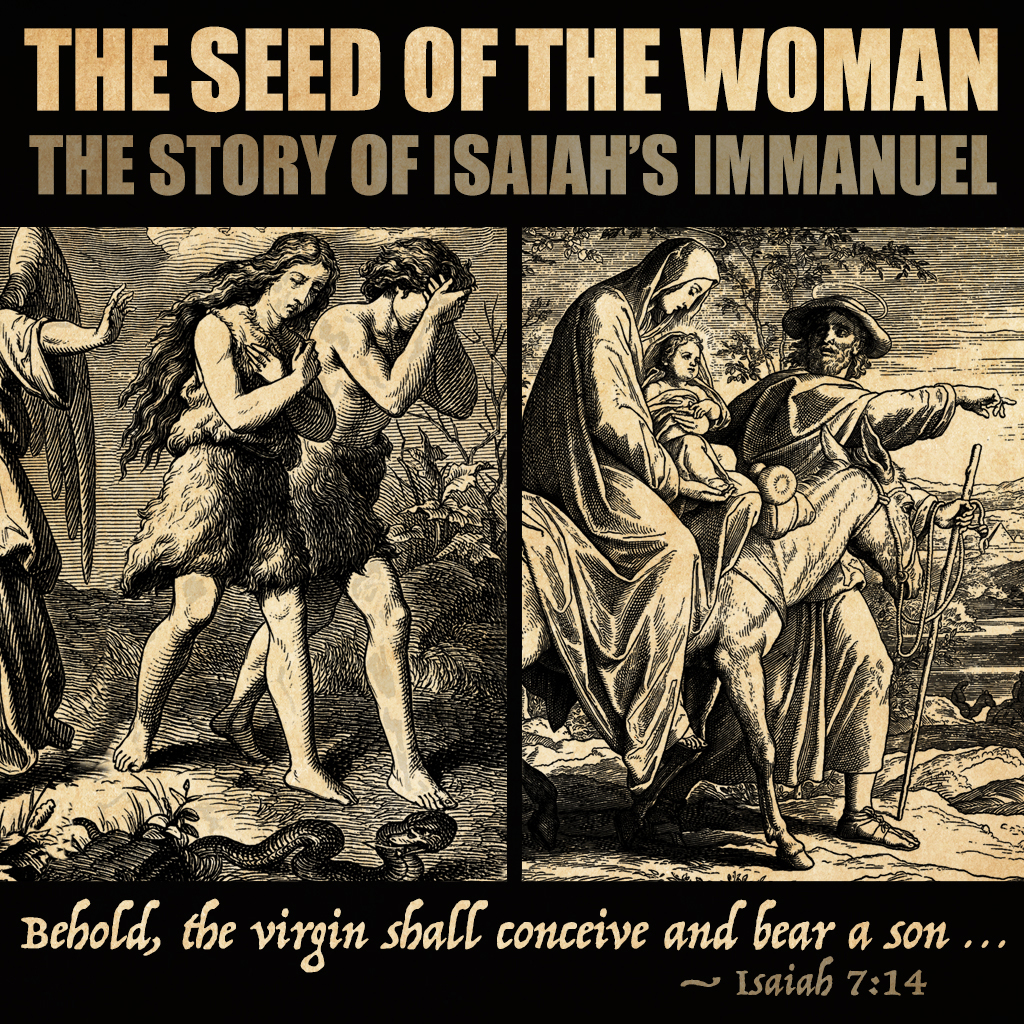
Seed of the Woman 1024x1024

Faith, Hope, Love, and a True Savior: Four Questions of Life and Death (Isaiah 36–39)

In Isaiah, the middle of the book presents us with a series of questions: Will you trust God when you are under threat? Will you turn to God when your life is in peril? Will you see God’s discipline as an act of love? And who is the king that can save you?

Truly, the book of Isaiah is not only one that foretells the coming of the messiah. It is also one that calls us to trust in the God who promised to send his Son as our messiah. In the events of Hezekiah’s life, which take center stage in Isaiah 36–39, we find an example of how one man trusted God and then failed to trust God. Indeed, Isaiah 36–39 is both a living parable for believers and a series of historical events that moves the story along in Isaiah’s long book.

On Sunday I preached a sermon these four chapters, complete with a spiritual parable about squirrels. If you are looking to learn how to have faith, hope, and love in the midst of hard times, this sermon may serve you well. In looking at Hezekiah’s faith and folly, we learn how to trust God and how to look for the greater king to come, the son of David who is greater than Hezekiah, the greatest of Israel’s kings (2 Kgs. 18:5).

Indeed, during this advent season, we continue to walk through Isaiah’s Gospel in order to see God’s plan of salvation. And in God’s plan of salvation, we not only find the promise of a king who will save his people (Matt. 1:21). We also find instructions for how the people of God shall respond to this Savior-King. To that end, you can listen to this sermon on Isaiah 36–39 to see how God calls us to trust him even when it costs us. This handout on Isaiah 36–39 may also help you to see what is in the text.

Until next time, let us continue to proclaim Christ from all Scriptures in order to make disciples of all the nations.

Soli Deo Gloria, ds