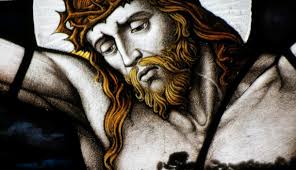
 When the Spirit led Jesus into the Wilderness, Satan tempted him three times. He questioned the authenticity of Jesus’ Sonship, tempting him to prove his power and his place as God’s Son. In perfect obedience to God and his Word, Jesus did not assert himself, but trusted that his earthly mission was one of absolute humiliation leading to honor, not a powerplay to gain honor for himself.
On the cross, the fury of Satan’s accusations returned, only it came not in the voice of the Serpent but in a salvo of accusations launched at Jesus while nailed to a tree. Physically speaking, no form of punishment has ever been more de-humanizing. Still, for all the physical a pain delivered in crucifixion, it was the Spiritual abandonment that was the greatest punishment. “My God, my God, why have you forsaken me?” was the cry of a man who had never known sin or the judgment of God’s abandonment. Moreover, in identifying himself with his sinful people, Jesus assumed in his flesh the fullness of their sin, which in turn invited the fullness of God’s wrath. He drank the cup, until the fury of God was extinguished.
And this is not all, the crucifixion, as Matthew describes it, is neither a testimony to the pain of crucifixion, as Mel Gibson sought to frame it in his movie The Passion of the Christ. Nor does Matthew ponder the horrible realities of God’s spiritual judgment. Rather, he records a bevy of Satanic accusations offered by Roman soldiers, Jewish leaders, nameless spectators, and the convicted criminals bleeding next to Jesus. After describing the mockery of Herod’s soliders (27:27–31), Matthew recounts the acts (vv. 32–37) and speeches (vv. 37–44) which Satan hurled at Jesus as died on the tree.
For us who find life in Jesus’ death, seeing Jesus’ humiliation teaches us what our sin deserves and what great lengths Jesus went to save us. At the same time, because Christ’s cross is exemplary for those who trust in his penal substitution, there is profit in seeing Satan’s accusations, that we might recognize the tempters accusations and continue to carry with faith the cross God gives to us. With this in mind, let’s consider Christ’s example of humiliation, that we might follow in his steps, by trusting in his substitutionary death, and his victory over Satan. Continue reading
 Via Emmaus